


China’s Foreign Minister Wang Yi has told Iran that the way to solve the Middle East conflict is talks, not weapons. He said this on Monday in Beijing, as China made several other moves to push for peace in the region.
What China Said
Wang met Ali Bagheri Kani, the deputy secretary of Iran’s Supreme National Security Council, in Beijing. According to China’s state news agency Xinhua, Wang said all sides in the Middle East conflict should focus on political solutions instead of using arms again. He said dialogue and negotiation are the way to settle disputes in the region. He also said China supports Iran in protecting its independence and security.
China’s Other Peace Moves This Week
| Who | What Happened |
|---|---|
| Wang Yi | Told an Iranian official that talks are the way to resolve the conflict |
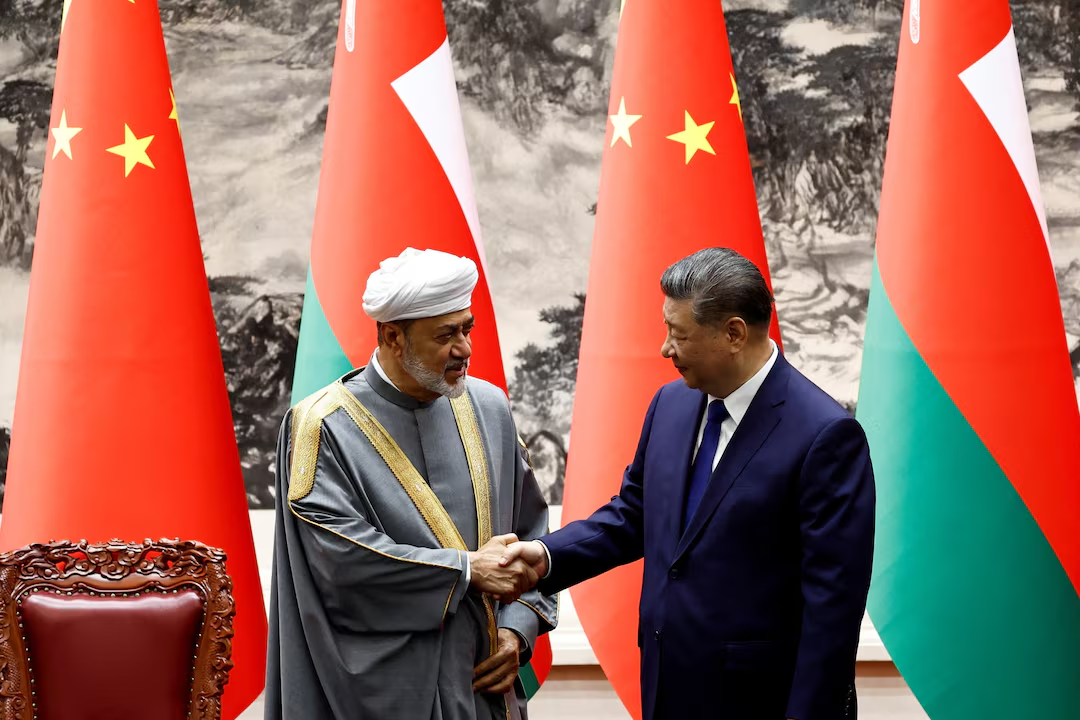
| President Xi Jinping | Told Oman’s Sultan Haitham bin Tariq, who is visiting China, that the Gulf region should not become a battleground for “great-power rivalry.” He said China wants to work with Arab countries for lasting peace |
| Special envoy Zhai Jun | Will visit Iran, Oman, and Saudi Arabia in early and mid-November, said foreign ministry spokesperson Mao Ning |
This is not China’s first effort. In September, Reuters reported, citing Iranian sources, that China had asked Iran to help calm the Houthis after Saudi Arabia asked Beijing for help.
What Is Happening on the Iran-US Talks
Iran says it is working on a plan to reopen the Strait of Hormuz, the narrow waterway that much of the world’s oil passes through. Foreign ministry spokesperson Esmaeil Baqaei said Iran is looking at a two-day plan if the United States agrees to Iran’s conditions. Iran had first suggested a one-week plan. He said messages are still going back and forth through mediators.
Foreign Minister Abbas Araghchi said Qatar and Pakistan have helped make the plan more practical, and that Qatar suggested shortening the timeline. He said Iran now wants the US to:
- Lift the new sanctions put in place after the memorandum
- Reduce its military presence in the region to the earlier level
- End its blockade
- Carry out the planned waivers on oil sanctions
Araghchi said these conditions are possible if the US shows goodwill. He said the strait would reopen first, and talks would follow: Iran wants all sanctions lifted, while the US wants to discuss the nuclear issue. Baqaei also said Iran will not send its 60 per cent enriched uranium to another country.
The Pressure From Washington
US President Donald Trump has kept up his warnings. At a campaign rally, he said the only reason he has not finished with Iran is that he wants “to be nice,” but that “at some point” the US will have to give Iran “the hammer.” Axios reported that Trump and Israeli Prime Minister Benjamin Netanyahu had a tough call about the next steps. Netanyahu reportedly wanted strikes on Iran right after the US midterm elections on Tuesday, while Trump wanted to let the negotiations continue.
Oil Prices Fell
Oil dropped more than 3 per cent on Monday after Iranian and Qatari officials held a third straight day of talks. Brent crude fell $3.68 to $109.75 a barrel, and US crude fell $3.43 to $100.69. Even so, Brent ended October at its highest level in six months, because people worry the conflict could grow again after the midterms.
Fighting Continues in Yemen and Saudi Arabia
Violence between Saudi Arabia and Yemen’s Houthis has not stopped. Saudi Arabia briefly sent emergency alerts in Abha, Khamis Mushait, Taif, and Najran, then said the danger had passed. The Saudi-led coalition said it destroyed a ballistic missile the Houthis fired toward southern Saudi Arabia. The Houthis said Saudi strikes on a port and an oil site in Hodeidah wounded seven people.
What to Watch Next
- Whether the US answers Iran’s two-day Hormuz plan
- What happens after the US midterm elections on Tuesday
- Zhai Jun’s trips to Iran, Oman, and Saudi Arabia later this month
Final Thoughts
China is speaking to both Iran and the Gulf states while the talks move slowly and threats continue. A pause in the fighting is still not guaranteed. The coming week, with the US midterms and Iran’s reply on Hormuz, will show whether the calls for dialogue have any real effect.
