


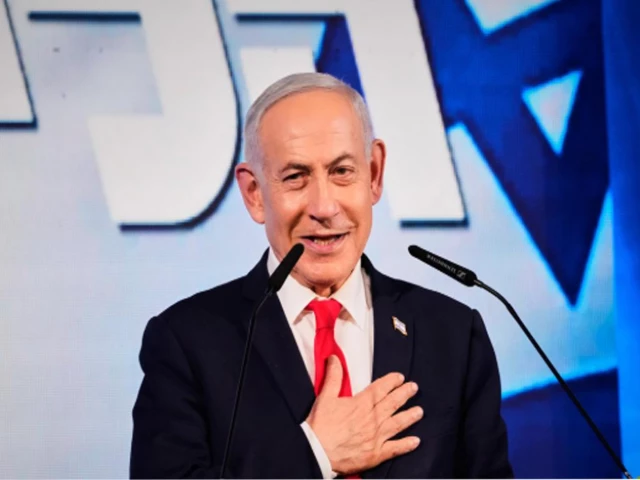
Israeli opposition leaders said on 4 November 2026 that Prime Minister Benjamin Netanyahu should not stay in power, a day after the US midterm elections. Yair Lapid, Yair Golan and Gilad Kariv made the statements, according to Anadolu Agency and other reports. They say the US results rule out a unity government led by Netanyahu. Here is who said what, what the numbers are, and what happens next.
What the Opposition Leaders Said
- Yair Lapid: According to Ynet and Middle East Monitor, he wrote on X that the US election results “eliminate any possibility of a unity government led by Netanyahu.” He also wrote, “Israel cannot afford to have him remain prime minister,” and said this would endanger Israel’s security and democracy.
- Yair Golan, leader of The Democrats: Anadolu says he wrote on X that the results show how unpopular Netanyahu is with both US parties. He warned that Netanyahu’s rule alongside National Security Minister Itamar Ben-Gvir could bring “international sanctions, international isolation, and a clash with the U.S.” He also said, “Netanyahu lost the elections. He is dangerous to Israel.”
- Gilad Kariv, a lawmaker: Anadolu says he claimed Netanyahu damaged relations with the Democratic Party and half of the Republican Party. He said Netanyahu “must not continue to lead the State of Israel” and rejected a unity government led by him.
Middle East Monitor says its report has no response from Netanyahu to Lapid. I did not find one from Netanyahu in the other reports either.
What Happened in the US
Anadolu, Ynet and Middle East Monitor report that the Democrats won control of both chambers of Congress. They call it a setback for President Donald Trump, who has backed Netanyahu. I could not confirm the seat counts myself. The Associated Press tables I checked on 4 November did not show counts I could read. Ynet also says Democrats were “expected” to make big House gains, so the final numbers may still change.
Where Israel’s Election Stands
Israel held its election on 27 October 2026. The Times of Israel reports the final results, published on 30 October by the Central Elections Committee:
| Bloc | Seats (of 120) |
|---|---|
| Pro-Netanyahu parties | 53 |
| Jewish opposition parties | 48 |
| Arab-led parties | 19 |
A government needs 61 seats. Neither side has that. The Times of Israel says Netanyahu’s bloc was down from 68 seats in the outgoing Knesset, and that turnout was 77.9%.
- Netanyahu’s bloc: Likud 27, United Torah Judaism 7, Otzma Yehudit 7, Shas 6, Religious Zionism 6.
- The Jewish opposition: Yashar 21, B’Yachad 12, The Democrats 8, Yisrael Beytenu 7.
- Arab-led parties: Joint List 11, Ra’am 8.
The Times of Israel says the opposition and the Arab parties would total 67 seats, but every Zionist party except The Democrats has ruled out working with Ra’am or the Joint List. Al Jazeera says the Arab parties could support a government from outside, as one possible route.
Who Will Lead the Opposition Bloc?
Ynet says the opposition bloc agreed a day earlier to seek a mandate to form a government headed by Gadi Eisenkot. On 2 November, Avigdor Liberman said he would recommend Eisenkot, and ruled out joining a Netanyahu government, according to ANI and Israel National News headlines. Ynet says Lapid’s words suggest some in the bloc might accept a unity government if Netanyahu is not the leader. Lapid’s wording is about a government “led by Netanyahu.”
What Happens Next
Al Jazeera gives this timeline:
- The new Knesset is sworn in on 10 November.
- President Isaac Herzog must task a lawmaker with forming a government by 11 November, after talking to party leaders.
- That person has 28 days, which can be extended by 14.
- If the first attempt fails, Herzog can ask another lawmaker. If all attempts fail, the Knesset is dissolved and a new election is held within 90 days.
Netanyahu stays as caretaker prime minister until a new government forms. Al Jazeera says Herzog has said he would push for a national unity government to avoid another election. The Times of Israel says talks could take more than two months. Both Netanyahu and Eisenkot have promised to form the next government.
Netanyahu’s Side
I found little on Netanyahu’s direct response to these statements. Reports from 2 November say he floated a “broad” government and raised fraud claims. A CNN headline says he claims the election was stolen, but I could not open that report. The Times of Israel quotes the Central Elections Committee acting director as saying fraud reports were “entirely unfounded,” and says the fraud investigation will not affect the final results.
Opposition statements are political claims, not facts. Whether the US result changes Israeli coalition talks is the opposition’s argument, and Netanyahu’s allies may see it differently.
Why the US Result Matters to Israel
The National (22 October) said a Democratic-controlled Congress could investigate the Iran war and look closely at US military aid to Israel. It also said Trump’s power as commander-in-chief does not depend on Congress. These were forecasts before the vote, not results.
What Is Not Clear
- The final US seat counts, since I could not read the AP numbers.
- Netanyahu’s response to Lapid, Golan and Kariv.
- What Lapid meant by his reference to “Zini.” Ynet does not explain it in the text I could see.
- Who Herzog will pick to form a government.
- Whether the opposition can reach 61 without the Arab parties.
- The date the results go to Herzog. Al Jazeera’s text gives both 4 and 10 November.
Frequently Asked Questions
What did the Israeli opposition say?
Lapid, Golan and Kariv said Netanyahu should not stay in power after the US midterms.
Is Netanyahu still prime minister?
Yes, as caretaker, until a new government forms.
Who won the US midterms?
Anadolu, Ynet and Middle East Monitor report that Democrats won both chambers of Congress. Final counts may still change.
Does Netanyahu have a majority?
No. His bloc has 53 of 120 seats. A majority needs 61.
Who might lead the opposition government?
Gadi Eisenkot, according to Ynet and Liberman’s recommendation.
What happens next?
The Knesset is sworn in on 10 November, and Herzog picks someone to try to form a government.
The story is still developing, so check Israeli and international news for updates.
