


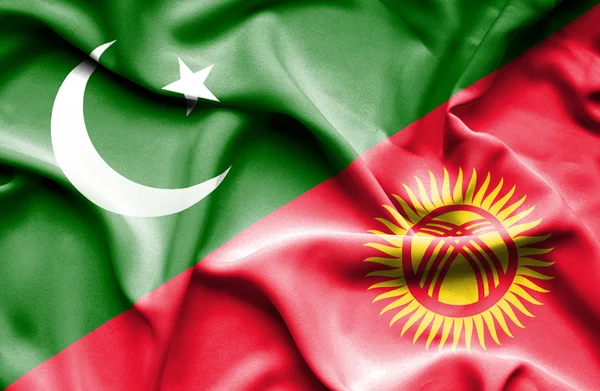
From $16 million to $200 million in just two years — that’s the ambitious trade target Prime Minister Shehbaz Sharif set for Pakistan and Kyrgyzstan this week, speaking alongside Kyrgyz President Sadyr Japarov in Bishkek. It’s a more than twelve-fold jump, and it comes with a fresh batch of signed agreements meant to make it happen.
The Numbers Behind the Ambition
Speaking at a joint press conference at the Kyrgyz presidential palace, PM Shehbaz didn’t mince words about how small current trade actually is. “Our present day bilateral trade hovers around $16 million, which is not a patch on our friendship, our brotherhood, and our very strong relations,” he said, calling for far greater economic engagement between the two countries. The goal: raise that figure to $200 million annually within two years, a target both governments have now stated on record more than once in recent months.
16 Agreements Signed in One Day
The trade pledge wasn’t just rhetoric — it was backed by paperwork. Pakistan and Kyrgyzstan signed 16 separate agreements and memorandums of understanding on Wednesday, September 2, 2026, covering trade, education, health, science, and several other sectors. Among the specific accords: a diplomatic Programme of Cooperation between the two countries’ foreign ministries for 2026–2027, a research partnership between the Institute of Strategic Studies Islamabad and Kyrgyzstan’s National Institute for Strategic Initiatives, finalized transit trade agreements to ease bilateral commercial movement, an extradition treaty, and a draft agreement on mutual legal assistance in criminal matters.
Energy Cooperation Gets a Boost Too
Trade wasn’t the only pillar discussed. PM Shehbaz described energy cooperation as “another very important pillar” of the relationship, reaffirming Pakistan’s commitment to the long-delayed CASA-1000 project — a $1.2 billion electricity transmission initiative designed to export surplus hydropower from Kyrgyzstan and Tajikistan to Afghanistan and Pakistan. The two sides also welcomed the establishment of a joint working group focused on electricity, hydropower, renewable energy, and modern energy infrastructure and technology.
Why This Target Is Genuinely Ambitious
Scaling bilateral trade from $16 million to $200 million within two years is an aggressive target by any measure — a more than twelvefold increase in a relatively short window. Officials have previously acknowledged that achieving this scale-up will depend heavily on real progress in transit routes, port access, and private-sector partnerships, rather than agreements on paper alone. This isn’t the first time the figure has been floated either: Pakistan and Kyrgyzstan first set the same $200 million target back in December 2025, during Kyrgyz President Zhaparov’s visit to Islamabad, meaning this week’s statement in Bishkek effectively reaffirms and builds on a goal already in motion for several months.
Part of a Broader Diplomatic Push
This trade announcement is one piece of a larger visit: PM Shehbaz traveled to Kyrgyzstan primarily to attend the Shanghai Cooperation Organisation summit in Bishkek, where Pakistan formally took over the SCO chairmanship for 2026–2027. During his remarks, he also congratulated Kyrgyzstan on its election as a non-permanent member of the United Nations Security Council for 2027–28, and praised the country’s successful chairmanship of the SCO through 2025–2026. Beyond trade and energy, the two leaders also discussed strengthening cooperation against terrorism and extremism, alongside broader regional and international issues of mutual concern.
What Happens Next
With the agreements now signed, the real test shifts to implementation. Pakistan exported roughly $5–8 million in goods to Kyrgyzstan in recent years, with limited imports flowing back — meaning both countries have real room to grow, but also real work ahead to translate signed paperwork into an actual twelvefold jump in trade volume. Whether the private-sector partnerships and transit-route improvements needed to hit that $200 million target materialize within the promised two-year window remains the key thing to watch going forward.
Frequently Asked Questions
What is Pakistan’s current trade volume with Kyrgyzstan?
Bilateral trade currently stands at around $16 million annually, according to PM Shehbaz Sharif’s own remarks this week.
What is the new trade target between the two countries?
Pakistan and Kyrgyzstan are aiming to raise bilateral trade to $200 million per year within the next two years.
What agreements were signed alongside the trade announcement?
Pakistan and Kyrgyzstan signed 16 agreements and MoUs covering trade, education, health, science, transit trade, extradition, and diplomatic cooperation.
What is CASA-1000, and how does it relate to this visit?
CASA-1000 is a $1.2 billion electricity transmission project designed to export surplus hydropower from Kyrgyzstan and Tajikistan to Afghanistan and Pakistan. Both leaders reaffirmed their commitment to its timely implementation during this visit.
Turning a $16 million trade relationship into a $200 million one within two years is a genuinely bold target — and with 16 fresh agreements now in place, the coming months will show whether Pakistan and Kyrgyzstan can back up this week’s ambition with real, on-the-ground economic momentum.
