


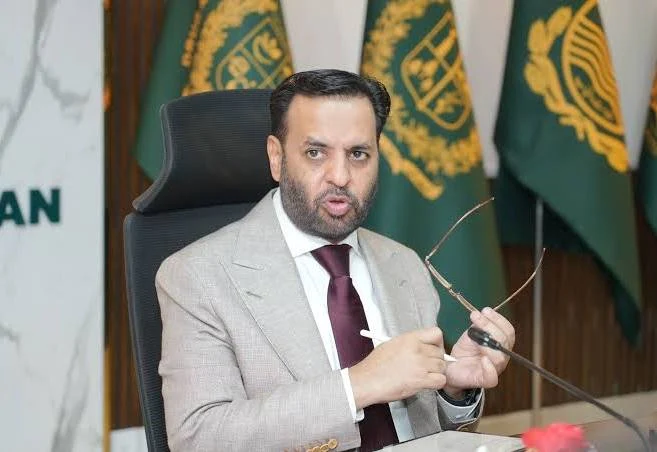
Federal Health Minister and senior MQM-P leader Mustafa Kamal has reaffirmed that his party has not walked back its long-standing demand for new provinces, pushing the issue back into the national conversation as tensions between MQM-P and the Sindh government continue to simmer.
What Kamal Said
Speaking to reporters after inaugurating Pakistan’s first International Travellers Vaccination Centre in Karachi, Kamal was direct when asked about the party’s position: MQM-P has not backed away from the demand for provinces, and has consistently supported the idea whenever the topic comes up. He pointed to Karachi’s administrative structure to make his case, noting that the city is divided into seven districts, while Lahore and Peshawar each function as a single district — a disparity he argues justifies restructuring on administrative grounds.
He also pushed back at what he described as selective outrage from critics, saying that convenient proposals get support while unpopular ones are dismissed outright, regardless of their merit.
Why This Keeps Coming Up
This isn’t a new position for MQM-P — the party has been steadily building this campaign for months. In earlier press conferences, Kamal has argued that Karachi generates the overwhelming majority of Sindh’s revenue but receives only a small fraction of it back in development spending, citing figures showing the city received roughly Rs. 680 billion out of Rs. 22 trillion allocated to Sindh over the past 18 years. Party chairman Khalid Maqbool Siddiqui has separately led rallies in Hyderabad making the same case for carving new administrative provinces out of the existing setup.
MQM-P leaders have repeatedly stressed that the demand is about administrative efficiency and better service delivery for a growing urban population, not about ethnic division or breaking up the province.
Pushback From the Sindh Government
The Pakistan Peoples Party (PPP), which governs Sindh, has firmly rejected the framing. Provincial officials have accused MQM-P of using the new-province demand for political leverage rather than genuine governance reform, and have pointed to the party’s own record while previously holding power in Karachi. PPP leaders have also argued that resource distribution follows the constitutionally mandated NFC Award formula, rather than being withheld from any particular city or party.
The Bigger Debate: Redrawing Pakistan’s Provinces
Calls for new provinces aren’t unique to MQM-P or Sindh — similar demands have surfaced periodically for regions like South Punjab and Hazara, and any such change would require a constitutional amendment along with approval from the relevant provincial assembly, making it a politically heavy lift rather than a simple administrative order. That difficulty is part of why the demand keeps resurfacing as a talking point without material progress toward implementation.
Final Thoughts
Kamal’s latest remarks signal that MQM-P has no plans to quietly drop the new-provinces demand, even as it draws continued criticism from the PPP-led Sindh government. With the party also threatening street protests over Karachi’s share of provincial funds, this dispute looks set to remain a recurring flashpoint in Sindh’s politics rather than one resolved anytime soon.
