


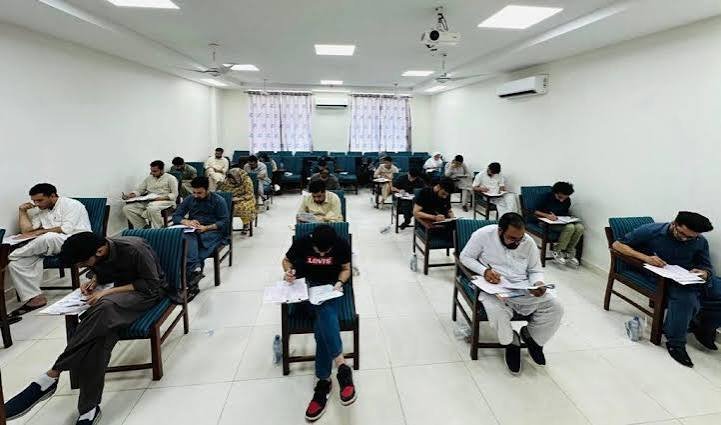
Afghan medical and dental students across Punjab are pleading to be allowed to finish their degrees, after Pakistan’s medical regulator ordered their return to Afghanistan — a decision that has already led to the first expulsions at one of the country’s most prominent medical universities, including students just months from graduating.
What the Directive Says
The Pakistan Medical and Dental Council (PMDC), the country’s regulatory body for medical education, issued a directive dated September 1 instructing institutions not to admit, transfer, or provide continued academic facilities to Afghan nationals during the current academic year. The order effectively suspends medical and dental education for Afghan students for the 2026–27 academic year, halting exams, clinical rotations, and thesis work for those already enrolled, while also barring any new admissions or transfers.
Following the directive, the University of Health Sciences (UHS) in Lahore — which oversees more than 120 affiliated medical and dental colleges across Punjab — issued an urgent notice instructing all 64 relevant institutions to implement the policy immediately.
The First Institution to Act
Lahore’s King Edward Medical University (KEMU) became one of the first to comply, expelling 20 Afghan MBBS students, including five who were in their final year of study. University records show a total of 22 Afghan nationals were affected at KEMU alone, including two who had only recently graduated. Affected students were given just 24 hours to complete official formalities through the university’s registrar’s office.
KEMU said it has begun processing the paperwork required under the directive, including No Objection Certificates, verification of academic records, and immigration-related documentation needed before students leave Pakistan.
Who’s Affected — and How Close Some Were to Finishing
| Detail | Figure |
|---|---|
| Afghan MBBS/BDS students affected at KEMU | 20 (plus 2 recent graduates) |
| Final-year students among those expelled | 5–7 (reported figures vary slightly by source) |
| Medical/dental colleges affected across Punjab (via UHS) | 64 |
| Deadline given to complete exit formalities | 24 hours |
The Students’ Plea
Affected students and advocates have pushed back hard against the decision, particularly for those in their final year — arguing that ending years of medical training just months before graduation leaves students with a credential-less gap that can’t easily be resumed elsewhere. Human rights advocate Bushra Gohar publicly condemned the KEMU expulsions, calling it especially cruel to remove final-year students who, under current conditions, are unlikely to be able to continue their education inside Afghanistan.
Amnesty International South Asia has also weighed in, describing the PMDC’s decision as discriminatory and arbitrary, and warning the consequences are especially severe for female Afghan students — many of whom came to Pakistan specifically because Taliban restrictions have sharply limited women’s access to higher education inside Afghanistan. The organization said Pakistan carries obligations under international human rights law to uphold access to education without discrimination based on nationality.
Separately, Mansoor Ahmad Khan, Pakistan’s former ambassador to Afghanistan, has publicly called on Islamabad to allow Afghan medical students to complete their studies rather than enforcing an abrupt cutoff.
The Bigger Picture: Why Now
This directive doesn’t exist in isolation — it comes as Pakistan has sharply intensified its broader Afghan repatriation campaign. According to the International Organization for Migration, more than 2.6 million Afghans returned from Pakistan between September 2023 and July 2026 alone. Pakistan maintains these measures are necessary for national security and immigration enforcement, pointing to allegations that Tehreek-e-Taliban Pakistan (TTP) militants use sanctuaries inside Afghanistan to plan cross-border attacks — a claim the Taliban government denies, calling Pakistan’s security issues an internal matter.
Relations between Islamabad and Kabul have deteriorated sharply as a result, including border clashes, Pakistani airstrikes inside Afghanistan, and — in October 2025 — some of the worst cross-border fighting in years before Qatar and Turkiye helped broker a ceasefire.
What This Means for Affected Students
For the Afghan students caught up in this directive, the practical stakes are severe: years of medical training with no credential to show for it, an uncertain path to resuming studies inside Afghanistan given the Taliban’s restrictions — particularly for women — and no clear alternative country offering an immediate path to finish an MBBS or BDS degree already years in progress.
Final Thoughts
The PMDC’s directive marks a significant escalation in how Pakistan’s broader crackdown on Afghan nationals is now touching areas — like ongoing medical education — that hadn’t previously been affected by the wider repatriation drive. With human rights organizations, a former Pakistani ambassador, and the affected students themselves all pushing for an exception for those close to finishing their degrees, whether Pakistan carves out any flexibility for final-year students remains the key question in the days ahead.
