


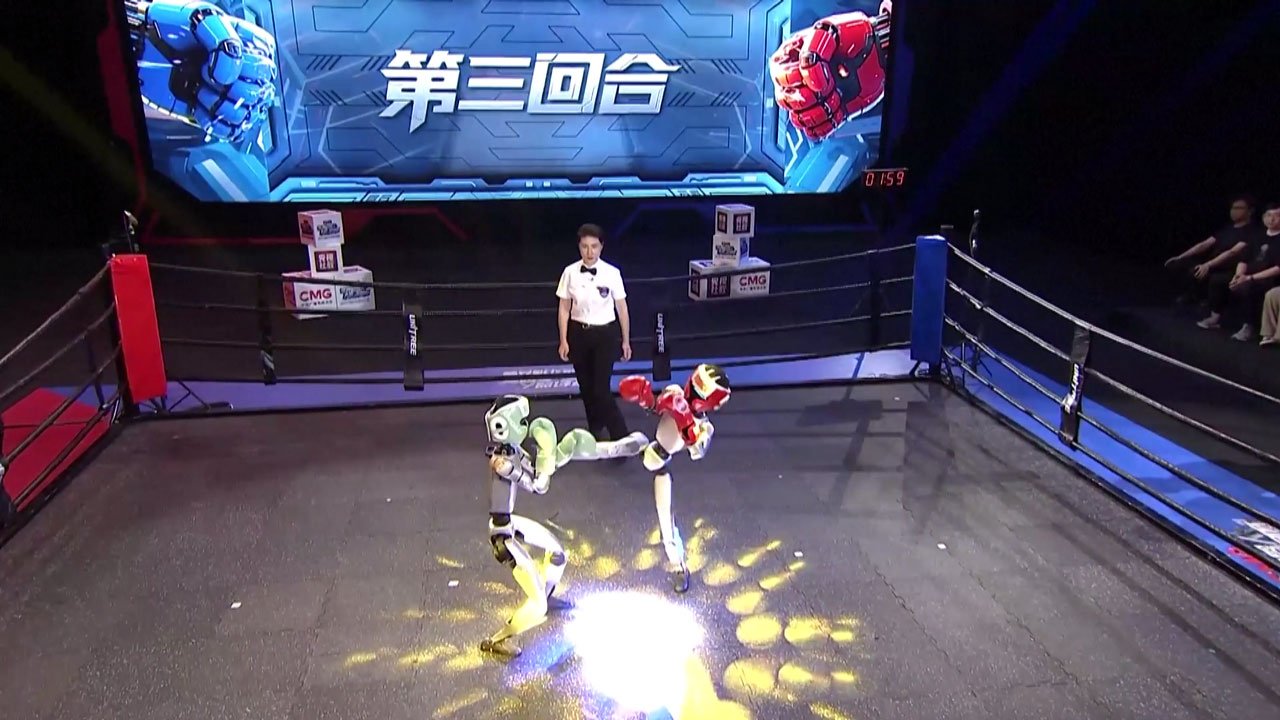
Robot combat just got its own global league. CyberHero, billed as the world’s first global humanoid robot sports league, launched in Riyadh on September 9, with plans to expand into a full circuit spanning eight cities across four continents.
What Actually Happened in Riyadh
The inaugural event, CyberHero x Riyadh, was held at Boulevard City and marked the Middle East’s first humanoid robot combat event, featuring EngineAI T800 humanoid robots competing inside a purpose-built arena. Staged as an invite-only launch, the event served as a preview of the league’s competition format, personalities, and broader vision rather than a full competitive season opener. Electronic music producer and DJ Tokyo Machine performed as part of the show, which organizers designed to blend sport, technology, gaming culture, and live entertainment into a single event.
How the Competition Actually Works
At the heart of CyberHero is a team-based format built around three distinct roles:
- Builders — design and engineer the robots
- Coders — develop and train the intelligence controlling them
- Drivers — make live, real-time decisions during competition, putting the team’s engineering and programming to the test in the physical arena
For the launch event, two teams competed under a celebrity-manager format, with MENA content creator AboFlah and Saudi sports creator Bashar Arabi going head-to-head as managers of the competing sides — a structure clearly designed to pull in audiences already familiar with esports and creator-driven content, not just traditional robotics or combat-sport fans.
Who’s Behind It
CyberHero was created by Hero Esports, which describes itself as Asia’s largest esports company. The league is explicitly framed as being about “physical AI” — bringing artificial intelligence out of purely digital environments and into machines that operate and compete in the real, physical world.
The Global Rollout Plan
| Detail | Plan |
|---|---|
| Total planned host cities | 8, across an inaugural season |
| Regions covered | Middle East, Europe, the Americas, Asia |
| Middle East stops | 2 of the 8 total events |
| Current status | Actively seeking host cities, venues, and partners |
Beyond Riyadh, specific host cities for the remaining stops haven’t yet been announced. Hero Esports says it’s currently in the process of securing host cities and venues, robotics and technology suppliers, university partnerships for teams and research, and commercial partners spanning tourism, sport, entertainment, and music — meaning much of the circuit’s shape is still being finalized even after this launch event.
Saudi Arabia’s Role in the Launch
Riyadh’s selection as the launch city fits into Saudi Arabia’s broader, well-documented push into esports and entertainment as part of its economic diversification strategy. HRH Prince Faisal bin Bandar bin Sultan al Saud, Chairman of the Saudi Esports Federation, welcomed the choice of Riyadh for the league’s debut, framing it as a reflection of the country’s fan passion and its ongoing commitment to esports as a growing entertainment sector — language consistent with Saudi Arabia’s other major recent investments in esports and gaming infrastructure.
Why This Matters Beyond a Single Event
CyberHero enters a small but growing space of humanoid robot competition formats emerging globally, reflecting a broader industry push to showcase advances in robotics and physical AI through competitive, spectator-friendly formats rather than purely academic or industrial demonstrations. By pairing robot combat with celebrity team managers, live music, and esports-style production values, the league is explicitly betting that packaging advanced robotics as mainstream entertainment — rather than a niche tech showcase — is the more effective way to build a lasting audience.
Final Thoughts
CyberHero’s Riyadh launch was a preview, not a full season — the real test will be whether Hero Esports can lock in the remaining seven host cities, build a genuinely competitive circuit around its builder-coder-driver format, and sustain audience interest once the novelty of “robots fighting” wears off. For now, it’s a notable first step toward what organizers are pitching as an entirely new category of global sport, built at the intersection of robotics, AI, and entertainment.
