


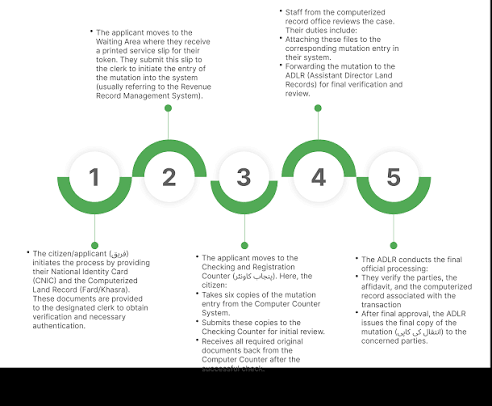
Buying land in Punjab isn’t complete until your name appears in the official revenue record, a step known as mutation, or Intiqal. This guide explains how to apply for land mutation online in Punjab through the Punjab Land Records Authority (PLRA), what’s changed in 2026, and what documents you’ll need.
What Is Land Mutation (Intiqal)?
Mutation is the official process of updating government land revenue records to show a change in ownership, whether from a sale, inheritance, gift, or court order. Even if you hold a registered sale deed, your name doesn’t legally appear as the owner in revenue records until mutation is completed. In Punjab, this is managed by the Punjab Land Records Authority (PLRA) through its Arazi Record Centers (ARCs) and online portal.
Important 2026 Change: Registry Is Now Central to Mutation
Punjab has tightened its rules around land mutation. As of early 2026, the Board of Revenue and PLRA have moved to make mutation dependent on a properly registered document (a Registry) at the Sub-Registrar’s office, rather than an informal or purely verbal (oral) arrangement. In practice, this means:
- You first obtain a Fard (ownership document) for the sale, either online or from an ARC.
- An e-Stamp paper is generated based on the property’s market value, and the registry (sale deed) is prepared.
- The registry must be formally registered at the Sub-Registrar’s office.
- Once registered, the mutation is entered at the Registration of Documents (ROD) branch at the Sub-Registrar’s office, and then attested by the Sub-Registrar or ADLR/LRO.
Since this is a recent and still-developing change, it’s worth confirming the current requirement for your specific transaction directly with your local ARC or the PLRA helpline before you proceed, especially if you’re considering an older-style oral mutation.
Documents You Need
- CNIC copies of both buyer and seller
- Copy of the registry (registered sale deed)
- Latest Fard (ownership document) of the property
- Property tax receipt
- A duly filled and signed mutation application form
For inheritance mutation specifically, you’ll instead need a death certificate, a Family Registration Certificate (FRC), an affidavit, property details, and CNIC copies of all legal heirs.
How to Apply for Land Mutation: Step by Step
Step 1: Get Your Fard
Before anything else, obtain the property’s Fard (ownership record) from your nearest Arazi Record Center (ARC) or check it online through the PLRA portal at punjab-zameen.gov.pk.
Step 2: Book an Appointment
Schedule your ARC visit by calling the PLRA helpline at 042-111222277, or book online through the PLRA website if that option is available for your service centre.
Step 3: Prepare and Register Your Sale Deed
Generate the required e-Stamp paper based on the property’s market value, and get your sale deed (registry) drafted. Take this to the relevant Sub-Registrar’s office to have it formally registered.
Step 4: Visit the ARC With Your Documents
Once the registry is complete, visit the ARC with your registered sale deed, CNIC copies, the latest Fard, and your property tax receipt. Collect a token and wait for your turn.
Step 5: Submit Your Mutation Application
Provide your details to the Service Centre Operator (SCO). Your mutation is entered into the system, and you’ll receive a challan for the applicable fee, along with a date for the next stage of the process.
Step 6: Pay the Fee
Pay the fee shown on your challan. PLRA also offers an online payment facility for fard, mutation, and registry-related fees through internet banking or ATMs.
Step 7: Attestation
Since your mutation is based on a registered document, it is entered at the ROD branch of the Sub-Registrar’s office and then attested by the Sub-Registrar or ADLR/LRO.
Step 8: Collect Your Updated Fard
Once your mutation is approved, an updated Fard-e-Malkiat is issued, reflecting your name as the new owner. Many ARCs issue this on the same visit or shortly after, often with your photograph printed on it.
Mutation Fees
PLRA charges different fees depending on how the mutation is processed. As per PLRA’s official service charges schedule, some reference figures include:
| Type of Mutation | Government Fee |
|---|---|
| Mutation through Registry | Rs. 1,300 |
| Mutation entered through Banks | Rs. 1,300 |
| Mutation through Express Service | Rs. 6,700 |
| Mutation through Pakistani Consulates (abroad) | USD 60 |
On top of the government mutation fee, a sale-based mutation can also involve additional charges, such as a mutation fee (around 3%), District Council fee (around 1%), and FBR advance/gain tax, which vary depending on your filer status. These figures are periodically revised, so confirm the exact current amounts with your ARC or on the PLRA website before you pay.
Inheritance Mutation: A Different Process
If the mutation is due to inheritance rather than a sale, any legal heir can approach the ARC with the required documents. The mutation is entered, and the file is forwarded to field revenue staff for Shajra Nasab (a genealogical verification). Once the field verification report is received, the inheritance mutation is attested at the ARC.
Checking Your Mutation Status Online
You can check land records, including Fard and mutation details, through the official PLRA portal at punjab-zameen.gov.pk. This lets you verify the current ownership record without needing to visit an ARC in person for every check.
Common Mistakes to Avoid
- Assuming a registered sale deed alone means you’re the legal owner in revenue records, without completing the separate mutation step
- Relying only on an older-style oral mutation for a sale transaction without confirming it’s still accepted for your case
- Not checking your updated Fard after mutation to confirm your name and details are correctly recorded
- Missing required documents, such as CNIC copies or the property tax receipt, which can delay processing
Frequently Asked Questions
Is land mutation the same as property registration?
No. Registration, done at the Sub-Registrar’s office, makes the sale legally valid. Mutation, done through PLRA, updates the government’s revenue record to show you as the new owner. Both steps matter.
Can I apply for land mutation fully online?
Parts of the process, such as checking your Fard, paying certain fees, and verifying records, can be done online through the PLRA portal. However, registering your sale deed and completing the mutation itself still typically involves a visit to the Sub-Registrar’s office and an ARC.
How long does land mutation take in Punjab?
Processing time varies, but many straightforward, uncontested mutations are completed within a matter of weeks once all documents and the registered deed are in order.
What documents do I need for inheritance mutation?
A death certificate, Family Registration Certificate (FRC), an affidavit, property details, and CNIC copies of all legal heirs.
What happens if I don’t complete mutation after buying land?
Your name won’t appear in official revenue records, which can create problems later when you try to sell, transfer, or use the property as collateral for a loan.
Completing land mutation in Punjab now runs largely through a registered sale deed, PLRA’s Arazi Record Centers, and the Sub-Registrar’s office working together. Keep your documents ready, confirm the current process for your specific case at your local ARC, and make sure your updated Fard reflects your name once the mutation is approved.
