


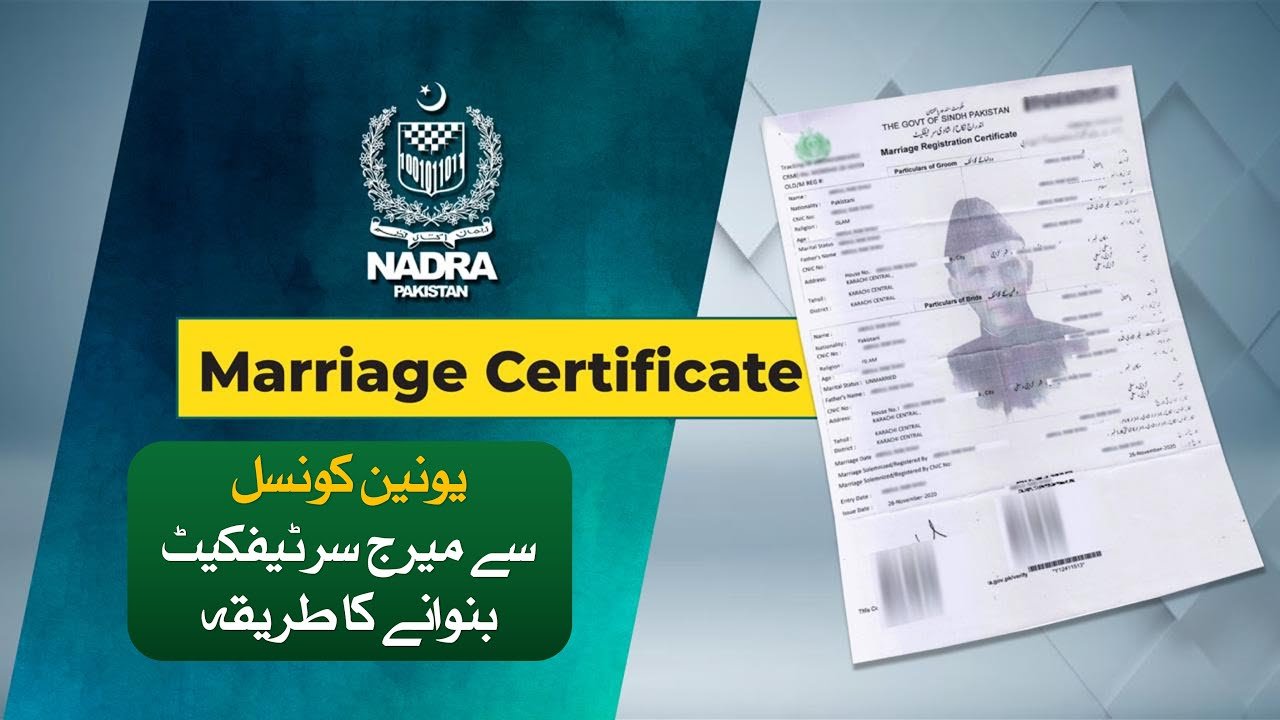
A marriage certificate is needed for passports, visas, CNIC updates, property and many legal matters. In Sindh, marriages are registered at the local level, and the certificate comes from the local authority, not directly from NADRA. This guide explains the process step by step and what to check before you go.
Understand the Two Documents
- Nikah Nama: The marriage register entry and certificate issued at the time of the nikah. For Muslims, under the Muslim Family Laws Ordinance 1961, it must be registered with the local Union Council, which keeps the original as a public record.
- Computerised marriage certificate (NADRA MRC): A computer-generated certificate based on the registered nikah record. One legal-services site notes that NADRA does not itself register or solemnise a marriage. The local registration authority issues the certificate using NADRA’s system.
Many embassies and government offices ask for the computerised certificate, so it is worth getting.
Step 1: Make Sure the Nikah Is Registered
The nikah is normally registered by a Nikah Registrar appointed by the local authority, such as the Union Council. Check that the registrar filled the Nikah Nama fully and correctly, including the names, CNIC numbers, witnesses and date. An unregistered or incorrectly filled Nikah Nama is a common cause of delay. If your nikah was never registered, you will need to register it first, which can involve extra steps and fees for late registration.
Step 2: Go to the Right Office
Apply at the office for the area where the marriage took place:
- The Union Council
- The Cantonment Board, for cantonment and DHA areas
- The local government office, where applicable
Ask the office for its current application form and fee.
Step 3: Bring the Documents
Reported requirements include:
- Original Nikah Nama
- CNIC copies of the bride and groom
- CNIC copies of both witnesses
- Passport-size photographs
- The completed application form
- Passport copy, if either spouse is a foreign national
Some offices also ask for the fathers’ CNIC copies. Take originals and photocopies.
Step 4: Pay the Fee and Wait for Verification
The office checks your record against the registered nikah and NADRA’s civil registration system. A computerised certificate with a QR code is then issued.
Fees: I could not find an official fee list for Sindh. Private websites quote a range of about PKR 300 for the official fee, but these figures are based on Punjab and are not reliable for Sindh. Ask the Union Council for the exact fee and get a receipt.
Time: Private guides say about 3 to 7 working days when everything is in order, and longer for late registration. This is an estimate, not an official promise.
New: Digital Services Through NADRA
In November 2025 the Sindh government and NADRA signed an agreement to launch a Civil Registration Management System (CRMS) mobile app covering birth, death, marriage and divorce certificates. Separately, NADRA’s Pak-ID app has been rolling out provincial civil registration services. A report in August 2026 listed the Sindh districts where it was available, including Karachi East, Karachi Central, Naushahro Feroze, Mirpurkhas, Shaheed Benazirabad, Larkana, Jamshoro, Tando Allahyar and Tando Muhammad Khan.
The reports I found explained the app steps only for birth registration, not for marriage. So I cannot confirm that you can apply for a marriage certificate entirely online yet. Check the Pak-ID app or ask your Union Council whether the service is available in your district.
Why Registration Matters
A registered marriage helps prove your marital status when dealing with government offices. Without a registration certificate, people can face problems getting a CNIC, passport or state benefits. It also protects rights such as inheritance and property.
Non-Muslim Marriages
The Nikah Nama process above is for Muslim marriages. Registration for other communities follows different rules. Ask your local Union Council or the relevant local government office what applies to you.
Common Problems to Avoid
- Mismatched names or CNIC numbers between documents.
- An incomplete Nikah Nama, or wrong witness information.
- Using an unregistered Nikah Registrar.
- Paying agents large amounts. Always get an official receipt from the office.
Frequently Asked Questions
Who issues the marriage certificate in Sindh?
The local authority where the marriage was registered, such as the Union Council or Cantonment Board. NADRA’s system is used to produce the computerised certificate.
Can I apply online?
Digital services through the Sindh CRMS app and NADRA’s Pak-ID app are being rolled out, but a clear online marriage certificate process was not confirmed. Check with your Union Council.
What documents are needed?
The Nikah Nama, CNIC copies of the couple and witnesses, photographs and the application form.
How long does it take?
Private guides say about 3 to 7 working days when documents are correct.
What if my nikah was never registered?
You will need to register it with the local authority first. Late registration may take longer and cost more.
The best approach is to confirm the exact fee and documents with your Union Council, make sure your Nikah Nama is complete, and keep all receipts.
