


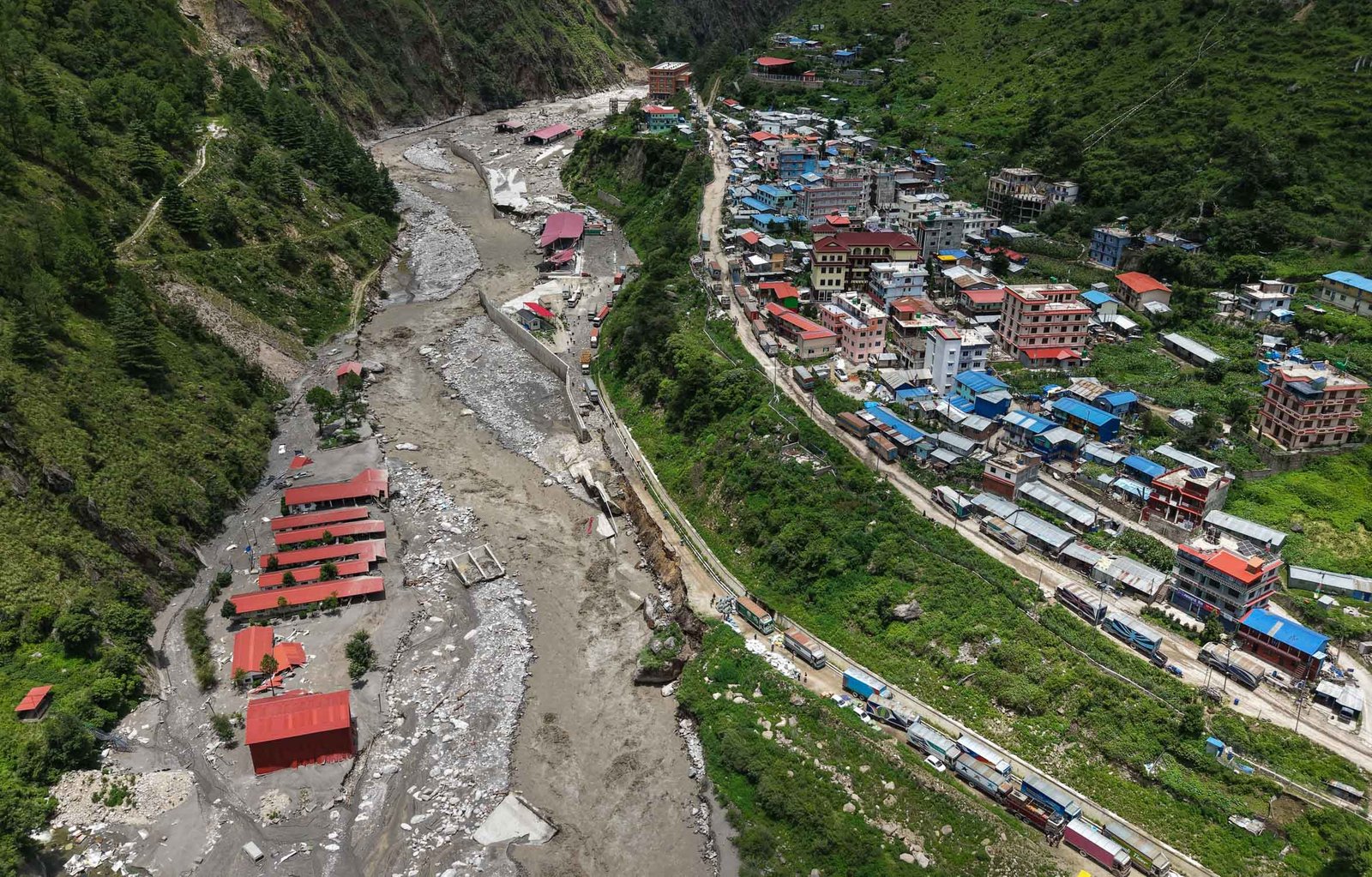
A catastrophic glacier collapse and flash flood tore through Nepal’s Rasuwa and Nuwakot districts on August 26, 2026, killing hundreds and leaving thousands more missing along the Nepal-China border. As rescue efforts continue into the weekend, this is the latest confirmed picture of the Nepal flood destruction — what caused it, the current death toll, and the ongoing danger that hasn’t yet passed.
What Caused the Flood
The disaster was triggered by a glacier collapse near Langtang Lirung in the Himalayas, close to the Nepal-China border. A roughly 2,000-foot-wide section of glacier broke away and plunged nearly 7,000 vertical feet toward the river below, carrying a similarly sized mass of surrounding rock with it. The collapse generated a tremor measuring magnitude 5.2, strong enough to be detected by seismometers as far away as the United States and Germany. The resulting flood wave — a mix of water, pulverized ice, and rock — surged down the Bhotekoshi and Trishuli river valleys, sweeping through settlements across a roughly 72-kilometer stretch.
Nepali and Chinese scientists had maintained a flash flood early warning system in the region for years, one credited with preventing casualties in past events. This time, the system was unable to detect the disaster in time to warn downstream communities.
Current Death Toll and Missing
As of the latest confirmed figures, at least 626 people have died in Nepal, with 1,924 still reported missing. In the neighboring Tibet Autonomous Region of China, an additional 7 deaths and 554 missing have been confirmed. More than 500 foreign nationals from 32 countries, including around 90 Americans, are among those unaccounted for — the region is popular with trekkers and pilgrims, which significantly widened the disaster’s international reach. Officials have cautioned that the death toll is likely to continue rising as search operations proceed.
The Danger Isn’t Over
Rescue efforts have been complicated by a second, newly forming lake spotted in satellite imagery near the original glacier collapse site. Scientists monitoring the area have described the development as deeply concerning, since an unstable body of water perched in the mountains above already-devastated communities raises the risk of further flooding. Additional rain forecast for the affected region this weekend threatens to further slow search and rescue work, which has already been hampered by destroyed roads, downed power lines, and limited access to the worst-hit areas.
Scale of Destruction
The flood completely destroyed the Gyirong Port complex on the China-Nepal border, previously a major hub for trade and tourism between the two countries. Entire settlements along the affected river stretch were swept away, and the force of the water carried the bodies of some victims as far as 240 kilometers downstream into neighboring India. Authorities have issued flood warnings for additional Nepali districts along connected river systems, including Dhading, Gorkha, and Chitwan, as monitoring continues.
The Humanitarian Response
The Nepali Army’s Trishuli barracks in Nuwakot district has become the operational center for rescue efforts, with helicopters running missions since the early hours of the morning and hundreds of family members gathering there seeking information about missing loved ones. United Nations agencies and humanitarian partners have deployed to support local authorities, with the UN Secretary-General expressing condolences over the scale of loss.
UNICEF has begun distributing emergency supplies to the hardest-hit communities, including medical tents, bed nets, newborn kits, therapeutic food for children facing acute malnutrition, and hygiene kits for thousands of affected households. Aid organizations have specifically flagged that children who survived the floods now face heightened risk of disease, malnutrition, and exploitation in the disaster’s aftermath — a concern that typically outlasts the initial rescue phase by months.
Frequently Asked Questions
What caused the Nepal flood in August 2026?
A glacier collapse near Langtang Lirung in the Himalayas triggered a massive landslide and flash flood that swept down the Bhotekoshi and Trishuli river valleys on August 26, 2026.
How many people have died in the Nepal floods?
As of the latest confirmed reports, at least 626 people have died in Nepal, with 1,924 more reported missing, alongside additional deaths and missing persons across the border in Tibet, China.
Are foreign tourists affected by the disaster?
Yes. More than 500 foreign nationals from 32 countries, including approximately 90 Americans, are among those reported missing, reflecting the area’s popularity with trekkers and pilgrims.
Is there still danger of further flooding?
Yes. Scientists have identified a second unstable lake that formed near the original glacier collapse site, and additional rainfall forecast for the region raises the risk of further flooding and could complicate ongoing rescue operations.
This is a rapidly developing disaster, and figures for the dead and missing are expected to change as search and rescue operations continue. If you or someone you know has been affected by this tragedy, reaching out to local Nepali Red Cross or UN humanitarian channels remains the most reliable way to get help or find information about missing loved ones.
