


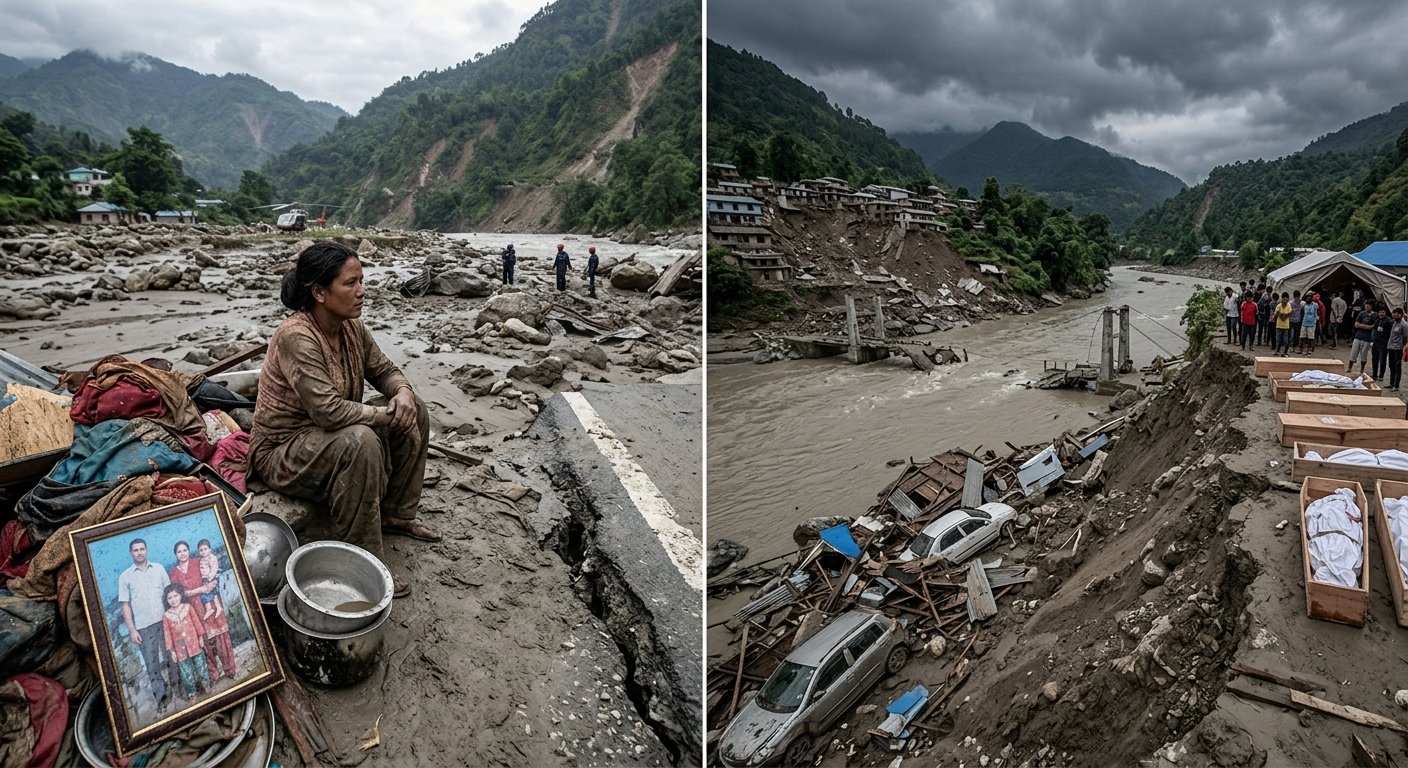
The scale of Nepal’s flood disaster just became far worse. Nearly a week after a glacier collapse triggered catastrophic flooding along the Nepal-China border, officials say the Nepal flood missing count has nearly doubled overnight, jumping from around 2,500 to 4,247 people unaccounted for — while the confirmed death toll has now surpassed 900. Search teams are racing against time, with hundreds of workers believed trapped inside flooded hydropower tunnels.
The Latest Numbers
As of Monday, Nepal’s National Disaster Risk Reduction and Management Authority confirmed at least 903 bodies recovered within the country, with 4,247 people still listed as missing — a sharp jump from the 2,498 missing reported just a day earlier. Across the border in Tibet, China’s Xinhua News Agency has confirmed 16 deaths, with 546 people still missing on that side. Combined, the disaster’s confirmed death toll now stands at 919, with close to 4,800 people unaccounted for on both sides of the border.
Officials and aid workers have cautioned that these figures are almost certain to keep rising as search teams reach areas that remained cut off in the disaster’s first week.
Why the Missing Count Jumped So Sharply
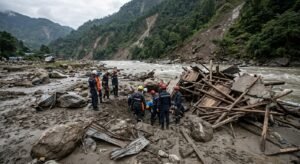
The sudden near-doubling of the missing figure is largely tied to a newly urgent search effort: hundreds of workers at hydropower construction projects along the Trishuli River are believed trapped inside flooded tunnels. Nepal’s Independent Power Producers’ Association says nearly 900 hydropower employees remain unaccounted for, with 361 workers rescued so far. Nepali authorities have now designated the tunnel search — including efforts at the Trishuli 3A and 3B hydropower projects — the nation’s “highest priority,” with rescue teams pumping air into at least one tunnel while still working to establish contact with anyone trapped inside.
Foreign Nationals Among the Missing
Of the missing in Nepal, 592 are foreign nationals, according to disaster management officials — reflecting the area’s popularity with international trekkers. The US State Department has confirmed roughly 85 Americans remain unaccounted for. Washington has significantly increased its emergency response, raising its humanitarian aid commitment to $3.6 million, up from an initial $500,000, funding intended to cover up to three months of emergency food assistance for as many as 10,000 flood-affected households.
A Rescue Effort Under Enormous Strain
Nepal’s Army says more than 2,500 people have been rescued by aerial evacuation so far, including 216 foreign nationals, with roughly 200 more rescued by ground teams. Even so, some remote communities remain extremely difficult to reach, with helicopters representing the only viable way in for rescue teams. The Nepal Red Cross estimates the disaster has affected more than 90,000 people in total. Morgues across the country are reportedly overwhelmed, and officials in Chitwan district have said more than half the bodies recovered there were unable to be identified due to the condition in which they were found.
The Danger Hasn’t Passed
Chinese authorities have flagged eight “high-risk geological disaster points” for intensive monitoring near the heavily damaged Gyirong Port, warning that continued rain and poor weather could raise water levels in a nearby barrier lake and trigger further flooding. This follows earlier warnings about a separate unstable lake that formed near the original glacier collapse site, underscoring that the immediate danger to the region is not yet fully resolved even as recovery efforts continue.
Frequently Asked Questions
How many people are missing after the Nepal floods?
As of the latest update, 4,247 people are listed as missing in Nepal, with an additional 546 missing in Tibet, China — bringing the combined total to nearly 4,800 across both countries.
What is the current death toll?
At least 903 people have been confirmed dead in Nepal and 16 in China, bringing the combined confirmed death toll to 919 as of the latest reports, with officials expecting the number to continue rising.
Why are so many hydropower workers missing?
Nearly 900 workers at hydropower construction projects along the Trishuli River, including the Trishuli 3A and 3B sites, are believed to have been trapped inside flooded tunnels when the disaster struck, and search efforts there are now considered the highest national priority.
Is the flooding risk over in the region?
No. Chinese authorities have identified multiple high-risk geological disaster points near the affected area, and continued rain could raise water levels in a nearby unstable lake, posing an ongoing risk of further flooding.
With thousands still missing and search conditions remaining extremely difficult, Nepal’s flood disaster continues to develop by the day. Figures for the dead and missing are expected to keep changing as rescue teams reach previously inaccessible areas — this remains an active, unfolding crisis rather than a resolved one.
