
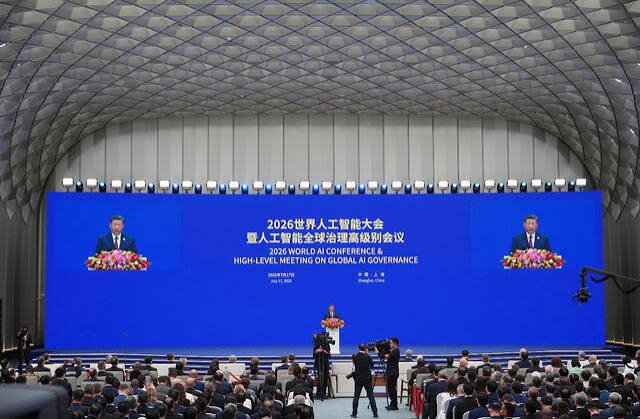
China has pushed back sharply against US allegations that Chinese AI companies are systematically extracting proprietary capabilities from American AI models, calling the claims “unfounded” just weeks before planned high-level talks between the two countries on AI governance.
What the US Alleged
The dispute began after the US Cyber Defense Agency issued an advisory saying China-based AI companies are conducting industrial-scale “knowledge distillation” — a technique where one AI model is trained using outputs from another, more advanced model — describing it as a core part of these companies’ development strategy rather than a minor supplement. The agency specifically named six Chinese firms: DeepSeek, Moonshot AI, Alibaba, MiniMax, StepFun, and Z.AI. According to the advisory, these companies extracted billions of tokens through millions of exchanges with leading US AI systems — including Claude, GPT, Gemini, and Grok — since at least late 2024, allegedly with awareness from the Chinese government.
The advisory also claimed the companies achieved cost savings for these efforts through bulk procurement of premium subscriptions to US AI services, shared across teams of developers, and that requests were routed through multiple pathways to gain unauthorized access.
China’s Response
Chinese Foreign Ministry spokesperson Mao Ning addressed the allegations at a regular press briefing, saying China’s progress in AI stems from high-level technological self-reliance and strength, rather than the practices described by US authorities. She said she had not personally reviewed the specific documents referenced in the reports, but urged Washington to act on prior understandings reached between the two countries’ presidents and to stop what she called “false allegations to smear China.”
China’s Ministry of Commerce went further, directly disputing the framing of the allegations. The ministry described model distillation as a normal technical and commercial practice used by AI developers worldwide, including US companies, and rejected the characterization of it as “stealing and copying.” It argued the technique can improve learning efficiency, make better use of existing knowledge, and help make AI technology more accessible to developing countries. The ministry also warned that China would take “resolute countermeasures” if Washington used the issue to suppress Chinese AI companies.
Why This Is Coming Up Now
The timing isn’t incidental. AI governance is expected to be a significant topic in planned talks between US President Donald Trump and Chinese leader Xi Jinping later this month, with US Treasury Secretary Scott Bessent reportedly set to lead bilateral discussions on AI governance ahead of that meeting. The dispute adds a fresh point of friction just as both sides prepare for those higher-level talks.
It’s also not the first time this specific accusation has surfaced — both Anthropic and OpenAI have separately made similar claims about Chinese AI companies extracting capabilities from their models, meaning this week’s government-level advisory formalizes concerns that had already been raised by US AI companies themselves.
The Bigger Picture: Why Distillation Is Controversial
Model distillation itself isn’t new or inherently prohibited — it’s a widely used technique across the AI industry for training smaller, cheaper models using outputs from larger ones. The dispute here isn’t over the technique’s existence, but over its scale, method, and intent. The US advisory frames the alleged activity as unauthorized and systematic access to premium services specifically to extract proprietary capabilities, while China frames comparable techniques as standard industry practice used globally, including by American firms.
Some Chinese AI models, including Moonshot’s Kimi K3, have gained traction internationally as more affordable alternatives to leading US models, even as broader US-led export restrictions continue to limit China’s access to advanced AI hardware. Analysts have noted that tighter US restrictions in this space could make cross-border AI technology sharing more difficult and potentially push the global AI industry toward further fragmentation.
Final Thoughts
With neither side backing down and formal US-China talks on AI governance approaching, this dispute looks likely to remain unresolved for now — and could become one of the more closely watched flashpoints heading into the Trump-Xi meeting later this month. Whether it’s treated as a serious diplomatic sticking point or a routine exchange of accusations may become clearer once those talks take place.
