
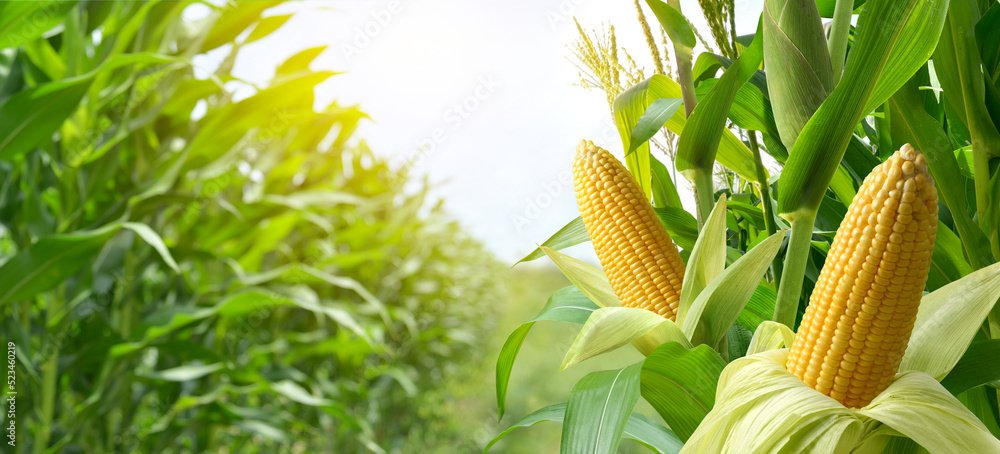
Pakistan grows a crop that should be commanding premium prices in global markets — but instead, its high-quality non-GMO corn is selling at 10 to 15% below prevailing international rates. The reason has nothing to do with the corn itself.
The Core Problem: It’s Not the Corn, It’s What Happens After Harvest
According to Muhammad Daniyal, Country Head and Head of Grains and Oilseeds at Louis Dreyfus Company (LDC) Pakistan, the discount isn’t a quality issue at all. Pakistan produces genuinely high-quality non-GMO corn — commonly known locally as “desi corn” — that should attract premium pricing internationally simply by virtue of being non-genetically modified, a trait increasingly valued in global grain markets. Instead, excess moisture and other impurities picked up after harvest are what’s dragging the price down.
The breakdown happens in three stages: inadequate drying facilities leave corn with moisture levels too high for international buyers’ standards, insufficient storage infrastructure lets quality degrade further while grain sits waiting for market access, and weak transportation and logistics networks limit how efficiently the crop can even reach export channels in the first place.
What This Actually Costs Farmers and the Country
The consequence plays out in two ways. Often, international buyers simply won’t purchase Pakistani corn at all due to these quality inconsistencies. When a buyer is willing to purchase it despite the issues, they negotiate the price down 10 to 15% below prevailing market rates to offset the risk and quality gap — a discount that comes directly out of what Pakistani farmers and exporters ultimately earn.
Daniyal was direct about the scale of the missed opportunity: if Pakistan brought its harvesting, drying, storage, and marketing systems in line with international standards, the country could earn millions of additional dollars from a crop it already produces at high quality.
Pakistan’s Corn Export Trajectory So Far
| Metric | Figure |
|---|---|
| Corn export growth (2020–2023) | From $12.6 million to a peak of $345.5 million |
| Yellow maize export value (2024) | $288.5 million |
| Largest export destination | Vietnam ($117.3 million) |
| Fastest-growing destination | Philippines |
This growth trajectory shows real underlying demand for Pakistani corn — meaning the infrastructure gap isn’t holding back a struggling sector, it’s capping the upside of one that’s already growing quickly.
A First Step Toward Fixing the Storage Gap
LDC has taken a concrete step to address part of the problem directly: the company has established its first silage storage facility near Multan, capable of storing up to 40,000 tonnes of grain — including wheat, corn, and rice — under internationally aligned storage conditions. Daniyal noted that surplus crops face significantly higher risk of loss when suitable storage isn’t available, making prompt, proper storage after harvest one of the most immediate ways to protect crop value.
Why a Company Like LDC Is Involved at All
Daniyal framed LDC’s entry into Pakistan around a specific goal: connecting the country’s surplus agricultural commodities with international markets in line with required quality standards, so that local farmers actually receive fair, competitive prices for what they grow rather than being forced into discounted deals due to preventable post-harvest issues. He pointed to Pakistan’s irrigation system as a significant underlying advantage — one that gives the country real potential to scale up agricultural production and exports, provided the surrounding infrastructure catches up.
What Would Need to Change
- Drying infrastructure — proper facilities to bring corn’s moisture content down to internationally accepted levels before storage or sale
- Storage capacity — more facilities like LDC’s Multan silage site, built to internationally aligned storage standards
- Transportation and logistics — better systems to move harvested grain from farms to processing, storage, and export points quickly and without quality loss
- Marketing and export standards alignment — ensuring the crop meets the documentation and quality benchmarks international buyers require
Final Thoughts
Pakistan’s corn story is a case of a genuine natural advantage — high-quality, non-GMO grain — being undercut by fixable infrastructure gaps rather than any real limitation in what the country can grow. With export values already climbing sharply since 2020 and new demand emerging from markets like the Philippines, closing the post-harvest infrastructure gap looks less like a long-term ambition and more like the most direct route to capturing millions of dollars in value the crop is already capable of earning.
