


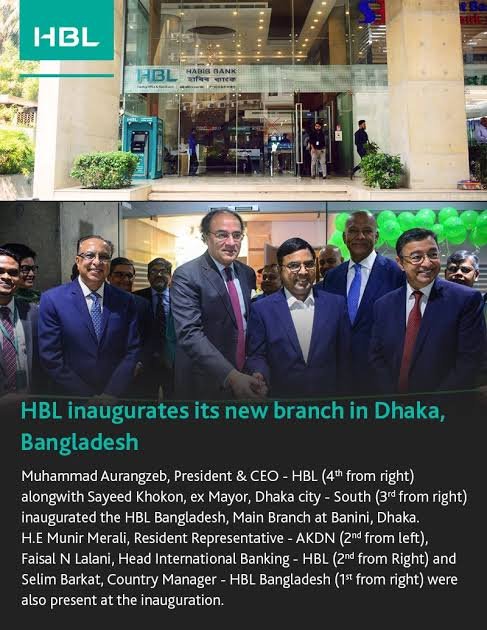
Habib Bank Limited (HBL) is marking 50 years of operations in Bangladesh in 2026, a milestone rooted in the bank’s arrival in the country back in 1976 — making it one of the longest-running foreign banking presences in the Bangladeshi market.
A Five-Decade Presence
HBL began operating in Bangladesh in 1976, just a few years after the country’s independence, and has maintained a continuous presence there ever since. Today, HBL Bangladesh operates through a small but established branch network, positioning itself within a market long dominated by domestic state-owned and private banks, as well as a handful of other foreign banking players.
HBL’s Broader International Footprint
Bangladesh is one of roughly 15 markets where HBL currently operates internationally, alongside countries including Kenya, Bahrain, the UAE, the Maldives, Sri Lanka, China, and Singapore. This regional network has become a core part of HBL’s identity as Pakistan’s largest bank by assets, allowing it to support trade, remittances, and corporate banking relationships that span South Asia, the Middle East, and beyond.
HBL’s presence in Bangladesh fits into this broader strategy of maintaining banking relationships across markets with strong trade and remittance ties to Pakistan and the wider region, rather than treating international branches as standalone outposts.
Current Leadership
HBL Bangladesh’s operations are currently led by Country Manager Alamgir Morshed, who joined the bank in July 2026. Morshed previously served as CEO of Bangladesh’s Infrastructure Development Company Limited (IDCOL), where he played a significant role in strengthening the institution’s position in renewable energy, energy efficiency, and climate finance — experience that brings a strong development-finance background to HBL’s Bangladesh leadership at the time of this milestone.
At the group level, HBL is chaired by Sultan Ali Allana, with Muhammad Nassir Salim serving as President and CEO, overseeing the bank’s operations across its full international network, including Bangladesh.
HBL at Home: Pakistan’s Largest Bank
| Metric | Figure (2025) |
|---|---|
| Total assets | Rs. 7.70 trillion (~$28 billion) |
| Branch network | 1,740+ branches |
| Employees | 20,756 |
| Parent organization | Aga Khan Fund for Economic Development (AKFED) |
Founded in Pakistan in 1941, HBL is the country’s oldest bank established after independence, and its scale at home has long supported its ability to sustain a wide international branch network, including long-standing markets like Bangladesh.
Why This Kind of Milestone Matters
A 50-year presence in a single foreign market is a notable marker of continuity for any international bank, particularly given the significant political, economic, and regulatory shifts Bangladesh has gone through since the mid-1970s. For HBL, maintaining an uninterrupted branch presence through five decades of Bangladesh’s development reflects a level of institutional continuity that few foreign banks in the region can claim.
A Note on This Article
We weren’t able to locate an official press release or event details for HBL’s specific 50th-anniversary event in Bangladesh — including the exact date, venue, or direct quotes from bank officials marking the occasion. The details above are drawn from verified, independently sourced facts about HBL’s history and current operations in Bangladesh. If you have the official press release or event coverage, we’d recommend cross-checking specific quotes and ceremony details against it before publishing.
Final Thoughts
Fifty years in Bangladesh places HBL among a small group of foreign banks with a truly long-term footprint in the country, built on the same institutional strength that has made it Pakistan’s largest bank by assets. As HBL continues expanding its regional network — from Beijing to Bangladesh — this anniversary marks one of its most enduring international relationships.
