


Roblox is loosening its grip on where games built on its platform can actually be played. At its annual Roblox Developer Conference (RDC), the company announced a wave of updates centered on AI-powered game creation and — notably — the ability for developers to release Roblox-powered games as standalone apps outside Roblox entirely.
The Headline Feature: “Build”
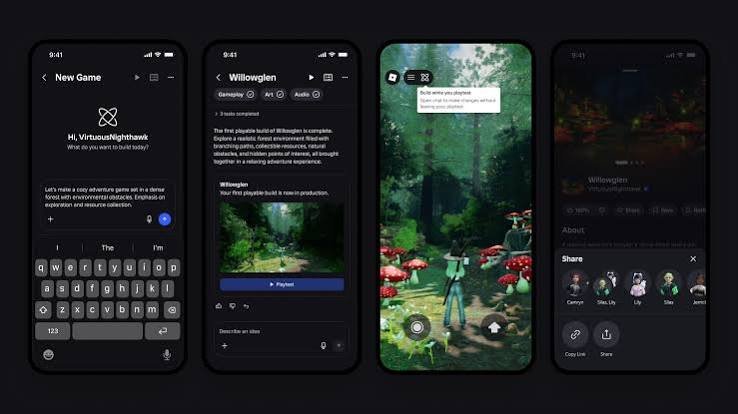
At the center of the announcements is Build, Roblox’s generative AI game-creation tool first introduced in July. Build lets users create games using plain natural-language prompts rather than manual scripting, lowering the barrier to entry for people without coding experience. It launched as a limited test in New Zealand and is now expanding to Serbia and Singapore, with Roblox adding desktop access for big-screen creation, a new asset library, and more iterative control over generated content. Later this year, Build will also gain prompt-based scene generation — a feature that will extend into Roblox Studio itself, Roblox’s core development environment.
The Bigger Shift: Games Beyond Roblox
The most significant announcement, though, is Roblox’s plan to let creators release their games as separate apps on mobile, PC, and consoles — meaning a game built inside Roblox’s ecosystem could eventually reach players who never open the Roblox app at all. The company hasn’t announced a specific release date for this capability. Alongside it, Roblox confirmed that browser-based play through a shareable link is planned to launch by the end of 2026, another step toward reducing how tightly game access is tied to the core Roblox platform.
What Else Roblox Announced at RDC
| Feature | What It Does |
|---|---|
| AI NPC playtesting | Non-player characters that can playtest a game automatically, arriving later this year |
| Offline mode | Lets players continue playing in areas with weak or no network connection |
| Persistent Friends chat tab | A chat tab that follows players across different games, with voice-typing support |
| Improved discovery algorithm | Surfaces shorter games to younger users and longer-playtime games to older users |
| Roblox Card & Roblox Wallet | New financial tools specifically for creators |
Why This Matters for Creators
For years, one of the most common frustrations among Roblox developers has been the platform’s tight coupling of creation and distribution — Roblox Studio builds games, but those games have historically only been playable inside the Roblox app itself, subject to Roblox’s platform cut and moderation policies. Letting developers ship the same underlying game as an independent app on other platforms represents a meaningful shift in that relationship, potentially giving successful Roblox creators a path to reach audiences — and revenue models — beyond what the core platform offers.
Combined with the expanding AI creation tools, the moves suggest Roblox is positioning itself less as a single closed platform and more as a broader game-development ecosystem: build inside Roblox’s tools, but don’t be limited to Roblox’s app for where that game ultimately lives.
Where This Fits in the Broader AI Game-Making Trend
Roblox isn’t alone in pushing AI-assisted, prompt-based game creation — a wider ecosystem of AI game-making tools has emerged over the past year, split roughly into two camps: prompt-to-playable web tools that keep a creator’s game on their own platform, and engine-native AI tools that generate real, editable project files a developer can export and own outright. Roblox’s Build tool currently sits closer to the first camp, but its planned expansion into standalone, cross-platform releases pushes it meaningfully toward the second — letting creators keep the speed of AI-assisted building without being permanently locked into Roblox’s ecosystem for distribution.
Final Thoughts
Between expanding AI-powered creation tools, smarter NPCs, and — most notably — a path for games to exist outside the Roblox app entirely, this year’s Developer Conference signals a genuine strategic shift for the platform. Roblox appears to be betting that giving creators more freedom over where their games live will strengthen the platform’s ecosystem overall, rather than weaken it — a bet that will become clearer once the standalone app and browser-play features actually roll out later this year.
