


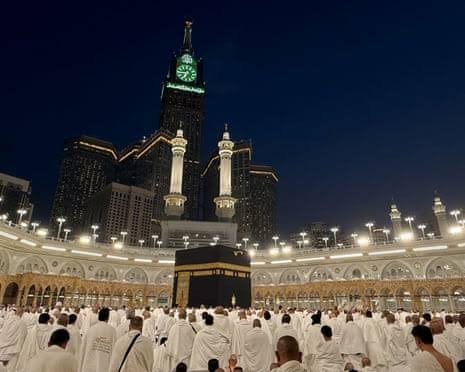
Saudi air defenses intercepted and destroyed a drone south of Makkah on Tuesday evening before it could enter the holy city’s restricted airspace — an incident the Saudi-led coalition has called a deliberate attempt to target Islam’s holiest site, while the Houthis have denied any such attack took place.
What Happened
According to a statement from coalition spokesperson Major General Turki al-Malki, the Royal Saudi Air Defence Forces intercepted the drone at around 6:50pm local time on Tuesday, south of Makkah Al-Mukarramah, before it reached the city’s prohibited airspace. The wreckage fell in an area south of the city. Al-Malki attributed the drone to Yemen’s Houthi movement, describing the incident as a hostile and terrorist act.
Saudi authorities had also issued a security alert for Makkah earlier that same day — the first such warning in the holy city since a 2017 incident — though it was withdrawn within minutes.
The Houthis’ Response
The Houthi movement rejected the Saudi-led coalition’s account, with the group denying that it had launched any drone toward Makkah. As of this reporting, the two sides’ accounts remain directly contradictory, with no independent verification publicly available confirming either version of events.
The Coalition’s “Red Line” Warning
Al-Malki said the security of the Two Holy Mosques and the pilgrims who visit them is a “red line,” and stated that the coalition’s Joint Forces Command would not hesitate to take necessary and deterrent measures against the Houthi movement in response. He described the incident as an attempt to frighten worshippers and harm civilians, calling it a deliberate effort to inflame the feelings of millions of Muslims around the world, and said it would remain a lasting mark against the group’s record.
Not the First Such Incident
The coalition described Tuesday’s incident as the second time the Houthis have attempted to target Makkah specifically. The first came in July 2017, when Saudi air defenses intercepted a ballistic missile fired toward the city, which was brought down over the Al-Wasliya area in Taif province with no reported damage or injuries.
Part of a Broader Escalation
This incident didn’t occur in isolation — it came just a day after the coalition reported that 13 civilians were injured in Saudi Arabia after Houthi missile and drone attacks struck Khamis Mushait, Abha, and Taif, damaging seven homes and two vehicles. The Houthis have also continued targeting commercial shipping vessels in regional waters, adding further strain to an already volatile security situation across the wider region. Confrontations between Yemen’s internationally recognized government forces and the Houthis have escalated sharply since early July, following a period of relative calm.
International Reaction
The incident drew attention beyond the immediate region. US Representative Joe Wilson voiced support for Saudi Arabia in response to the incident, referencing the Makkah Joint Defence Agreement between Pakistan, Saudi Arabia, and Turkiye, and calling for Pakistan and Turkiye to actively work with Saudi Arabia against the Houthis as part of that alliance’s stated purpose.
Why Makkah’s Security Carries Extra Weight
Makkah holds unique significance as Islam’s holiest city, visited by millions of Muslims annually and central to Hajj, one of Islam’s five pillars. Any threat — real or attempted — to the city carries a symbolic and emotional weight far beyond its immediate physical risk, which is precisely why the coalition’s language around this incident has been notably forceful compared to its statements on attacks targeting other Saudi cities.
Final Thoughts
With Saudi Arabia and the Houthis offering flatly contradictory accounts of what happened south of Makkah on Tuesday, the incident adds another layer of uncertainty to an already fast-moving regional conflict. Regardless of which account holds up, the coalition’s explicit “red line” language — and its direct reference to the Makkah Joint Defence Agreement drawing in international support — suggests this specific incident, whatever its true nature, is likely to factor into how the broader Saudi-Houthi confrontation develops in the days ahead.
