


India has summoned Pakistan’s top diplomat in New Delhi after a Pakistani naval vessel collided with an Indian Navy warship in the Arabian Sea — the first open military friction between the two nuclear-armed neighbors since a four-day conflict and ceasefire last year.
What India Says Happened
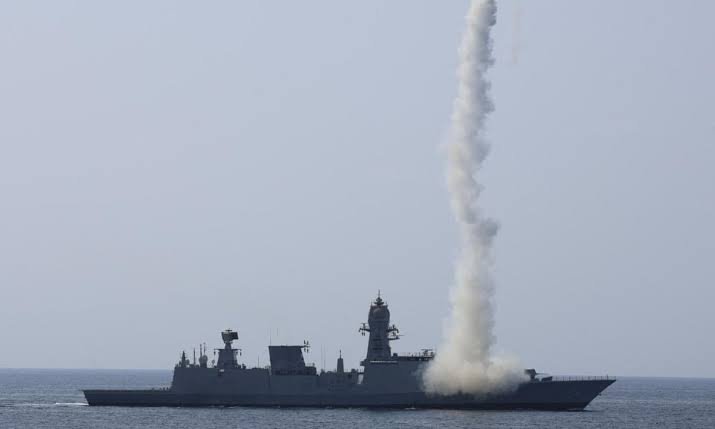
According to India’s Ministry of External Affairs (MEA) and government sources, the incident occurred on the evening of September 15 in the North Arabian Sea, in international waters. An Indian Navy warship was reportedly conducting a routine surveillance mission when a Pakistan Navy vessel approached at high speed and, according to Indian sources, maneuvered in an “unprofessional and unsafe manner,” resulting in a collision. India says no major damage was reported on either side.
It’s worth noting that as of this writing, Pakistan has not issued its own public account of the incident, so the description above reflects India’s version of events as reported through its foreign ministry and government sources — not an independently confirmed or mutually agreed sequence of events.
India’s Diplomatic Response
India’s MEA summoned Saad Ahmad Warraich, the Charge d’Affaires at the Pakistan High Commission in New Delhi, and lodged what it described as a strong protest over the conduct of Pakistani naval units. The ministry said Pakistan’s actions were in direct contravention of Article 10 of the April 1991 Agreement between India and Pakistan on Advance Notice on Military Exercises, Manoeuvres and Troop Movements — a longstanding bilateral confidence-building arrangement between the two countries’ militaries.
The Pakistani diplomat was asked to convey to authorities in Islamabad the need for all military units to exercise due care and comply with existing bilateral agreements to prevent a repeat of such incidents. India’s own Charge d’Affaires in Islamabad has separately been instructed to lodge an equivalent protest directly with Pakistan’s Ministry of Foreign Affairs.
Why This Incident Carries Extra Weight
According to Reuters, this marks the first instance of overt military tension between India and Pakistan since the two countries fought a fierce four-day military conflict last year — a confrontation that raised serious fears of wider escalation before a ceasefire was reached. Given that backdrop, even a low-damage naval incident like this one is being read as diplomatically significant, since it represents the first crack in the relative military calm both sides have maintained since the ceasefire.
India and Pakistan have not maintained ambassadors in each other’s capitals since 2019, when diplomatic relations were downgraded amid the two countries’ dispute over Kashmir — both missions have instead been headed by a Charge d’Affaires ever since, which is the level at which this protest was formally lodged.
The Broader Context: Both Navies Are Currently Active in the Region
This incident comes at a time when both countries’ navies have expanded operations in the wider Arabian Sea and Indian Ocean region, largely in response to the ongoing regional instability tied to the Iran conflict and Strait of Hormuz tensions. Pakistan’s Navy has been running Operation Muhafiz-ul-Bahr since March 2026, aimed at protecting the country’s sea lines of communication and ensuring uninterrupted energy supply routes. India, separately, has been running its own Operation Urja Suraksha since March 2026, escorting Indian-flagged and India-bound vessels for similar energy-security reasons. With both navies operating more actively and in closer proximity than usual, the underlying conditions for this kind of encounter have arguably been building for months.
Final Thoughts
With no major damage reported and both sides’ foreign ministries now formally engaged through diplomatic channels, this incident looks contained for now — but its significance lies less in the collision itself and more in the timing. Coming as the first overt military friction since last year’s ceasefire, and set against a backdrop of both navies operating more actively across the same waters, how India and Pakistan handle the diplomatic follow-up here will be closely watched as an early signal of whether the post-ceasefire calm can hold.
