


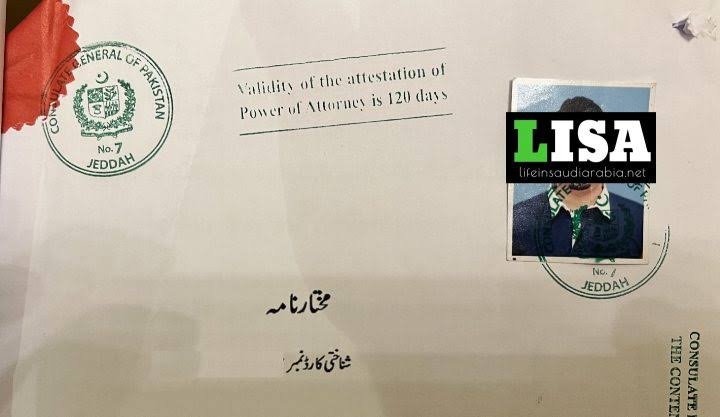
Need someone in Pakistan to sell property, handle court cases, or manage your affairs while you live overseas? You will need a power of attorney from abroad that Pakistani offices accept. A normal signed paper is not enough. It must be attested by the Pakistani embassy or consulate, then re-attested by the Ministry of Foreign Affairs (MOFA). This guide explains both the online and in-person routes.
What Is a Power of Attorney?
A power of attorney (POA) is a legal document that lets another person act on your behalf. You are the executant, and the person you choose is the attorney. A general power of attorney covers many matters. A special power of attorney covers only a named task, such as selling one plot.
Because a POA gives real legal power, keep the wording clear and specific. If the matter involves property or money, consider asking a lawyer to draft it.
How Does a Power of Attorney From Abroad Work in Pakistan?
MOFA’s official procedure says a POA made abroad must be attested by the Pakistani embassy or consulate in that country. After the mission confirms that the document is genuine, MOFA attests it in Pakistan. For this last step, the attorney must appear in person with his or her original CNIC.
In short, the chain has three parts:
- The executant signs the POA abroad and gets it attested by the Pakistani mission.
- The attested original reaches the attorney in Pakistan.
- The attorney gets it re-attested at MOFA before using it.
Option 1: Online Power of Attorney Through NADRA
NADRA and MOFA have built a digital system so overseas Pakistanis can get a POA without visiting the mission. The portal is poa.nadra.gov.pk. The process works like this:
- Create an account on the NADRA POA portal.
- Enter the details of the executant, the attorney, and two witnesses.
- Upload a scanned copy of your POA and any supporting documents.
- Give biometrics for the applicant and the witnesses, as the system requires.
- Pay the fee by credit or debit card after NADRA verifies the details.
- Join the online interview with the Pakistani mission.
- Receive the receipt, then print it and send it with the original POA to your attorney.
You must be an overseas Pakistani to use this system. You also need valid identity documents for yourself, the attorney, and the witnesses. In addition, availability can differ by country, so check your mission’s website.
Option 2: In-Person Attestation at the Embassy or Consulate
You can still visit the mission in person. Several missions run the manual and online systems in parallel. Usually, you must bring:
- The original POA, already drafted.
- Your passport and identity card.
- Identity documents of the attorney and the witnesses.
- The attestation fee, paid by card or the method your mission accepts.
Many consulates work by appointment only. Therefore, book a slot first.
Online vs In-Person: Quick Comparison
| Feature | Online (NADRA Portal) | In Person |
|---|---|---|
| Visit to the mission | Not needed, but an online interview is held | Required |
| Biometrics | Applicant and two witnesses | Depends on the mission |
| Payment | Online by card | At the mission |
| Best for | Those far from a mission | Those who live near one |
Attestation Fees
Fees differ by country and by mission. For example, the Consulate General in Toronto lists C$35 for an online POA and C$50 for an in-person POA of up to three pages, with a charge for each extra page. Check your own mission’s fee table before you pay.
Step 3: Re-Attestation by MOFA in Pakistan
After the attested POA reaches Pakistan, the attorney takes it to MOFA in Islamabad or to a liaison office in Lahore, Karachi, Peshawar, Quetta, or Gujrat. The attorney must bring the original CNIC. MOFA checks with the mission that the attestation is genuine, and then adds its own attestation.
MOFA launched a digital attestation system in October 2026 for general and apostille attestation. For a POA, MOFA’s published rule still requires the attorney to appear in person. Ask MOFA whether any part of the process can be done online.
How Long Is the Power of Attorney Valid?
This point surprises many people. MOFA states that a POA is valid for 120 days from the date of the mission’s attestation and the ministry’s re-attestation. Therefore, plan the timing carefully. Send the document quickly, and use it before it expires.
Common Mistakes to Avoid
- Using a vague POA that does not name the exact powers.
- Misspelling names or getting CNIC numbers wrong.
- Waiting too long to send the document, which can run into the 120-day limit.
- Sending only a scan, when the office needs the original.
- Paying agents who promise shortcuts.
Frequently Asked Questions
Can I make a power of attorney online from abroad?
Yes. NADRA and MOFA offer an online system at poa.nadra.gov.pk for overseas Pakistanis, subject to availability in your country.
Does my attorney need to visit MOFA?
Yes. MOFA says the attorney must appear in person with the original CNIC for attestation in Pakistan.
How long is the power of attorney valid?
It is valid for 120 days from the date of attestation by the mission and re-attestation by MOFA.
Can a local notary and apostille replace embassy attestation?
MOFA’s own procedure asks for attestation by the Pakistani mission. Some lawyers mention a notary and apostille route, so confirm with the office where you will use the document.
What is the difference between a general and special power of attorney?
A general POA covers many matters. A special POA covers only the task it names.
Conclusion
A power of attorney from abroad needs mission attestation and MOFA re-attestation before Pakistani offices accept it. You can apply online through NADRA’s portal or visit your embassy or consulate. Keep the 120-day validity in mind, and ask your attorney to complete the MOFA step quickly. Rules and fees can change, so verify them with your mission. For more guides on public services, keep reading Pakistan Post. You can also check the official MOFA attestation page for the latest rules.
