


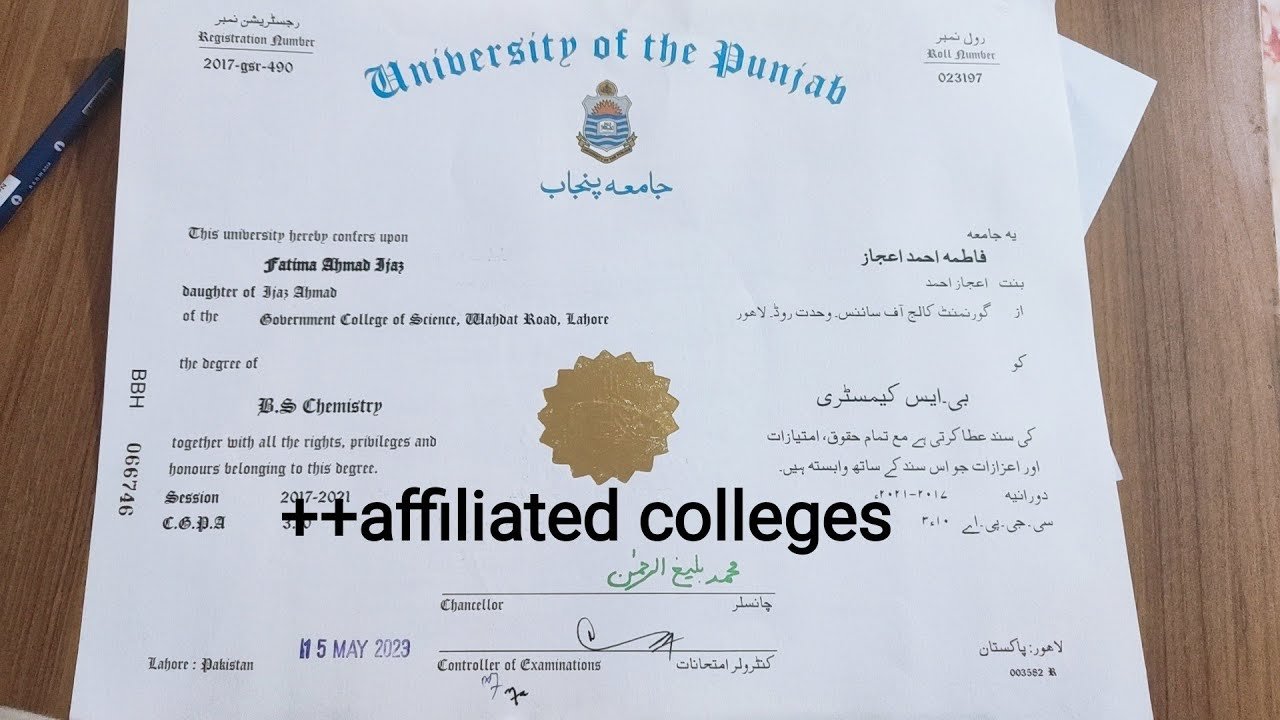
Planning to study, work, or settle abroad? Your Pakistani degree needs HEC attestation before any foreign embassy, employer, or university will accept it. The good news: since May 2026, this entire process has gone fully online. Here’s exactly how to apply for HEC degree attestation from home, with no office visits and no original documents to submit.
What Is HEC Degree Attestation?
HEC degree attestation is the official process through which Pakistan’s Higher Education Commission verifies that your degree is genuine and that the university that awarded it is recognized. In practical terms, HEC puts its official stamp of authenticity on your degree, making it acceptable to foreign governments, embassies, employers, and universities. Without this attestation, your degree carries little to no value outside Pakistan — embassies and foreign institutions generally won’t accept it.
It’s worth noting the difference between attestation and equivalence: attestation confirms a degree earned in Pakistan is genuine. Equivalence, a separate service, is only needed if your original qualification was earned outside Pakistan and needs to be assessed against Pakistan’s education system. If someone asks for your “HEC-attested” degree, they almost always mean attestation, not equivalence.
What Changed on May 11, 2026
HEC launched a fully online, paperless Degree Attestation System (DAS) on May 11, 2026, replacing the older counter-based, courier-dependent process entirely. Applicants no longer need to visit HEC offices or submit original hard-copy documents, and applications can now be submitted 24 hours a day. Instead of a physical stamp, HEC now issues a blockchain-secured e-Attestation Certificate. If your degree was already attested under the old system before this date, that stamp remains fully valid — you don’t need to reapply, and it can still be verified through HEC’s official verification page.
How to Apply: Step-by-Step
Official portal: https://www.eservices.hec.gov.pk
- Visit the official HEC e-Services portal linked above.
- If you’re a new user, click “Sign Up” and register using your CNIC, POC, or passport number. Existing users can simply sign in.
- Complete your Personal Information, Address, and Education Details. Make sure your name, father’s name, and date of birth match your CNIC exactly — mismatches are one of the most common reasons applications get delayed.
- From the menu, select “Degree Attestation.”
- Read the instructions carefully, tick the confirmation checkbox, and click “Proceed.”
- Confirm your personal details, country, city, district, and postal code.
- Select your university, campus, and the specific documents you need attested (degree, transcript, provisional certificate, etc.).
- Upload clear, readable scanned copies of the required documents.
- Pay the attestation fee online — currently Rs. 3,000 per document.
- Submit your application and note your application ID for tracking.
What Happens After You Submit
Once submitted, your application enters a step called UFP verification. HEC forwards your academic record and degree details to the University Focal Person (UFP) — a designated representative at your university — who verifies your educational record against the university’s own database and confirms the degree and transcript are genuine. This stage is currently the most common source of delays, since each university has its own internal process; some respond quickly, while others require additional departmental approval or manual record checks. After successful verification, HEC’s attestation team reviews each document, a process that typically takes 8 to 10 working days, before approving it for download as your e-Attestation Certificate.
Fees and Timeline
| Item | Detail |
|---|---|
| Fee | Rs. 3,000 per document (applies to degrees, transcripts, provisional certificates, and equivalence letters) |
| Processing time | Typically 8–10 working days after successful UFP verification |
| Application availability | 24/7 through the online portal |
| Office visit required? | No — fully online and paperless |
Common Mistakes That Slow Down Applications
- CNIC name mismatch: Your name, father’s name, or date of birth doesn’t exactly match your CNIC records.
- Selecting the wrong university or campus: Especially easy to get wrong for universities with multiple campuses under the same name.
- Unreadable scans: Blurry or low-resolution document uploads can cause rejection or delay.
- Missing supporting documents: Double-check the required document list for your specific degree level before submitting.
- Rushing the final submission: Take a few extra minutes to review everything before clicking submit — corrections after submission mean delays and possible resubmission.
Verifying an Attested Degree
HEC provides an official online verification page where anyone — an employer, foreign institution, or you yourself — can confirm whether a degree has genuinely been attested. This works for both new e-Attestation Certificates and degrees attested under the old system before May 2026, since all previously issued attestations remain checkable through the same portal at hec.gov.pk/site/verification.
Getting Help
If you run into issues during registration or application — such as not receiving a verification code by SMS or email — HEC recommends waiting 5 to 7 minutes and checking your spam folder before trying again. If the issue persists, register a complaint directly through HEC’s official support ticket system at onlinehelp.hec.gov.pk.
Frequently Asked Questions
Do I need to visit an HEC office to get my degree attested?
No. Since May 11, 2026, the entire process is online and paperless — you apply, upload documents, pay, and download your certificate without visiting any HEC office.
How much does HEC degree attestation cost?
Rs. 3,000 per document, covering degrees, transcripts, provisional certificates, and equivalence letters.
How long does the process take?
Typically 8 to 10 working days after your university’s UFP verification is complete, though delays can occur depending on how quickly your specific university responds.
Is my old, pre-2026 attested degree still valid?
Yes. Attestations completed before May 11, 2026, remain fully valid and don’t need to be redone — they can still be verified through HEC’s official verification page.
With the new online system, HEC degree attestation is genuinely faster and more convenient than the old process — just double-check every detail before submitting, since accuracy at the start saves real time later.
