


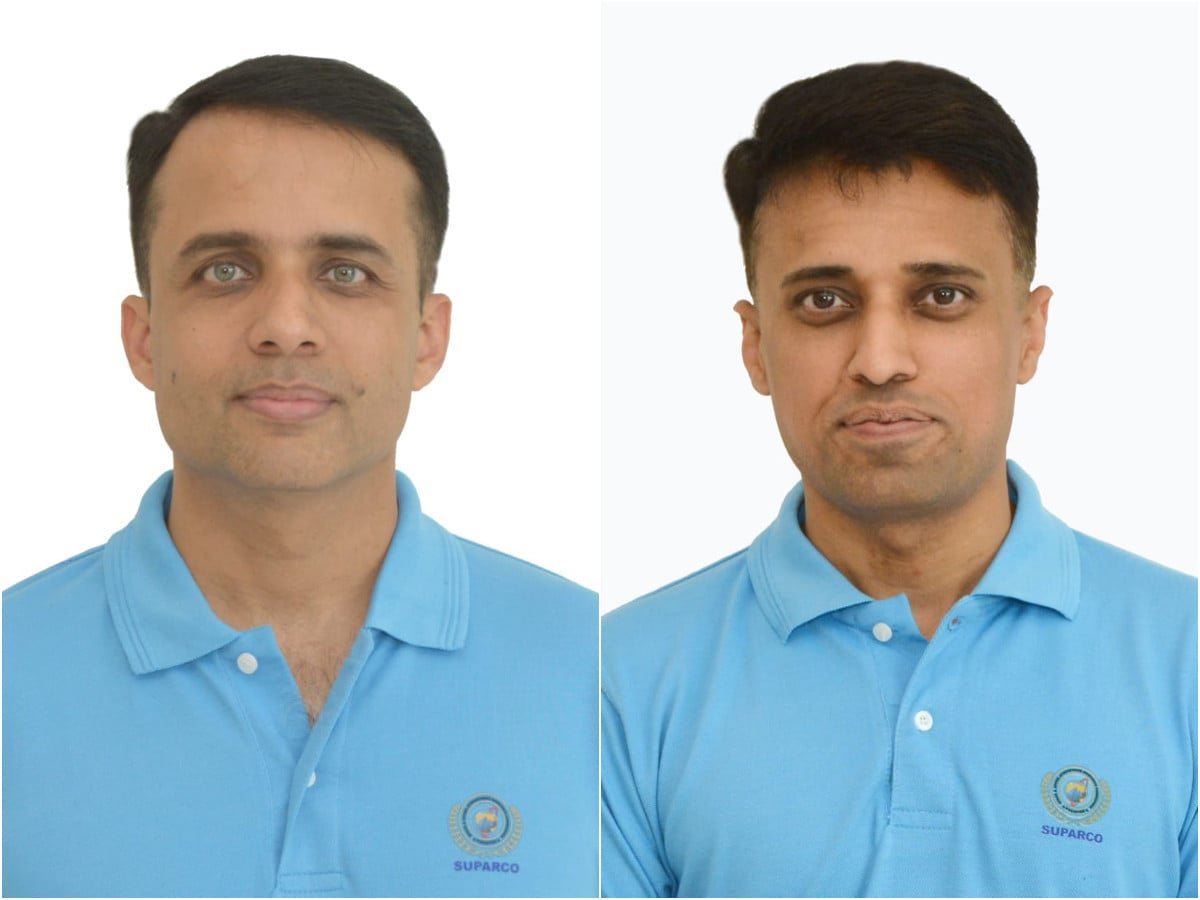
The first Pakistani astronaut is set to fly to China’s Tiangong space station on the Shenzhou-24 mission. SUPARCO, Pakistan’s space agency, confirmed the plan on Wednesday, November 18. The astronaut will fly as a payload specialist and become the first foreign national to visit Tiangong.
This article explains who the candidates are, when officials expect the launch and what the mission will do. It also covers the experiments on board and what officials have not yet confirmed. We checked the details against reports from The Express Tribune, Space.com and Reuters on November 19, 2026.
First Pakistani Astronaut: What SUPARCO Announced
According to The Express Tribune, a SUPARCO spokesperson said the astronaut will serve as a payload specialist. It will be Pakistan’s first participation in a crewed mission to China’s space station. SUPARCO also called it the first time a Pakistani national will travel to space under the country’s space programme.
China’s human spaceflight agency (CMSA) had already confirmed the plan in a statement on November 7, Space.com reports. It said Shenzhou-24 will carry one of the two Pakistani candidates. The agency also released a mission patch.
The patch features jasmine, Pakistan’s national flower. A SUPARCO spokesperson said the flower symbolises friendship and strategic partnership between Pakistan and China.
China’s Foreign Ministry commented as well. Spokesperson Guo Jiakun called the two countries “all-weather strategic cooperative partners” on November 9. He added that it will be the first joint mission of Chinese and foreign astronauts in China’s manned programme.
Shenzhou-24 Mission at a Glance
- Spacecraft and rocket: Shenzhou-24, launched on a Long March 2F rocket.
- Launch site: Jiuquan Satellite Launch Centre in the Gobi Desert.
- Pakistani role: Payload specialist, responsible for four experiments.
- Time in orbit: About one week for the Pakistani astronaut, according to Reuters and Space.com.
- Chinese crew: Two Chinese astronauts will start a six-month stay on Tiangong.
- Return: The Pakistani astronaut will come home aboard the departing Shenzhou-23 spacecraft.
- Launch date: Not officially confirmed. Planning Minister Ahsan Iqbal said November 25.
China normally rotates three astronauts at a time. This time, one Shenzhou-23 astronaut will stay aboard for China’s first year-long stay in orbit, Space.com reports. The Pakistani astronaut will take that seat for the ride home.
Who Could Be the First Pakistani Astronaut?
Two candidates have trained in China: Muhammad Zeeshan Ali and Khurram Daud. Some reports spell the second name Khurram Dawood. Space.com says both men are pilots from Pakistan’s military forces.
China has not said which of them will fly. The other candidate will serve as a backup, according to Space.com. China usually reveals crew names at a press conference a day before launch.
Reuters reported that the pair beat about 20 finalists from a pool of pilots and scientists. SUPARCO officials said screening covered medical fitness, psychological resilience and tolerance for high g-forces. As a result, candidates with high-speed flying backgrounds won out.
Both candidates also studied Chinese at the Confucius Institute in Islamabad. An official from Beijing Language and Culture University shared this with China News Service, as The Express Tribune notes.
First Pakistani Astronaut Launch Date and Mission Plan
On October 18, Planning Minister Ahsan Iqbal named November 25 as the launch date, The Express Tribune reports. However, CMSA has not confirmed a date. Its latest statement, as cited by APP, says the spacecraft will launch at an appropriate time.
CMSA said the spacecraft and rocket are in good condition and launch-site equipment is running normally. The combined spacecraft and rocket stands nearly 60 metres tall. It moved about 1.5 kilometres to the launch area in a vertical transfer lasting around 90 minutes.
Engineers have also prepared for cold weather at Jiuquan. APP reported nearly 20 voltage stabilisation devices on the launch tower. In addition, crews replaced propellant pumps that had served for more than two decades.
A backup rescue system is on standby too. Chinese space expert Yang Yuguang said a spare Long March-2F rocket and a Shenzhou-25 spacecraft stand ready for emergencies.
The first Pakistani astronaut will not return to Pakistan before launch. SUPARCO’s Amer Gilani told Reuters the astronaut will fly directly from training in China. He will then return home after a recovery period.
What Is the Tiangong Space Station?
Tiangong has three modules: Tianhe, Wentian and Mengtian. Together they weigh about 77 metric tons, SUPARCO’s Amer Gilani told Reuters. The station has roughly 14 experiment racks. They cover life sciences, materials, fluid physics, combustion and radiation exposure.
Some experiments sit outside the station and face space directly. This applies to certain materials and biotechnology payloads. Therefore, the first Pakistani astronaut will join a busy research platform, even for a short stay.
Experiments the Pakistani Astronaut Will Run
As payload specialist, the astronaut will run Pakistan’s experiments instead of piloting the spacecraft. SUPARCO’s Uzair Ansari explained this to Reuters.
SUPARCO collected more than 300 proposals from universities in Karachi, Lahore and Islamabad during a year-long campaign. Chinese institutes then picked four for this flight. The experiments are in biotechnology, and they aim to help tackle food insecurity and climate change.
SUPARCO built and tested each experiment in its own labs. Chinese engineers then signed it off. Ansari called this a rare case of an international platform validating Pakistani technology.
The payload is modest next to Tiangong’s wider science programme. Ansari said the station has hosted more than 180 experiments and produced over 500 research papers and 150 patents.
How the Astronaut Candidates Trained in China
Pakistan and China signed the astronaut agreement in Islamabad on February 28, 2025. Under it, two Pakistani astronauts trained at the Astronaut Center of China, SUPARCO says. Gilani told Reuters that the two countries first conceived the mission in 2019.
Training covered intensive Chinese-language lessons and spacecraft systems. The candidates also learned to handle microgravity and the g-forces of liftoff. Reuters described centrifuge drills and lessons on eating, sleeping and repairing equipment while weightless.
The Express Tribune reports that both candidates have now completed their training. Prime Minister Shehbaz Sharif met the selected astronauts in April and called the mission a historic milestone.
Why the Mission Matters for Pakistan and China
SUPARCO says the flight opens a new chapter in Pakistan’s space journey. Officials also describe it as growing cooperation between Islamabad and Beijing in the peaceful use of outer space.
Reuters notes that the flight sits within broader cooperation. That includes Chinese-launched Pakistani satellites, a joint satellite-navigation system and a Pakistani-built rover for China’s Chang’e-8 lunar mission. Space.com adds that China has also launched a Pakistani lunar cubesat. The first Pakistani astronaut flight adds a crewed mission to that list.
Reuters also points to Pakistan’s reliance on Beijing. The astronaut will fly a Chinese spacecraft from a Chinese site. Chinese instructors trained the candidates, and the stay will last about a week. Pakistan has no independent launch vehicle or crewed spacecraft. Only Russia, the United States and China have launched their own crewed spacecraft. Since Yuri Gagarin’s 1961 flight, citizens of about 50 countries have flown in space, Reuters says.
Looking ahead, Gilani told Reuters there is no official commitment or discussion on a Pakistani astronaut flying to the moon. He said the next steps depend on how the “maiden mission” turns out.
What to Watch Next After the First Pakistani Astronaut Announcement
Several confirmations are still pending. First, watch for CMSA to confirm the launch date. Next, expect a press conference about a day before launch, where China usually reveals the crew. That will show which candidate flies.
After liftoff from Jiuquan, the spacecraft will head for Tiangong. Universe Today reports that the crew will meet the Tianhe core module. Then the Pakistani astronaut will start the four experiments during the week-long stay.
Finally, the return flight will bring the astronaut home aboard Shenzhou-23. Two Chinese astronauts who are finishing their six-month stay will travel with him.
First Pakistani Astronaut: Quick Answers
Who will be the first Pakistani astronaut?
China has not named the flyer yet. The candidates are Muhammad Zeeshan Ali and Khurram Daud. China usually announces the crew a day before launch.
When will the first Pakistani astronaut launch?
Pakistan’s planning minister said November 25. CMSA has not confirmed a date, so check official updates before you share it.
How long will the Pakistani astronaut stay in space?
The stay will last about one week, according to Reuters and Space.com.
What experiments will the astronaut run?
The astronaut will run four biotechnology experiments. Chinese institutes chose them from more than 300 Pakistani proposals. They target food insecurity and climate change.
Is this Pakistan’s first astronaut mission?
Yes. SUPARCO says it is the first time a Pakistani national will travel to space under the country’s space programme.
Is this the first foreign visit to Tiangong?
Yes. Space.com and SUPARCO describe the Pakistani astronaut as the first foreign visitor to the station.
Sources and Further Reading
- The Express Tribune: Pakistan set to send first astronaut to Tiangong through Shenzhou-24
- Space.com: Pakistani astronaut set to become first international visitor to Tiangong
- Reuters via The Express Tribune: Pakistan nears historic first astronaut mission
- SUPARCO: Astronaut Program
- Dunya News: Pakistan’s first astronaut set to join Shenzhou-24
This is a developing story, and we will update it once CMSA confirms the launch date and crew. For more news from across Pakistan, visit Pakistan Post.
