


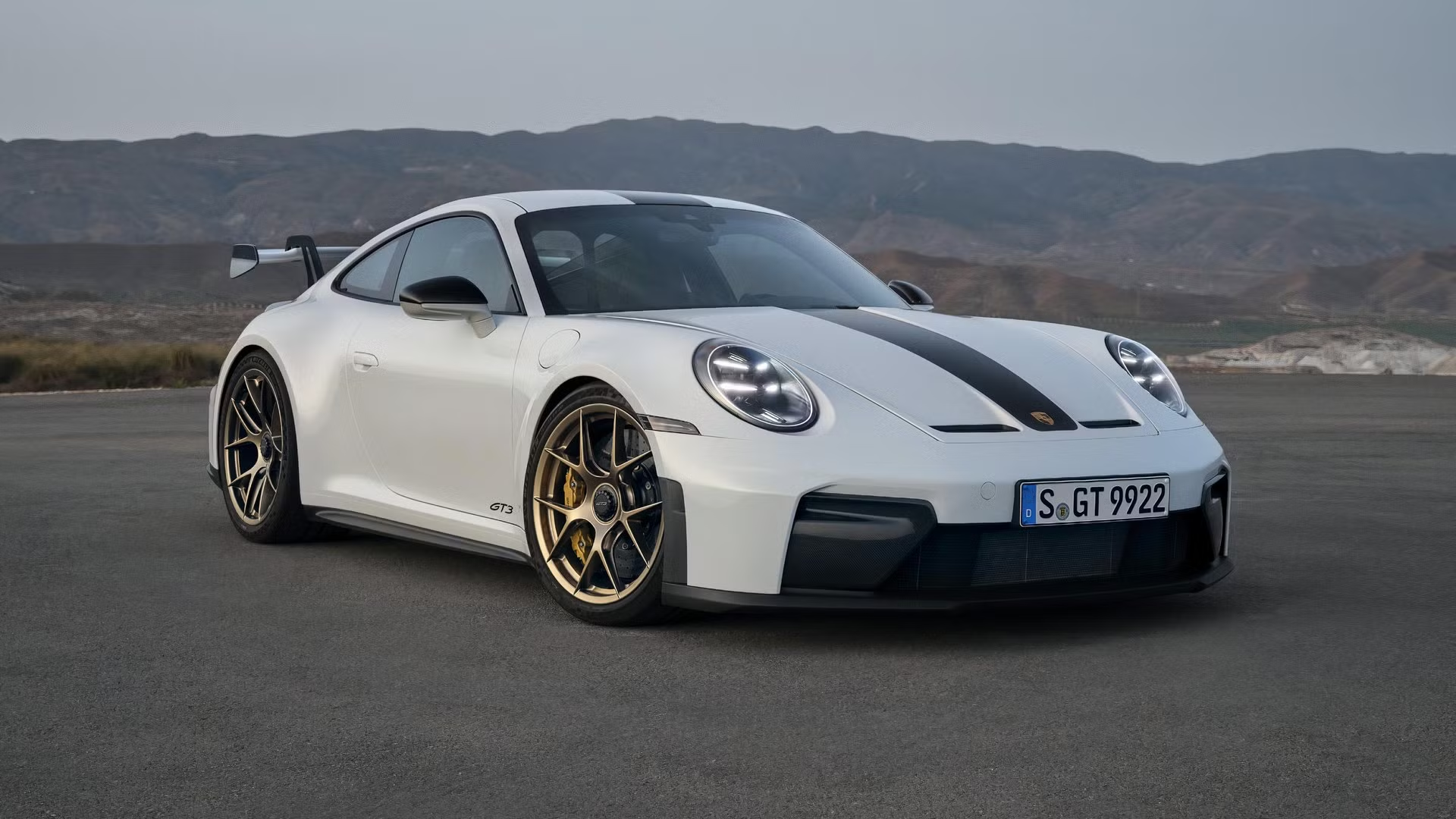
Porsche used to be Volkswagen’s biggest money-maker. Now it has become one of the company’s biggest problems. In the latest Porsche Volkswagen crisis update, Volkswagen just took a massive €6 billion financial hit tied directly to Porsche — and the story of how this happened says a lot about bigger troubles facing Germany’s car industry. Here it is, explained simply.
What Actually Happened
On Friday, Volkswagen issued a new profit warning. It said it is taking a €6 billion (about $6.9 billion) writedown, which is an accounting term for admitting that something you own is now worth much less than you previously thought. This writedown is tied to Volkswagen’s 75% ownership stake in Porsche. This news came just weeks after Volkswagen had already agreed to heavy job cuts, as part of the biggest company restructuring in its 89-year history.
How Big a Fall Is This, Really?
To understand how serious this is, it helps to look at the numbers over time. This €6 billion writedown lowers what’s called Volkswagen’s “goodwill” on Porsche — basically, a measure of how valuable the Porsche brand is seen to be — by more than one-third compared to last year. Goodwill on Porsche now sits at about €10 billion. Back in 2022, the year Porsche was first listed on the stock market in one of Europe’s biggest public offerings, that same goodwill figure stood at €18.8 billion. In other words, more than half of Porsche’s original brand value, as measured this way, has disappeared in just a few years.
This isn’t even the first big writedown either — Volkswagen also took a €2.7 billion impairment on Porsche just one year earlier.
Why Did This Happen? Two Big Reasons
According to the reporting, Porsche’s struggles come down mainly to two connected problems:
- Losing ground in China: Porsche used to be extremely successful selling luxury cars in China. But local Chinese car brands have grown stronger and taken away much of that business, “dethroning” Porsche in what used to be one of its most profitable markets.
- A costly shift to electric cars: Porsche made a big bet on electric vehicles (EVs), but that strategy has caused expensive problems, forcing the company to reverse parts of its approach at a very high cost.
Auto industry analyst Ferdinand Dudenhoeffer put it bluntly: “The days of (Porsche) being a profit driver are over.”
Porsche’s Business Model Is Under Real Pressure
Porsche has always followed a “value over volume” strategy — meaning it tries to sell fewer cars but at higher prices and profit margins, rather than chasing big sales numbers. But Dudenhoeffer warned this approach only really works “when people still want to overpay” for the brand. With demand weakening, Porsche’s profit margins have fallen below the average for the wider Volkswagen group — and have even been overtaken by Volkswagen’s own budget brand, Skoda.
One independent analyst, Matthias Schmidt, summed it up with a striking line: “The Czech brand has effectively become the new Porsche of the group” — meaning Skoda, a much cheaper brand, is now performing better financially than Porsche itself.
A Bigger Problem Than Just Porsche
This isn’t only about one brand struggling. On the same Monday this news broke, thousands of workers were protesting against job cuts at car plants across Germany. Analysts say the crisis reflects a much wider squeeze on Germany’s entire car industry, caught between two big pressures: tougher competition from Chinese car manufacturers, and new tariffs imposed by the United States.
Stefan Bratzel of the German auto research group CAM said plainly: “The pressure could not be bigger right now. Cutting costs alone will not help Volkswagen get out of its crisis.”
Investors Are Worried Too
Big Volkswagen investors have also expressed concern. Ingo Speich, from top-10 Volkswagen investor Deka, called this new writedown “a very negative signal,” especially coming so soon after the company’s big restructuring announcement. He said, “The situation remains very fragile, and visibility is very limited. It remains to be seen whether the announced restructuring measures will even be sufficient.” Analysts at Jefferies were even more critical, saying the repeated writedowns point to a lack of oversight at Volkswagen, describing them as “endless clean-up surprises.”
What Porsche’s Own CEO Says
Despite all this bad news, Porsche’s CEO, Michael Leiters, is standing firm on the company’s longer-term goals. In an internal memo seen by Reuters, he said the company still stands by its medium-term target of achieving profit margins between 10% and 15%.
Frequently Asked Questions
Why did Volkswagen take a €6 billion writedown?
It’s tied to Volkswagen’s 75% ownership stake in Porsche, reflecting weaker financial expectations for the brand after struggles in China and costly missteps in its shift toward electric vehicles.
Why is Porsche struggling in China?
Local Chinese car brands have grown much stronger and have taken significant market share away from Porsche, which was previously very successful there.
Is this only a Porsche problem?
No. Analysts say it reflects a broader crisis across Germany’s car industry, driven by competition from Chinese manufacturers and new US tariffs, with worker protests happening at multiple German car plants at the same time.
What is Porsche’s plan going forward?
Porsche CEO Michael Leiters says the company still stands by its medium-term target of 10% to 15% profit margins, despite the current financial pressure.
Porsche’s fall from Volkswagen’s most reliable profit source to one of its biggest financial headaches shows just how quickly fortunes can change in the global auto industry — and with German carmakers facing pressure on multiple fronts at once, this story is likely far from finished.
