


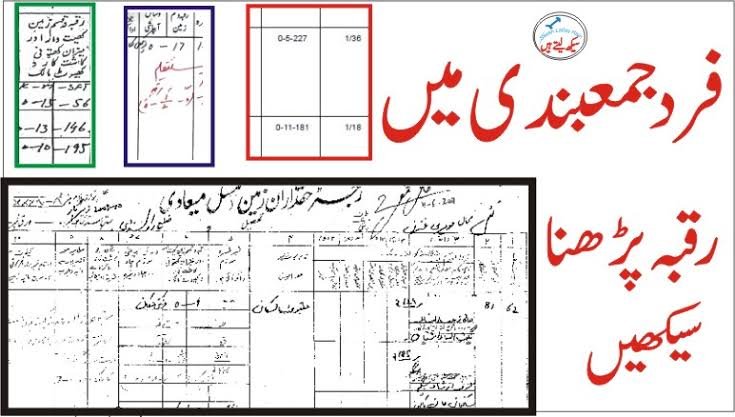
A fard is a land record that shows who owns a piece of land and where it is. In Punjab, you can get one online for your own records or from an Arazi Record Centre (ARC). To read it, you need to know a few terms such as khewat, khatuni, khasra and intiqal. This guide explains those terms in simple words. I could not find an official field-by-field guide to a fard, so the layout can differ and you should ask the ARC if a field is unclear.
What Is a Fard?
Zameen’s glossary describes a fard as a document that proves a property’s ownership. It is needed to register a property, and it lists the location, size and property type. Another Zameen guide on the Punjab Land Records Authority (PLRA) says a fard shows ownership of land and identifies the land and the rights holder.
Key Terms You Will See
| Term | What it means |
|---|---|
| Mauza (moza) | The revenue estate, a specific piece of land within an area. You choose it with the district and tehsil when you request a fard online. |
| Khewat number | A number given to land that is made up of one or more khatunis. It can change after a new jamabandi. |
| Khatuni | A subdivision of a khewat, recorded by the Revenue Department. It contains several khasras. |
| Khasra | A numbered subdivision of land. Each khasra falls under a specific khatuni. |
| Jamabandi | The updating of land records, usually about every four years. |
| Intiqal (inteqal) | The transfer of property from one owner to another, based on the registry. |
| Registry | A document issued by the Revenue Department proving ownership. |
| Patwari | The government employee who keeps land ownership records. |
These definitions are from Zameen’s glossary, dated 2 December 2019. Zameen notes the Supreme Court has since restricted the patwari’s role in urban land transfers.
Land Units on a Fard
- Kanal: 20 marla, 4,500 square feet or 500 square yards.
- Marla: About 225 to 272 square feet, and the size varies by region.
- Sarsahi: About 25 square feet. One marla equals nine sarsahis.
- Bigha: Four kanal, or half an acre. It is mainly used in Punjab and is becoming obsolete.
Because a marla differs by region, check how the area is measured before you compare plot sizes.
Things to Check When You Read a Fard
These are common-sense checks. They are not from an official PLRA guide, so ask the Arazi Record Centre what each entry means on your fard.
- Owner’s name: Does it match the seller’s CNIC? Check the father’s or husband’s name as well.
- Location: Do the district, tehsil and mauza match the property you are buying?
- Khasra and khewat numbers: Do they match the numbers in the seller’s documents?
- Area: Does the size in kanal and marla match what the seller says?
- Transfer history: Is the seller’s name the latest in the record, after the last intiqal?
A fard alone does not prove that a property is free of disputes. Ask a lawyer to check the whole chain of ownership before you pay.
How to Get a Fard in Punjab
Zameen’s PLRA guide (3 August 2022) says:
- Online: This is only for your own records. Choose “Get your online fard” on the PLRA site, enter your CNIC, passport, POC or NICOP, verify the code sent to your mobile, then enter the district, tehsil and mauza. The purpose must be personal.
- At an Arazi Record Centre: This is needed for any other purpose, since biometric verification is required. Give your name and your father’s or husband’s name. Your CNIC is enough, and you do not need the khewat number. Your thumb impression and photo are taken, and you get a challan to pay the fee. Then you submit the challan and get the printed fard.
The guide says the fee was PKR 500 to 700, depending on the type of fard, paid at a Punjab Bank branch. This is from 2022, so confirm the current fee. A Zameen tool page names the online fard portal as onlinefard.punjab-zameen.gov.pk. Type the address yourself, and confirm it with the PLRA. It also says issuing a fard at an ARC can take about 30 minutes.
Changes to Punjab’s Land Records
Dawn (6 January 2023) reported that Punjab’s new system would register properties under a “property number” instead of khasra, khatuni and similar identifiers. It said each khasra would be mapped digitally. I could not confirm whether this has changed how a fard looks today.
Stay Safe From Scams
- Use only the PLRA’s official site and Arazi Record Centres.
- Do not pay agents extra to “fix” or “clear” a record.
- Do not trust a photocopy or a screenshot of a fard. Get a fresh one yourself.
Related Guides
Before you buy, see our guides on checking whether a housing society is approved in Punjab and in Islamabad.
What I Could Not Confirm
- An official, field-by-field description of a fard.
- How fards look in Islamabad, Sindh and other provinces. This guide covers Punjab only.
- The current fard fee.
- Whether the new property number system has changed the fard’s layout.
Frequently Asked Questions
What is a fard?
It is a land record that shows ownership of a piece of land.
What is the difference between khewat, khatuni and khasra?
A khewat is made of one or more khatunis, and each khatuni contains several khasras.
What is an intiqal?
It is the transfer of property from one owner to another.
How do I get a fard in Punjab?
Online for your own records, or at an Arazi Record Centre for other purposes.
How much does a fard cost?
Zameen reported PKR 500 to 700 in 2022. Confirm the current fee.
How big is a kanal?
20 marla, or 4,500 square feet.
Learn the terms, get a fresh fard yourself and compare it with the seller’s papers before you pay.
