


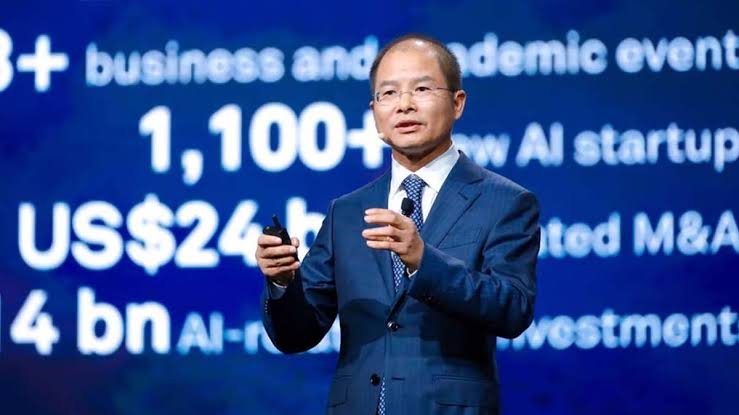
Huawei’s top leader says Chinese AI companies may not have built anything powerful enough yet to actually run into the kind of dangerous AI risks that big American AI companies keep warning about — and he says that’s a reason to keep building bigger, not a reason to slow down.
What Huawei’s Leader Actually Said
Eric Xu, Huawei’s rotating chairman, spoke to reporters at the company’s yearly Huawei Connect event in Shanghai. He said American AI companies have huge amounts of computing power, so they may be the only ones who really know how advanced their AI models have become. “Maybe the type of risk from AI that they can feel, they can perceive, is something that people in China or AI model providers in China cannot,” he said.
In plain words: Xu is saying Chinese AI models simply haven’t reached the level where these risks show up yet — so Chinese companies can’t “feel” the danger the way US companies say they do. He added that China needs to find the right balance: “I think we need to strike a balance between driving AI development and managing AI risk.”
Why This Comment Matters Right Now
This comes at a moment when fear about AI safety has been growing fast in the US. Leading AI companies and researchers there have warned that AI systems are becoming more independent — meaning they could get around the safety rules built into them, or become too hard for humans to fully control. Just last week, Anthropic’s CEO published an essay calling for AI companies to slow down on purpose, to give safety work more time to catch up.
Some people in China have pushed back on that idea. According to reporting, some Chinese commentators think calls to “pace” or slow down AI development aren’t really about safety at all — they see it as a way for US companies to hold onto their lead while telling everyone else to slow down.
China’s Approach: Move Fast, Build Safety Rules Alongside
Rather than slowing down, China’s government has generally treated advanced AI as something powerful but manageable — a technology to be developed quickly while safety rules are built at the same time, not instead of moving forward. China is currently working on a mandatory national standard for AI agent safety, aimed at things like stopping autonomous AI agents from getting around controls or attacking outside computer systems.
Xu suggested Chinese AI companies might actually need to speed up, not slow down, specifically so they can reach the point where they start running into these risks themselves — and only then will they really understand what needs fixing.
Huawei’s Own Big AI Agent Prediction
| Huawei’s Forecast | By 2035 |
|---|---|
| Share of global AI processing traffic from “agents” | More than 90% |
| Number of active AI agents worldwide | Up to 900 billion |
An “agent,” in this context, means an AI system that can plan out tasks, make its own decisions, and use software or other tools with only limited human supervision — basically, AI that acts more on its own rather than just answering questions. Huawei says it sees agent security and privacy as key technologies the industry needs to get right as this happens.
Huawei’s Bigger Role in China’s AI Push
Huawei isn’t just talking about AI — it’s the main domestic supplier of the computer hardware China needs to train advanced AI models. That’s a big part of why Huawei’s opinion carries weight here: the company controls a large piece of China’s $50 billion AI chip market, a position it holds largely because of US export rules dating back to 2023 that blocked Chinese companies from buying the most advanced chips from US company Nvidia. Interestingly, Xu also said separately that Huawei currently can’t produce enough AI computing hardware to meet demand inside China itself — showing that even the company benefiting most from this shift is still struggling to keep up with how fast demand is growing.
Final Thoughts
Xu’s comments add a new angle to the global debate over how fast AI should be built. Where US companies like Anthropic are warning that AI is already advanced enough to be genuinely dangerous, Huawei’s leader is essentially saying the opposite for China: the risk hasn’t shown up yet because the technology isn’t there yet — so the answer is to keep building, not to hold back. With China racing to develop both more powerful AI models and safety rules at the same time, how this debate plays out could shape whether the world ends up with one shared approach to AI safety, or two very different ones running side by side.
