


Days after a fire claimed the lives of 14 newborns at one of Islamabad’s largest public hospitals, Pakistan’s federal health minister has proposed a sweeping change to how government hospitals are staffed. Health Minister Mustafa Kamal wants to end permanent government jobs in public hospitals altogether, replacing them with performance-based contracts — a proposal that has reignited debate over accountability in Pakistan public hospitals just as the country mourns.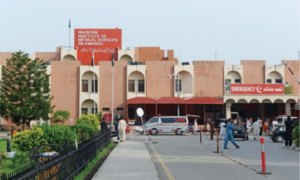
What Happened at PIMS
The fire broke out around 6:45 a.m. on Wednesday, August 26, 2026, inside the nursery of the Mother and Child Healthcare Centre at the Pakistan Institute of Medical Sciences (PIMS) in Islamabad, one of the country’s main public hospitals. Rescue officials said the blaze began after an air-conditioning unit compressor exploded, with flames spreading rapidly through oxygen outlets fitted at each incubator. The fire was confined to the third-floor nursery, but staff were only able to rescue one baby out of the 15 infants being cared for there at the time. An interim investigation report later found that just 120 seconds passed between the first spark and the fire engulfing the ward. The report also credited a nurse, Razia Noreen, with risking her life to pull one child to safety before the flames spread further; she was later awarded the Sitara-i-Khidmat, a state honor for public service.
The Government’s Immediate Response
Prime Minister Shehbaz Sharif, calling the loss “irreparable,” ordered the removal of Health Secretary Aslam Ghauri and later approved the suspension of eight officials, directing that criminal proceedings begin against anyone found responsible once the investigation concludes. A preliminary inquiry has recommended reviewing the role of the outsourced security company responsible for fire safety at the facility, with officials saying the company could face blacklisting and criminal charges if violations are confirmed. The government has also ordered a third-party audit of all federal hospitals to identify safety gaps, and Punjab’s provincial government separately ordered an immediate review of fire-safety systems at hospitals under its jurisdiction.
The Minister’s Controversial Proposal
Speaking to reporters after briefing a parliamentary committee on Monday, Kamal made his position blunt: “In public hospitals, a person should not be on permanent, government payroll. Hire them on contracts.” In an earlier interview with Geo News, he elaborated further, arguing that permanent employees “were extremely powerful and embroiled their departments in litigation if they were ever dismissed.” His proposed alternative goes further than staffing alone — he suggested public hospitals should be run by a CEO brought in from the private sector, with full authority over hiring and firing, operating on an annual budget approved by the government while being held fully accountable for performance.
Why Kamal Says This Is Necessary
Kamal has been unusually direct in his public criticism of the system he oversees, describing Pakistan’s health system as “rotten” while backing the parliamentary investigation into the fire. He argued that permanent staff at institutions like PIMS often accumulate outsized influence over time, with top officials sometimes behaving, in his words, like “kings” who assume no outsider could ever replace them. He also pointed to accountability limits on his own office, arguing it isn’t a health minister’s job to run a hospital day-to-day — suggesting that responsibility should instead fall to an elected mayor if Islamabad had a directly elected local government structure, which it currently lacks.
What We Don’t Yet Know
As of now, this remains a proposal rather than confirmed policy — Kamal floated the idea publicly, but no legislation, formal hiring freeze, or implementation timeline has been announced. It’s also worth noting that this proposal addresses hospital staffing and management broadly, and isn’t a direct technical fix for the specific fire-safety failures the PIMS inquiry is still investigating, such as the outsourced security contractor’s fire-safety compliance. Whether ending permanent hospital jobs would meaningfully improve patient safety, or whether it primarily reshapes labor and accountability structures, is likely to become a significant point of debate as the proposal moves — or doesn’t move — toward serious consideration.
A Tragedy Among Several Recent Ones
The PIMS fire ranks among Pakistan’s deadliest recent tragedies involving children. It follows a separate incident in June 2026, when 14 schoolchildren were killed after the roof of a tutoring center under construction collapsed in Lahore. Together, these events have intensified public and parliamentary scrutiny of safety standards across Pakistani public institutions, well beyond the healthcare sector alone.
Frequently Asked Questions
What caused the PIMS hospital fire?
Rescue officials said the fire began after an air-conditioning unit compressor exploded in the third-floor nursery, with flames spreading rapidly through oxygen outlets connected to each incubator. A full investigation into contributing factors, including fire-safety compliance, is ongoing.
What is Health Minister Mustafa Kamal proposing?
He has proposed ending permanent government jobs in public hospitals, replacing them with performance-based contracts, and bringing in a private-sector CEO to manage hospital operations with full hiring and firing authority.
Has this proposal been implemented yet?
No. As of now, it remains a public proposal from the health minister, without confirmed legislation or an implementation timeline.
What actions has the government already taken after the fire?
Eight officials have been suspended, the Health Secretary was removed from his post, a third-party safety audit of federal hospitals has been ordered, and the government has pledged five million rupees in compensation to each affected family.
As PIMS installs new leadership and the investigation into the fire continues, Kamal’s proposal adds a significant new dimension to an already difficult national conversation — one that now stretches beyond fire safety alone and into how Pakistan’s public hospitals are staffed and managed for the long term.
