

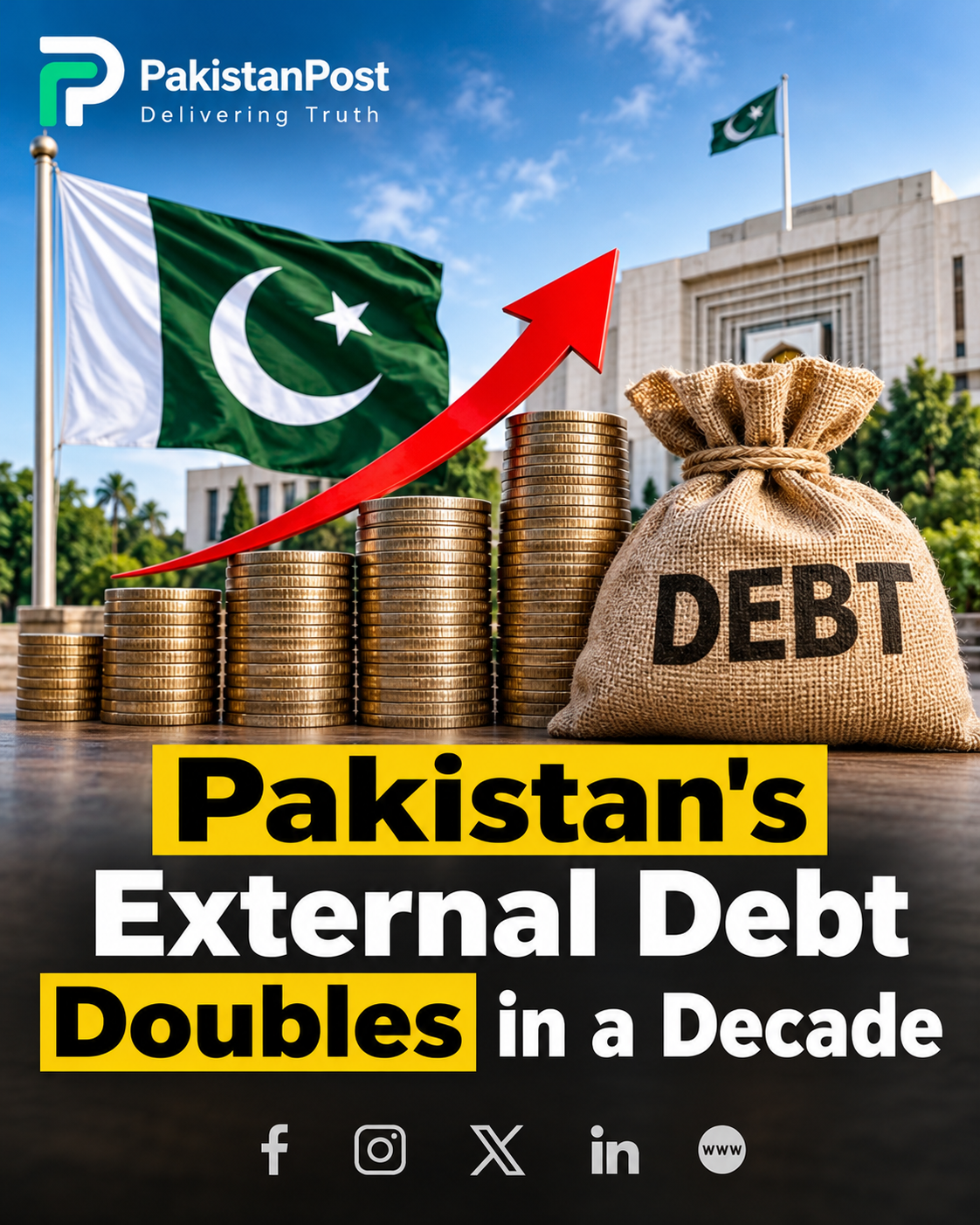
Pakistan external debt has nearly doubled in ten years. The World Bank’s International Debt Report 2026 shows that the country’s total external debt reached $135.1 billion at the end of 2025. In 2015, it stood at $68.7 billion. This article explains the numbers, who Pakistan owes, and what the figures mean.
Pakistan External Debt: Key Numbers
- 2015: $68.673 billion.
- 2024: $129.921 billion.
- 2025: $135.107 billion.
- Ten-year increase: about 96.7 percent.
- Increase in 2025: about 4 percent over 2024.
The World Bank uses its own definitions, so its figures can differ from national data published in Pakistan.
How Is Pakistan’s External Debt Divided?
The debt has three main parts. The table shows how the $135.1 billion breaks down.
| Type of Debt | Amount |
|---|---|
| Public and publicly guaranteed debt | $107.076 billion |
| Private non-guaranteed debt | $17.58 billion |
| Short-term debt | $10.45 billion |
| Total | $135.107 billion |
Within the public and publicly guaranteed part, $56.83 billion is owed to multilateral lenders. Another $42.43 billion is owed to bilateral lenders, and $7.8 billion is owed to private creditors.
Who Are Pakistan’s Biggest Creditors?
Three lenders stand out:
- China: $22.4 billion, the largest single creditor.
- World Bank: $19.2 billion.
- Asian Development Bank (ADB): $16.83 billion.
In 2025, China also extended the repayment period for $2 billion in loans to Pakistan. In the same year, the International Monetary Fund (IMF) provided $2.3 billion in new financing under its Extended Fund Facility.
Is the Debt Burden Getting Heavier?
The picture is mixed. The total amount has risen, but the debt burden compared with the size of the economy has eased slightly. Pakistan’s external debt was 33.9 percent of gross national income (GNI) in 2025. In 2024, the figure was 35.8 percent.
Therefore, the debt is bigger in dollars, but it grew more slowly than the economy’s income last year. However, the burden is still large. Repaying foreign loans takes dollars, and Pakistan earns them mainly through exports and remittances.
How Does Pakistan Compare With Other Countries?
The report shows that debt is rising across the developing world:
- External debt of developing countries rose 5.5 percent to a record $9.4 trillion in 2025.
- This was the fastest pace since 2021.
- Debt of countries eligible for the World Bank’s concessional lending rose 8.1 percent to $1.3 trillion.
- In the Middle East, North Africa, Afghanistan, and Pakistan region, the ratio of external debt to GNI rose from 26.7 percent to 29.4 percent, the largest rise of any region.
The World Bank says access to international finance has improved, but the cost of borrowing has not. It also warns that high debt can crowd out spending on health, education, and other essential needs.
What Does This Mean for Ordinary Pakistanis?
External debt matters because it affects the government’s budget and the rupee. Money spent on repaying foreign loans is money not spent on services. Also, the country needs steady dollar inflows to avoid a crisis. For this reason, exports, remittances, and foreign investment are important.
The data alone does not say whether the borrowing was wise. That depends on what the money was used for, and on whether the economy grows enough to repay it. Economists continue to debate this point.
Frequently Asked Questions
How much is Pakistan’s external debt?
The World Bank puts it at $135.1 billion at the end of 2025.
How much was it in 2015?
It was $68.7 billion, so it has nearly doubled in a decade.
Who is Pakistan’s largest creditor?
China, with $22.4 billion, followed by the World Bank and the ADB.
Is the debt rising faster than the economy?
Not in 2025. The debt-to-GNI ratio fell to 33.9 percent from 35.8 percent.
Where does this data come from?
It comes from the World Bank’s International Debt Report 2026.
Conclusion
Pakistan external debt has almost doubled in ten years and now stands at $135.1 billion. The burden relative to income eased slightly in 2025, but the country still relies on a few large creditors and steady dollar inflows. Readers can follow future debt data from the World Bank and the State Bank of Pakistan. For more economy updates, keep following Pakistan Post. You can also read the original report on The Express Tribune.
