


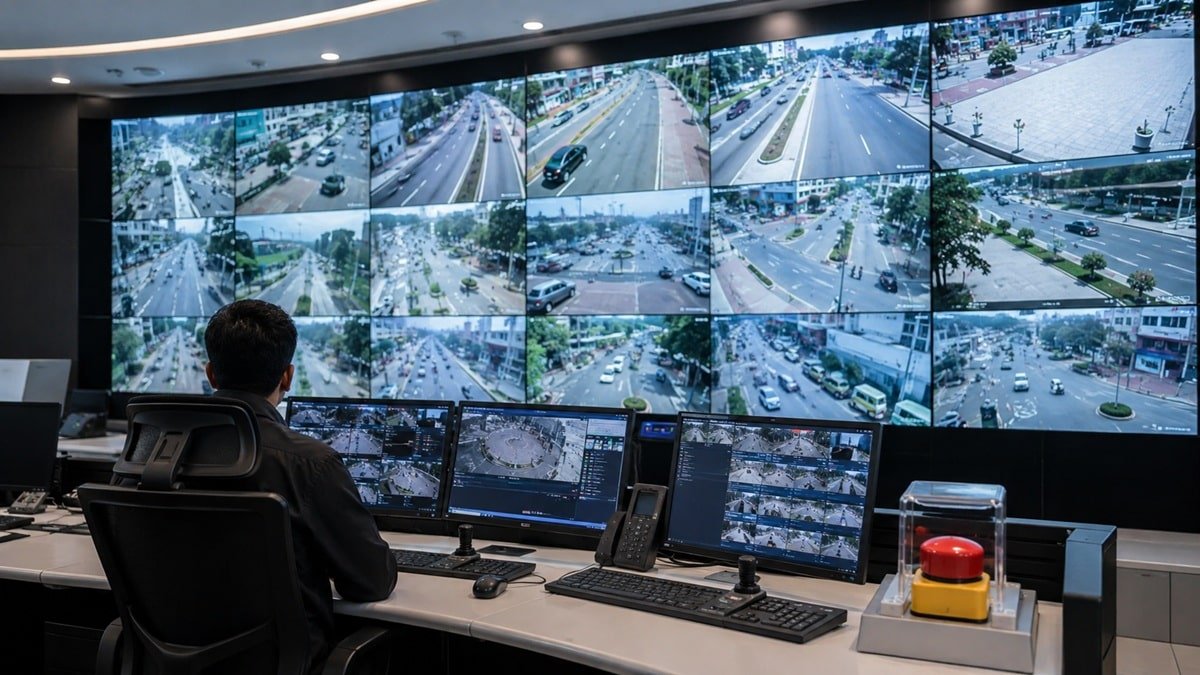
Punjab is taking its surveillance network well beyond the big cities. The Punjab Safe Cities Authority (PSCA) has launched a Rs. 16 billion project to install around 10,000 new cameras across 98 tehsils — pushing digital policing into areas that have never had this kind of coverage before.
What’s Actually Being Built
| Detail | Figure |
|---|---|
| Project cost | Rs. 16 billion |
| New cameras planned | ~10,000 |
| Tehsils covered in this phase | 98 |
| Long-term target | 7,602 union councils across Punjab |
| Cameras already operational | 24,000+ (some reports cite 17,000 as of June 2026) |
| Safe City smart centers currently running | 43 |
| Cities with active Safe City operations | ~40 |
Why the Government Says This Is Worth the Money
According to an official, the expansion was approved after reports showed encouraging results from the existing Safe City network — specifically, a reported 70% reduction in heinous and serious crimes across Punjab. That figure has become the government’s core justification for extending the system deeper into the province, beyond the major urban centers where it already operates.
Chief Minister Maryam Nawaz personally approved the project, with officials describing it as part of an effort to build one of South Asia’s most extensive digital policing networks once fully rolled out to the union-council level.
What the Cameras Actually Do
This isn’t simple CCTV monitoring. Punjab’s Safe City network uses more than a dozen artificial intelligence systems working together, including:
- Automatic Number Plate Recognition (ANPR) — reading vehicle plates automatically, including for stolen-vehicle detection and e-challan issuance
- Facial recognition
- Smart vision and crime analytics — identifying suspicious activity and crime hotspot patterns
- Intelligent traffic management — supporting the e-challan system already in place across major cities
These systems feed directly into the 43 smart Safe City centers, which provide round-the-clock surveillance and operational support to police and other law enforcement agencies.
A Notably Lower Cost This Time
One detail worth flagging: officials say this phase of the expansion will be completed at a significantly lower cost than earlier phases — reportedly reducing expenses by close to 50% compared to previous rounds of camera installation. That’s a meaningful efficiency claim if it holds, given how much has already been spent scaling the network to its current 24,000+ camera footprint.
The Bigger “Safe Punjab” Push
This project fits into the provincial government’s broader “Safe Punjab” initiative, which has also included integrating private surveillance cameras into the official Safe Cities network to widen coverage further. The Safe City program’s origins trace back to the tenure of former caretaker chief minister Mohsin Naqvi, and it has continued expanding steadily under the current provincial government, with officials describing its technology and performance as having received international recognition.
What This Means for Residents in Smaller Towns
The practical shift here is geographic: Safe City coverage has largely been concentrated in Punjab’s major cities until now. Extending the network to 98 tehsils — and eventually all 7,602 union councils — means smaller towns and more rural parts of the province will start seeing the same kind of AI-powered monitoring, automated traffic enforcement, and crime-detection infrastructure that’s been standard in Lahore, Rawalpindi, and other major cities for years.
Final Thoughts
A Rs. 16 billion investment in 10,000 additional cameras marks one of Punjab’s most ambitious surveillance expansions yet, built on the government’s claim of a 70% drop in serious crime from the existing network. Whether the promised cost savings and crime-reduction results hold up as the system extends into smaller tehsils and, eventually, every union council in the province will be worth watching as this next phase rolls out.
