


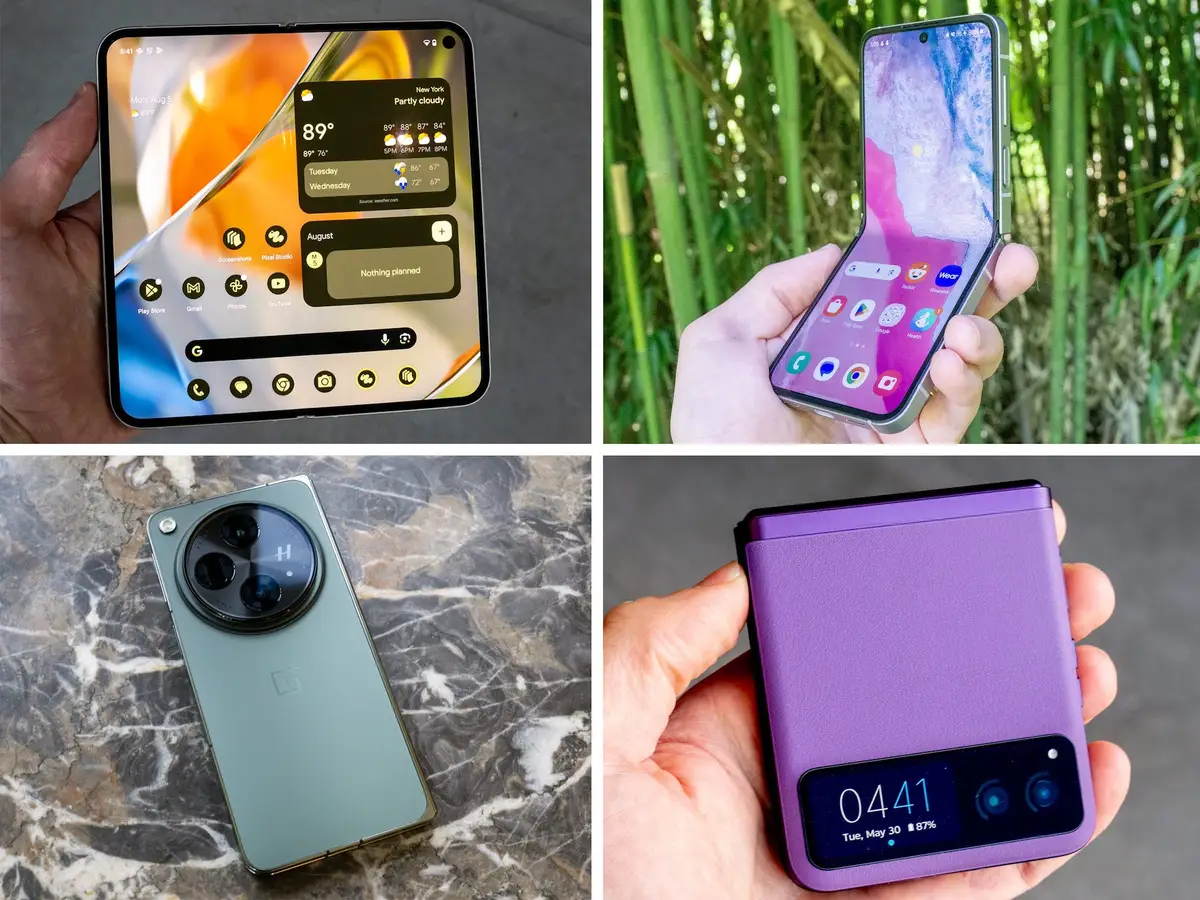
The foldable phone market looks nothing like it did a year ago. Samsung ditched its cramped inner screen for a genuinely wide, tablet-like display, Apple finally entered the category, and Google, Motorola, and Honor have all pushed out serious new competitors. Here’s a complete, up-to-date look at the latest foldable phones, what actually changed, and which one might be worth your money.
Quick Comparison
| Phone | Starting Price | Battery | Standout Feature |
|---|---|---|---|
| Samsung Galaxy Z Fold 8 | $1,899.99 | Larger capacity, improved from prior gen | New wide, tablet-like inner display |
| Samsung Galaxy Z Fold 8 Ultra | Higher than standard Fold 8 | Largest in Samsung’s foldable lineup | Brightest foldable display, premium materials |
| Google Pixel 11 Pro Fold | Flagship-tier pricing | Solid all-day capacity | Tensor G6 chip, Google’s camera processing |
| Motorola Razr Ultra 2026 | Flagship flip pricing | 4,800mAh | 165Hz cover display, IP48 rating |
| Honor Magic V6 | Competitive with Samsung | 6,600mAh (silicon-carbon) | Thinnest, lightest big-battery foldable |
Samsung Galaxy Z Fold 8: A Genuine Redesign, Not Just a Refresh
Samsung opened preorders for the Galaxy Z Fold 8 on July 22, 2026, and it changed the foldable conversation almost overnight. For the first time since the original Z Fold, Samsung ditched the narrow, awkward inner screen that defined every previous generation, adopting a genuinely wide layout that feels close to a small tablet when unfolded. The camera system also got a real upgrade, with a new 200MP main sensor nearly matching the Galaxy S25 Ultra in image quality. Backed by the Snapdragon 8 Elite chipset, strong multitasking software, and Samsung’s seven-year OS and security update commitment, the Z Fold 8 offers a foldable with a real-world lifespan comparable to any flagship phone. Pricing starts at $1,899.99.
Galaxy Z Fold 8 Ultra: Samsung’s Premium Tier
Sitting above the standard Fold 8, the Z Fold 8 Ultra pushes further on display brightness and premium materials, positioning itself as Samsung’s flagship-of-flagships in the foldable lineup. Reviewers note that while rivals can beat it on raw battery capacity or camera specs in isolated areas, the Ultra’s polish, software experience, and Samsung’s broad global availability keep it near the top of most foldable rankings for 2026.
Google Pixel 11 Pro Fold: A Steady, Not Radical, Upgrade
Google’s Pixel 11 Pro Fold went on sale August 20, 2026, replacing the previous Pixel 10 Pro Fold. Reviewers describe it as a solid refinement rather than a generational leap, running on Google’s new Tensor G6 chip. Its strongest selling points remain consistent with past Pixel Folds: excellent camera processing, including a capable 5x telephoto lens, along with world-first features on past models like Qi2 magnetic wireless charging and IP68 water resistance carrying forward into this generation.
Motorola Razr Ultra 2026: The Flip Phone Powerhouse
On the flip-phone side of the market, Motorola’s 2026 Razr lineup has drawn strong reviews. The top-tier Razr Ultra 2026 features an impressive cover display with a 165Hz refresh rate, Full-HD+ resolution, and very high peak brightness — a notable upgrade for a form factor where the outer screen often feels like an afterthought. The standard 2026 Razr refresh adds new colors, an IP48 rating, and a larger 4,800mAh battery. Separately, Motorola’s book-style Razr Fold stands out with a 6,000mAh silicon-carbon battery, 80W wired charging (fast even by North American flagship standards), a capable Snapdragon 8 Gen 5 chipset, a triple 50MP rear camera system, and Moto Pen Ultra stylus support — notable since Samsung dropped stylus support from the Galaxy Z Fold line. At $1,899 full price, it undercuts many rival big-screen foldables while still competing on features.
Honor Magic V6: Proof That Foldables Don’t Need to Be Bulky
The Honor Magic V6 has emerged as one of the most consistently praised foldables of 2026 across multiple reviewers. Its headline achievement is fitting a massive 6,600mAh silicon-carbon battery into a remarkably slim 8.75mm frame — delivering genuinely excellent battery endurance without the bulk that usually comes with a bigger cell. The inner OLED display measures 7.95 inches with a 6.43-inch outer screen for everyday use, and the camera system includes a 64MP telephoto lens. Its distinctive red-and-gold aesthetic also sets it apart visually from the more understated designs common across the category.
Apple Enters the Category: iPhone Duo
Apple confirmed its long-rumored foldable, referred to as the iPhone Duo (also reported under the name iPhone Ultra), at its September 9, 2026 event — officially entering a category Samsung pioneered back in 2018. Apple’s arrival is widely seen as a significant moment for the broader foldable market: if Apple’s device performs well, it validates the category to a mainstream audience that has been slower to adopt foldables; if it underperforms, it could pressure other manufacturers to reconsider the high cost and complexity of these devices. Either way, Apple’s entry means comparisons between the iPhone Duo and Samsung’s Z Fold 8 are already becoming a central storyline in the foldable conversation.
Why Foldables Are Getting More Expensive
None of these devices are cheap, and pricing pressure is a real, industry-wide trend right now. Foldables sit firmly in flagship-plus territory partly due to the inherent cost of hinge engineering, but also because of a broader DRAM and memory chip shortage pushing component costs up across the entire smartphone industry in 2026 — the same trend that’s been driving up prices on standard flagship phones too. This means foldable prices are unlikely to drop significantly in the near term, even as the technology itself continues to mature.
Fold vs. Flip: Which Type Should You Consider?
- Book-style folds (Galaxy Z Fold 8, Pixel 11 Pro Fold, Honor Magic V6, Razr Fold): Best if you want a tablet-like experience for multitasking, reading, or media, while still folding down to phone size for pocket carry.
- Flip-style folds (Razr Ultra 2026, Galaxy Z Flip line): Best if you want a genuinely compact, pocketable phone with flagship specs, and don’t need the larger inner display for multitasking.
Frequently Asked Questions
What is the best foldable phone right now?
The Samsung Galaxy Z Fold 8 is widely considered the most well-rounded choice for most people, thanks to its new wide display, strong camera, and seven-year update policy, though the Honor Magic V6 and Motorola Razr Fold both offer genuine advantages in battery life and design thinness.
Has Apple released a foldable iPhone?
Yes. Apple confirmed its foldable, referred to as the iPhone Duo or iPhone Ultra, at its September 9, 2026 event, officially entering the foldable phone category.
Why are foldable phones so expensive in 2026?
Beyond the inherent cost of hinge engineering, a broader DRAM and memory chip shortage has pushed component costs up across the smartphone industry, affecting foldable pricing alongside standard flagship phones.
What’s the difference between a book-style fold and a flip phone?
Book-style folds open into a larger, tablet-like inner display for multitasking and media, while flip phones fold vertically into a more compact form factor focused on pocketability.
With Samsung’s redesigned Z Fold 8, Apple’s category entry, and strong competition from Google, Motorola, and Honor, 2026 has genuinely been a turning-point year for foldable phones — even if the price tags mean this remains a premium category rather than a mainstream one, at least for now.
