


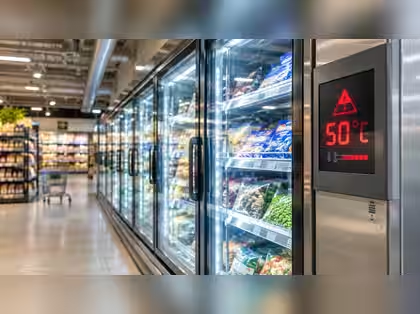
A new wave of cyberattacks has hit supermarket fridges and freezers across Europe, leaving food spoiled in several countries. Reports on 2 November 2026 say stores in Belgium, Sweden, the Netherlands, Ireland, Luxembourg and Estonia were affected. It follows a similar attack on French supermarkets in October. No group has claimed responsibility, and authorities have not named the attackers. Here is what is known, what is not and why it matters.
What Happened
Hackers remotely raised the temperature inside supermarket freezers and fridges. Tom’s Hardware reports that attacked freezers were heated to 50°C, and that the hackers triggered each unit’s built-in defrost mode, overriding its temperature and defrost-time limits. The units were controlled online. Forbes (2 November 2026) says refrigerators were heated above 120°F, and that one ICA freezer in Stockholm reached 50°C (122°F). A sales manager there said, “everything is destroyed.”
Tom’s Hardware says the Belgian attack began around midnight on a Sunday night, and that its report was updated on 2 November 2026.
Which Countries and Stores?
The reports differ on the details, so here is each one:
- Tom’s Hardware: Belgium and Sweden, with an update saying Ireland, Estonia and the Netherlands were also reportedly affected. It names Ahold Delhaize-owned stores, plus Delhaize, Carrefour and Spar locations in Belgium, and ICA and Coop stores in Sweden.
- Forbes: Sweden, the Netherlands, Belgium, Ireland, Luxembourg and Estonia, with at least dozens of stores affected. It says 13 SuperValu stores were hit in Ireland, and 15 Carrefour stores and one IKEA location in Belgium. In Sweden it says seven Coop supermarkets were affected, while ICA said a “limited number of stores were affected.” It also mentions Colruyt reporting five affected stores, but the report does not make clear which country they were in.
The exact number of stores is not clear. Forbes says “dozens”. Sabcobel, a Belgian refrigeration firm, estimated at least 20 units were affected in Belgium, according to Tom’s Hardware.
The Earlier Attack in France
Forbes says hundreds of French supermarkets were targeted in October, with fridges at Carrefour, Monoprix, Intermarché and Coopérative U heated, ruining food. Intermarché’s CEO said the losses could reach “millions of euros,” and the parent company Les Mousquetaires expected “several million euros.” A CNBC headline from 13 October says French fridges were heated to 122°F and sparked fires. I could not open that report, so I cannot confirm the fires.
How Did the Attackers Do It?
- Tom’s Hardware says they triggered each freezer’s defrost mode remotely. It does not name the freezer maker.
- Forbes says some refrigerators hit on Monday used software from the Danish firm Danfoss, which is the same technology reportedly used in the October attacks in France. Forbes adds that security firm Claroty had reported Danfoss vulnerabilities in August, and that Danfoss fixed them in a software update.
- Tom’s Hardware reports that Ahold Delhaize’s CEO said fixing the weakness requires physical changes to the units.
These accounts do not fully fit together. If a software update fixed the flaw, it is not clear why the CEO says physical changes are needed. I could not check this with Danfoss or Claroty.
Who Is Behind It?
Authorities have not named the attackers, and no hackers have claimed responsibility, according to Forbes. Forbes says it is unclear whether artificial intelligence was used. It notes that Belgium’s Centre for Cybersecurity said AI can help attackers exploit weaknesses, but does not link AI to this attack.
How Much Was Lost?
No verified figure has been given for the November attacks. Tom’s Hardware estimates the losses at millions of dollars, but says this is not a verified figure. In Sweden, photos show staff throwing away carts of goods, but there is no total.
Why It Matters
Many supermarket fridges and freezers are connected to the internet so that staff can control and monitor them remotely. That also gives attackers a way in. When a cold chain fails, a large amount of fresh and frozen food can spoil quickly. This is not only an IT problem, since it affects food supply and shop stock.
That paragraph is general background, not from the reports.
What Shoppers Should Know
The reports I read do not say that any food was sold after it spoiled, or that shoppers were harmed. If you shop in the affected countries, follow notices from your supermarket and food safety authority. As a general rule, do not eat food that was not kept cold, and check use-by dates.
What About Pakistan?
None of the reports mention Pakistan. The story shows the risk of online-connected cold storage anywhere, including warehouses and shops that rely on remote control.
What Is Not Yet Clear
- Who carried out the attacks.
- The exact number of stores and units affected.
- Which makers’ equipment was involved, since the reports differ.
- How much it cost.
- Whether the October and November attacks are linked, although Forbes says the technology appears to be the same.
Frequently Asked Questions
What happened to the supermarket fridges?
Hackers remotely heated them, causing food to spoil.
Which countries were hit?
Belgium, Sweden, the Netherlands, Ireland, Luxembourg and Estonia, according to Forbes.
How hot did they get?
Up to 50°C (122°F), according to Tom’s Hardware and Forbes.
Who did it?
Nobody has been named, and no group has claimed it.
Was this the first attack?
No. A similar attack hit supermarkets in France in October.
Which company’s software was involved?
Forbes says some refrigerators used Danfoss software. Other reports do not name the maker.
The story is still developing, so check the supermarkets and cybersecurity authorities for updates.
