


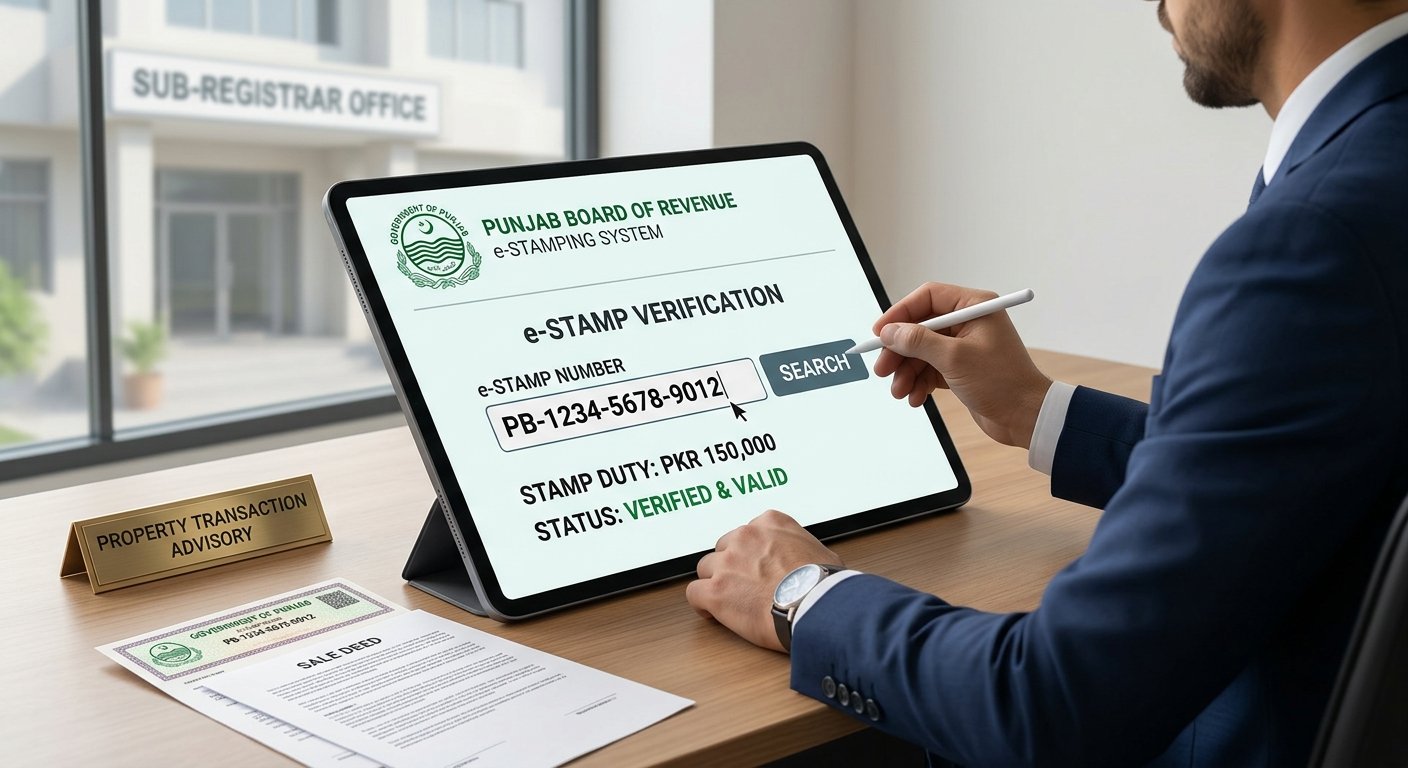
Stamp duty is a provincial or territorial government charge imposed on specified legal documents. The applicable rate depends on the property’s location, transaction type, valuation and relevant laws.
What Is Stamp Duty on Property in Pakistan?
Stamp duty is a government tax imposed on legal documents such as sale deeds, conveyance deeds, gift deeds and other property transfer instruments. It is separate from registration fees, FBR advance tax, mutation charges and housing society fees.
How to Check Stamp Duty Online
- Identify the province or territory where the property is located.
- Visit the relevant official e-Stamping or registration portal.
- Select the correct transaction or document category.
- Enter the property location, area and valuation details.
- Review the calculated stamp duty and other applicable charges.
- Generate the official challan and follow the payment instructions.
Official Stamp Duty Websites in Pakistan
- Punjab: Punjab e-Stamping Portal
- Sindh: Sindh Excise and Taxation
- Khyber Pakhtunkhwa: KPK e-Stamping
- Balochistan: Board of Revenue
- Islamabad: ICT Administration
How Is Stamp Duty Calculated?
Stamp Duty = Applicable Property Value × Applicable Stamp Duty Rate.
For example, if the applicable property value is Rs. 10,000,000 and the applicable stamp duty rate is 1%, the estimated stamp duty is Rs. 100,000. This is an illustration, not a universal rate for Pakistan.
What Other Property Charges Should You Check?
- Registration fee
- Capital Value Tax, where applicable
- FBR advance tax under Sections 236K and 236C
- Mutation fee
- Housing society transfer charges
Documents Required
- Buyer and seller CNICs
- Property ownership documents
- Sale agreement or transaction details
- Property location and area
- Declared transaction value
- Previous registry or ownership record, where applicable
Frequently Asked Questions
Is stamp duty the same throughout Pakistan?
No. Stamp duty rules and rates vary according to provincial and territorial laws.
Is stamp duty the same as registration fees?
No. Stamp duty is a tax on specified legal instruments, while registration fees are separate charges for registering documents.
Can I check stamp duty online?
Yes, where official e-Stamping services are available. Otherwise, contact the relevant registration authority.
Who pays stamp duty, the buyer or seller?
Responsibility depends on the applicable law and transaction. The parties may agree on sharing certain expenses, but their agreement does not override statutory requirements.
Conclusion
Before completing a property transaction in Pakistan, check the applicable stamp duty through the relevant government authority. Confirm the property valuation, transaction category and additional charges, and keep all official payment receipts.
Disclaimer
This article provides general information only. Rates and procedures may change. Confirm the latest requirements with the relevant government authority or a qualified property lawyer before making payment.
