


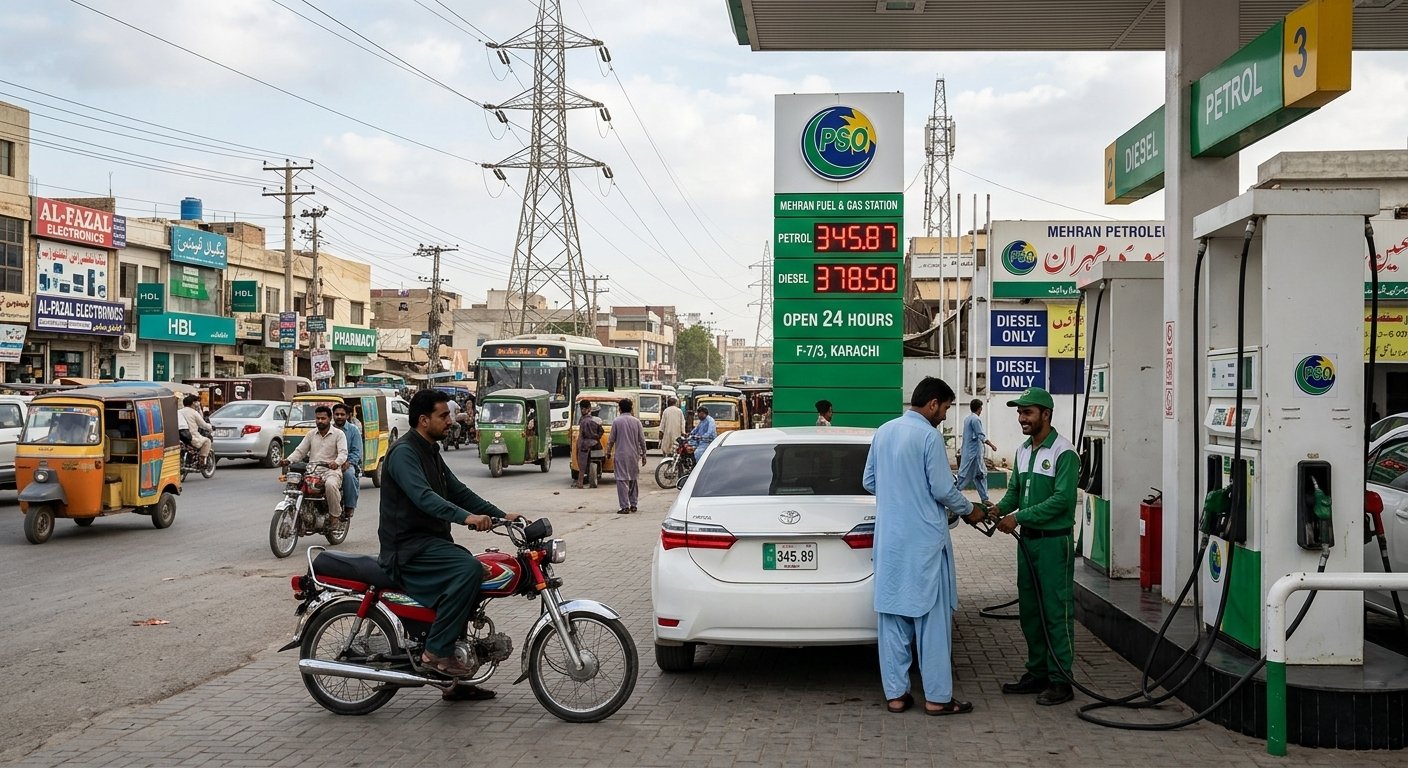
Pakistan’s energy rates continue to shift as the government revises petroleum, electricity, and gas prices to reflect global market trends and the rupee’s exchange rate. As of 6 September 2026, energy rates in Pakistan show petrol, diesel, and LPG holding at levels set on 5 September, while electricity consumers brace for the end of a temporary relief package and gas tariffs remain under review by regulators. Here’s a complete breakdown of petrol, diesel, LPG, electricity, and gas rates to help you plan your monthly budget.
Petrol and Diesel Prices in Pakistan Today
The Oil and Gas Regulatory Authority (OGRA), through Pakistan State Oil’s official notification, has fixed the following ex-depot rates, effective from 5 September 2026 and applicable nationwide:
| Product | Price (Rs./Litre) |
|---|---|
| Petrol (Premier Euro 5) | 345.87 |
| High Speed Diesel (HSD) | 378.05 |
| Kerosene (SKO) | 307.00 |
| Light Diesel Oil (LDO) | 267.06 |
| JP-1 (Jet Fuel) | 329.35 |
Note: These are ex-depot rates and exclude freight charges, so pump prices may vary slightly by city.
Recent Price Trend (1–5 September 2026)
Fuel prices moved several times in the first week of September as OGRA adjusted rates in line with international crude movements and rupee fluctuations:
| Date | Petrol (Rs./Ltr) | Diesel (Rs./Ltr) |
|---|---|---|
| Sept 1 | 343.87 | 370.92 |
| Sept 2 | 346.16 | 372.03 |
| Sept 4 | 349.00 | 374.31 |
| Sept 5 (current) | 345.87 | 378.05 |
Petrol has eased slightly from its early-September peak, while diesel has continued climbing — a trend that typically pushes up freight and transport costs across the country.
LPG Price in Pakistan – September 2026
OGRA increased the LPG price by Rs.4.33 per kilogram for September, taking the consumer rate to Rs.258.65/kg. This raised the price of a standard 11.8kg domestic cylinder to approximately Rs.3,052 — a rise of over Rs.51 compared to August.
Energy Rates in Pakistan: Electricity Tariff Update
Electricity bills are also set for change this billing cycle:
- Fuel Cost Adjustment (FCA): NEPRA approved a Rs.0.75 per unit increase under the June 2026 monthly fuel cost adjustment, which was reflected in August 2026 bills.
- Relief package expiring: A Rs.1.99 per unit relief, granted under the January–March 2026 quarterly adjustment, was applicable from June through August 2026. With this relief ending, September electricity bills may edge higher even without a fresh hike.
- Pending quarterly adjustment: Power distribution companies (DISCOs) have petitioned NEPRA to recover more than Rs.23 billion under the April–June 2026 quarterly adjustment — a move that could add roughly Rs.1 per unit if approved after the regulator’s hearing.
- Rising generation costs: Pakistan’s average fuel cost of electricity generation climbed 14% year-on-year to Rs.9.0 per unit in June 2026, driven largely by costlier RLNG and furnace oil-based generation.
Lifeline consumers, prepaid customers, and electric vehicle charging stations are typically exempted from these fuel cost adjustments.
Natural Gas Prices: SNGPL and SSGC Rates
For the current fiscal year (FY 2025–26), OGRA finalized reduced average gas prices: Sui Southern Gas Company (SSGC) rates fell 8% to Rs.1,549.41 per MMBTU, while Sui Northern Gas Pipelines Limited (SNGPL) rates dropped 3% to Rs.1,804.08 per MMBTU. However, both companies have since filed petitions with OGRA seeking higher rates for FY 2026–27 to cover rising revenue requirements, with SNGPL requesting an average of around Rs.2,485.72/MMBTU and SSGC seeking close to Rs.4,137.49/MMBTU. A final decision from OGRA on these new gas tariffs is still pending, so consumers should watch for an official notification in the coming weeks.
What’s Driving the Latest Fuel Price Revision in Pakistan?
- International crude oil prices, which directly affect import costs for petrol and diesel
- PKR-to-USD exchange rate, since Pakistan imports the bulk of its refined petroleum and LNG
- Petroleum levy and taxes, which the government adjusts periodically for revenue targets
- RLNG and furnace oil costs, which continue to push up the cost of thermal power generation
- Circular debt pressures, which influence both electricity and gas pricing decisions
How These Energy Rate Changes Affect Consumers
Higher diesel prices tend to ripple through the economy fastest, since HSD powers most trucks, buses, and agricultural machinery — meaning transport fares and food prices often follow. Meanwhile, the expiry of the electricity relief package means households should expect their September bills to look different even without headline-grabbing news of a “new hike.” Businesses relying on LPG for cooking or industrial use will also see a modest cost increase this month.
Frequently Asked Questions
What is the petrol price in Pakistan today (6 September 2026)?
Petrol (Premier Euro 5) is priced at Rs.345.87 per litre, effective from 5 September 2026, per PSO’s official notification.
What is the current diesel price in Pakistan?
High Speed Diesel (HSD) is priced at Rs.378.05 per litre under the same notification.
How much has the LPG price increased in September 2026?
LPG rose by Rs.4.33 per kilogram for September, bringing the rate to Rs.258.65/kg and pushing an 11.8kg cylinder to around Rs.3,052.
Will electricity bills increase in September 2026?
Bills may rise as a Rs.1.99 per unit relief package (from the Jan–March 2026 quarterly adjustment) expires, and DISCOs have separately requested a further increase under the April–June 2026 quarterly adjustment, pending NEPRA approval.
How often does OGRA revise fuel prices in Pakistan?
OGRA’s standard mechanism reviews petroleum prices every 15 days (around the 1st and 16th of each month), though rates can be adjusted more frequently when global crude prices or the rupee move sharply, as seen in early September 2026.
