


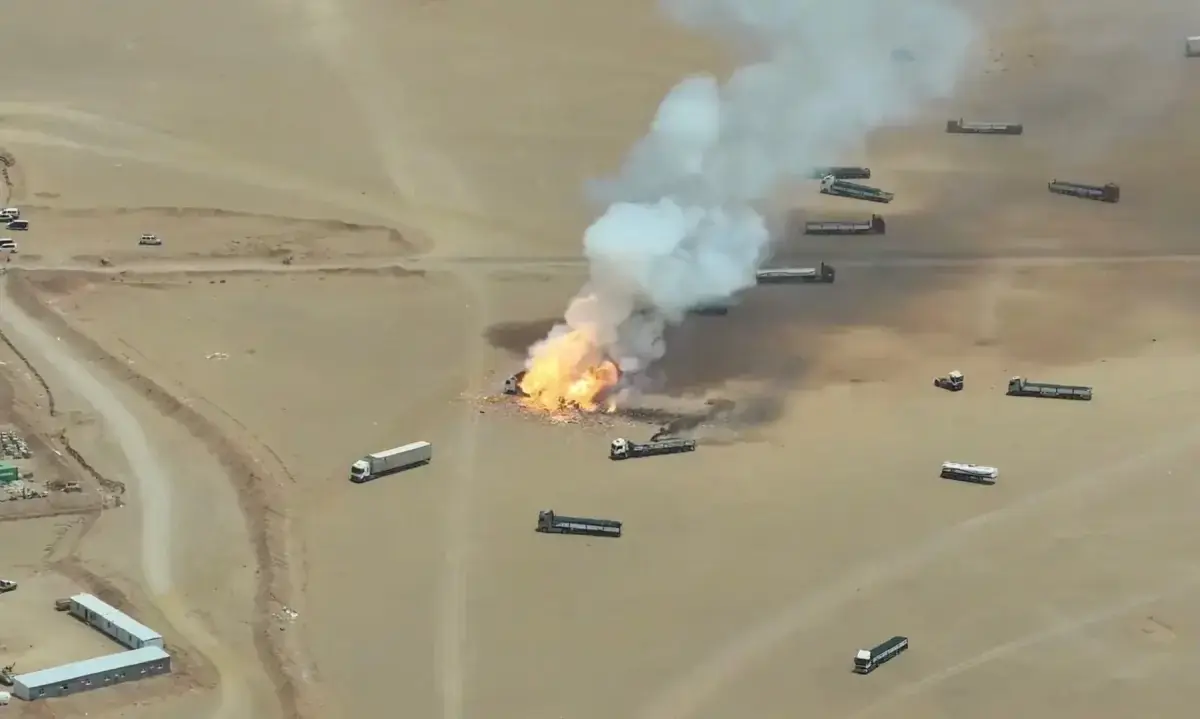
A wave of Houthi attacks on Saudi Arabia’s southern region injured 73 people and forced a temporary halt at several energy facilities on Tuesday, marking a serious escalation in the renewed conflict between the kingdom and Yemen’s Iran-aligned Houthi movement.
What Happened
The attacks struck the southern Saudi cities of Abha, Khamis Mushait, Jazan, and Najran early Tuesday, hitting what Saudi officials described as civilian and economic sites. According to Maj. Gen. Turki Al-Maliki, spokesperson for the Saudi-led coalition in Yemen, the strikes injured 73 civilians, including women and children. Fires broke out at several locations, with firefighting and emergency teams dispatched to contain the blazes and assess the damage.
Saudi Arabia’s Energy Ministry confirmed that energy sector facilities and infrastructure in the southern region were targeted, causing fires that led to a temporary halt in some operations. The ministry said the relevant authorities were working to ensure the safety of facilities and workers and to resume operations under approved plans. Separately, the Financial Times reported that Aramco’s Jazan oil facilities — home to one of Saudi Arabia’s largest oil refineries, processing roughly 400,000 barrels per day — were hit in the strikes, though Reuters said it could not independently verify that report and Aramco had not commented.
Saudi Arabia’s Response
Saudi officials condemned the attacks in strong terms. Al-Maliki called the escalation “dangerous” and accused the Houthis of deliberately targeting national infrastructure and civilian sites, describing it as a violation of the kingdom’s sovereignty and a direct threat to the safety of its citizens and residents. Saudi Arabia’s foreign ministry issued a separate condemnation, calling for an immediate halt to what it described as escalation by the group, including attacks on shipping. The coalition said it would take the necessary operational measures to deter the Houthis and respond to the source of the threat.
Why This Is Happening Now
The Houthis, who control Yemen’s most populous areas and much of the country’s north, have been launching attacks toward Saudi Arabia since declaring a naval blockade against Riyadh in July, with strikes previously targeting Saudi-linked vessels in the Red Sea. Tuesday’s escalation reportedly stemmed from a Houthi attempt to fly a plane from Tehran to Sanaa, challenging a decade-long air and naval blockade maintained by the Saudi-led coalition. The clash has also unfolded against the backdrop of a shattered four-year truce in Yemen’s civil war, with weeks of rising tension between the Houthis and Saudi-backed Yemeni government forces preceding this week’s attacks.
The Houthis’ military spokesperson said the group would announce a broader operation deep into Saudi territory in the hours following the attacks, raising concern about further escalation in the days ahead.
Impact on Oil Markets
The attacks landed directly on global energy markets, given Saudi Arabia’s position as the world’s top oil exporter. Brent crude futures rose roughly $1 to around $98 per barrel following the Saudi Energy Ministry’s statement, while US crude futures climbed more than $2 to about $93.65 per barrel. The price jump reflects broader unease in the oil market, which has also been under pressure from mounting tension between the United States and Iran as the wider Middle East conflict continues, with diplomatic negotiations largely stalled.
The Bigger Picture
Yemen’s civil war, now well into its second decade, has repeatedly spilled across the Saudi border, with the Houthis previously targeting sites including Abha’s airport. This week’s attacks represent one of the more serious escalations in that cross-border conflict in recent months, both in terms of the number of people injured and the direct hit to Saudi energy infrastructure. Separately, the Houthis reported that a Saudi-coalition strike on the Yemeni city of Hazem killed at least seven people, including a child, and wounded seven others — underscoring how the violence continues to run in both directions.
Final Thoughts
With the Houthis signaling further operations inside Saudi territory and oil markets already reacting to the disruption, Tuesday’s attacks look less like an isolated incident and more like an escalation point in a conflict that had already been intensifying for weeks. How Saudi Arabia and its coalition partners respond in the coming days will likely determine whether this marks a temporary flare-up or the start of a more sustained confrontation.
