


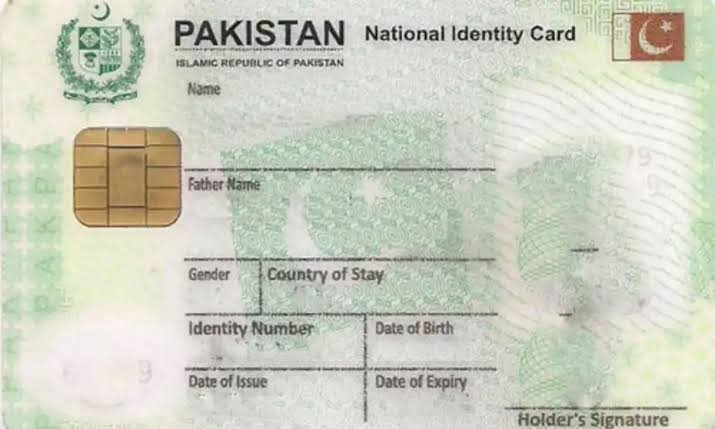
A wrong date of birth on your CNIC can cause real problems with school admissions, jobs, pensions, and passports. Unlike a photo or address update, correcting your date of birth on CNIC is treated as a legal matter, not a simple edit. This guide explains what NADRA requires, when a court order is needed, and how the process works.
Why Date of Birth Corrections Are Treated Strictly
Your date of birth is a core identity detail used across government systems, education records, passports, and legal documents. NADRA processes identity data, but it does not have the authority to change a date of birth on its own. That authority rests with courts and other recognized bodies, such as the Union Council, Cantonment Board, or Municipal Corporation. This strict approach exists to prevent fraud and to keep records consistent across departments.
General Rules to Know
- A date of birth correction is normally allowed only once.
- NADRA generally does not process date of birth changes for anyone under 18.
- Some guidance suggests that a small correction, of a few years or less, may sometimes be processed with strong documents and an affidavit, without a court order. However, in several provinces, including Punjab under current rules, NADRA requires a formal court order along with a verified computerized birth registration certificate for any date of birth correction.
- Requirements can differ by case and by province, so confirm the exact requirement for your situation at your NADRA Registration Centre before you start.
Documents You May Need
| Document | Purpose |
|---|---|
| Verified computerized birth registration certificate | Primary proof of your correct date of birth, from your Union Council or Cantonment Board |
| Matriculation certificate | Supporting proof showing your date of birth as recorded during school |
| Affidavit | States the incorrect date currently on record and the correct date, with supporting reasons |
| Family Registration Certificate (FRC) | Additional supporting evidence of family records |
| Court order or decree | Required in many cases, especially for a larger discrepancy or in provinces with stricter rules |
| Hospital birth record or immunization card | Extra supporting evidence for children or where school records are unavailable |
When You Need a Court Order
If your case requires a court order, here is the general process:
- File a plaint (a declaration suit) in the relevant Civil Court in your city, with the help of a lawyer.
- Include your supporting documents, such as your matriculation certificate and Union Council birth record, showing your correct date of birth.
- The court issues a summons to NADRA, which then submits a written reply.
- You may be cross-examined by NADRA’s counsel, so keep all your original documents with you.
- Once the court is satisfied, it issues a judgment and directs NADRA to correct your date of birth.
- Submit this court order to NADRA along with your other documents to complete the correction.
This process takes time, so it’s worth budgeting for weeks or months rather than days if a court order is required in your case.
Step-by-Step: Applying at a NADRA Centre
Step 1: Gather Your Documents
Collect your original CNIC, birth certificate, matriculation certificate, and any court order if your case needs one.
Step 2: Prepare Your Affidavit
Clearly state your incorrect date of birth as it currently appears, and the correct date you are requesting, with supporting reasons.
Step 3: Visit Your Nearest NADRA Registration Centre
Take a token for CNIC modification or date of birth correction.
Step 4: Submit the Modification Form and Documents
Fill out the required form and hand in your documents, including your affidavit and, if applicable, your court order.
Step 5: Complete Biometric Verification
NADRA staff will verify your fingerprints and photograph on-site. This step cannot currently be completed online for a date of birth correction.
Step 6: Choose Your Service Type and Pay
Select normal, urgent, or executive processing, and pay the applicable fee.
Step 7: Track and Collect Your Updated CNIC
Keep your receipt and token number. Once approved, you will be notified to collect your corrected CNIC or have it delivered.
Approximate Fees and Processing Time
| Service Type | Approximate Fee | Delivery Time |
|---|---|---|
| Normal | Around Rs. 1,150 | Around 30 days |
| Urgent | Around Rs. 2,150 | Around 15 days |
| Executive | Around Rs. 3,150 | Around 7 days, with same-day delivery in some major cities |
These figures are approximate and can change, and they cover only the modification itself, not a fresh CNIC application. Confirm the exact fee at your NADRA centre before applying.
Common Reasons Applications Get Rejected
- Missing or unverified birth registration certificate
- Inconsistent dates across your supporting documents
- No court order submitted when one is required for your case
- Applying for someone under 18
- Requesting a second date of birth correction
Frequently Asked Questions
Do I always need a court order to correct my date of birth?
Not always, but many cases do, especially larger discrepancies or applications in provinces with stricter current rules, such as Punjab. Confirm your specific requirement at a NADRA centre.
Can I correct my date of birth online through the PakID app?
No. Date of birth correction requires in-person biometric verification and document checks at a NADRA Registration Centre.
How many times can I correct my date of birth?
Generally only once.
Can I correct the date of birth for a child under 18?
NADRA generally does not process date of birth corrections for minors on a CNIC, since they typically don’t hold one yet. Corrections to a B-Form or Child Registration Certificate follow a related but separate process.
What is the strongest document to support my correction?
A verified computerized birth registration certificate from your Union Council or Cantonment Board is usually the primary document NADRA relies on.
Correcting a date of birth on your CNIC takes more effort than other updates, since it’s treated as a legal correction rather than a simple edit. Gather strong supporting documents, check whether your case needs a court order, and confirm the exact requirement with your NADRA centre before you begin.
