


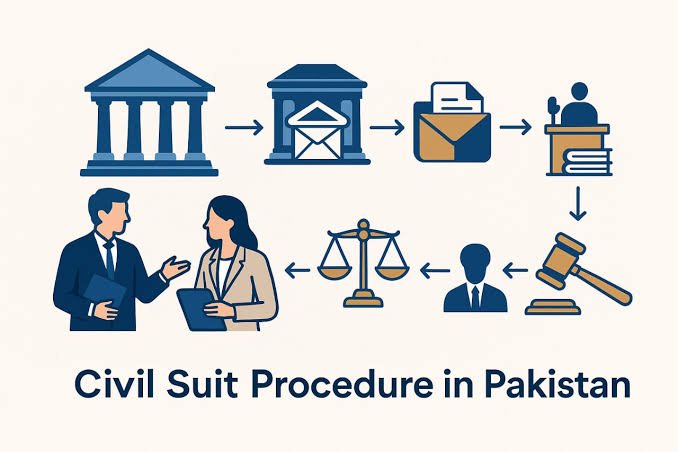
Filing a civil case in the wrong court can waste months. The court may return your plaint and you will have to start again. To find the right court, ask three questions: what kind of case is it, how much is it worth, and where did it happen? Here is how that works in Pakistan, what the sources say, and what you should confirm with a lawyer.
The Three Questions
Courting The Law (29 July 2025) and a lecture note from the University of Sindh (an older, undated page) describe three kinds of jurisdiction:
- Subject matter: Can a civil court hear this type of claim at all?
- Value (pecuniary): Which court is allowed to hear a claim of this size?
- Place (territorial): Which district’s court covers the property, the defendant or the place where the problem happened?
Question 1: Is It a Civil Matter for a Civil Court?
Section 9 of the Code of Civil Procedure (CPC), 1908 lets civil courts try “all suits of a civil nature,” unless the law bars them, according to Courting The Law. Some matters go elsewhere:
- Disputes under the Land Revenue Act 1967, where Section 172 keeps civil courts out and revenue courts hear agricultural land matters.
- Matters for service tribunals, labour courts and other tribunals under Article 212 of the Constitution.
- Matters where a special law gives another forum the power to decide.
The article says the court checks this first, using what you write in your plaint. If a court has no jurisdiction, the plaint can be returned or rejected under Order 7, Rules 10 or 11. Our guide on how to file a consumer complaint in Pakistan explains one such special forum.
Question 2: Which Court Can Hear a Case of This Value?
A copy of the Punjab Civil Courts Ordinance, 1962 on a law firm site says:
- The District Judge can hear original civil suits “without limit” as to value (Section 7).
- A Civil Judge’s value limit is set by the High Court (Section 9).
- Appeals from a Civil Judge go to the High Court if the suit’s value is above Rs2.5 million. All other appeals go to the District Judge (Section 18).
That copy is undated and shows signs of old amendments, so these limits may have changed. Ask the court office for the current limit before you file.
A copy of the 2025 amendment for Khyber Pakhtunkhwa (gazetted 18 February 2025) says the limits of District and Civil Judges there are tied to Section 6 of the CPC. It gives no money figures. Rules differ by province, so check the law of your province.
The University of Sindh note says to file in the lowest-grade court that can hear the value, and that the plaintiff’s valuation generally governs unless it is clearly wrong.
Question 3: Which Place?
The University of Sindh note explains the CPC place-of-suing rules:
- Land or houses (Sections 16 to 18): File where the property is located. If the property lies in more than one court’s area, you may file in any of them, if that court can hear the full value.
- Movable property and wrongs to a person (Section 19): File where the wrong happened, or where the defendant lives, does business or works.
- All other suits (Section 20): File where the defendant lives, does business or works, or where the cause of action arose, wholly or in part.
Courting The Law says that if two courts both have jurisdiction, the plaintiff chooses. It also says the parties’ consent generally cannot give a court jurisdiction that it lacks. That lecture page uses wording about India for companies, so check with a lawyer how the rule works for Pakistani companies.
A Simple Way to Decide
- Write down the exact thing you are claiming, such as a refund, possession of land or damages.
- Check whether a special law or forum covers it.
- Work out the value of the claim.
- Find where the property is, where the defendant lives or works, and where the problem happened.
- Choose the lowest court that can hear that value in that place.
- Ask the court office, or a lawyer, to confirm before you file.
This list is a summary of the rules above, not legal advice.
What Happens If You Pick the Wrong Court?
Courting The Law says jurisdictional objections can be raised at any stage. The University of Sindh note says objections to place or value must be raised early, and a decree from a court that lacks jurisdiction is generally treated as a nullity. The two sources frame the risk differently, so do not rely on a mistake being overlooked. Get it right first.
Tips
- Keep the documents showing where the property is and where the other side lives.
- Value your claim honestly. A wrong valuation can send the case to the wrong court.
- Check the time limit for your type of case. I did not find a source on it here.
- Do not pay anyone who promises to “fix” a court or a hearing date.
These tips are general advice.
What I Could Not Confirm
- The current value limits for Civil Judges in each province.
- The rules in Sindh and Balochistan. I did not open them.
- Whether the Punjab Ordinance text has been changed since the copy I read.
- Which special courts apply to family, rent, banking or property disputes.
- Time limits for filing.
I could not open the official court websites. This is general information, not legal advice.
Frequently Asked Questions
How do I find the right court for a civil case?
Check the subject, the value and the place. Then confirm with the court office.
Where do I file a case about land?
In the court where the land is located, under Sections 16 to 18 of the CPC.
Where do I file a money claim?
Usually where the defendant lives or works, or where the cause of action arose, under Section 20.
Does the value of the claim matter?
Yes. Each court can hear cases only up to a certain value, which depends on the province.
Can both sides agree on a court?
Generally no. Consent cannot give a court jurisdiction it does not have.
What if the court has no jurisdiction?
The plaint can be returned or rejected.
Check the subject, the value and the place, and confirm with a lawyer or the court office before you file.
