


A new anime set in 13th-century Persia has become one of the most talked-about releases of the year — not for spectacle, but for something rarer in mainstream anime: a Muslim lead character whose faith is simply part of her world, rather than the point of the story.
What Jaadugar Is About
Jaadugar: A Witch in Mongolia adapts Tomato Soup’s manga, known in Japan as Tenmaku no Jādūgaru, and follows a young Persian girl named Sitara as her world is upended by the Mongol invasion. Orphaned and taken in by a family of scholars, she’s taught astronomy, medicine, and science — knowledge that becomes her real weapon as she navigates war, survival, and shifting political power. The title’s “witch” refers to how Sitara is perceived by those around her, even though her strength comes from intellect rather than magic.
Why the Representation Feels Different
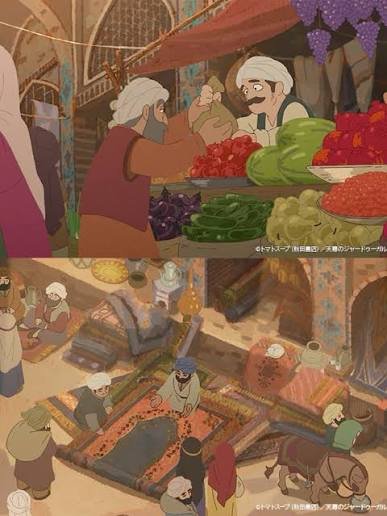
What’s struck many Muslim viewers isn’t a single dramatic moment — it’s the accumulation of small, ordinary details. The adhan plays over establishing shots of the city. Characters wear hijab and traditional dress without the show pausing to explain or justify it. Islamic architecture, ornate rugs, and starry night scenes fill the frame as part of the setting rather than as cultural set-dressing.
One fan interviewed about the series put it simply: rather than being built around a Muslim character’s hardship or internal conflict with her faith, the show treats Islam as something that exists naturally within her world. That distinction has resonated widely — several viewers have noted this is the first time they’ve seen a hijabi lead whose story isn’t centered on struggling with the hijab itself, but on survival, strategy, and grief.
The Cultural Craftsmanship Behind It
Part of what’s earned the show praise is the visible research behind its setting. The series blends Persian visual influences with Japanese animation style, and its dialogue draws directly on Islamic principles — including lines emphasizing that seeking knowledge is a duty for every person, not a privilege reserved for a few. Commentators studying the show’s reception have noted that its historical grounding functions as a gateway for viewers unfamiliar with the Islamic Golden Age, introducing the era’s emphasis on science and scholarship to an international anime audience.
It Isn’t Without Controversy
The show’s reception hasn’t been universally positive. Some critics have raised concerns about how the series frames slavery within its historical setting, while others have debated whether pairing Islamic themes with a “witch” framing sends a mixed message. There’s also been disagreement in the opposite direction, with some viewers arguing the show doesn’t lean into Muslim cultural representation strongly enough. Commentary on the debate has generally pushed back on both sets of criticism, arguing that historical fiction doesn’t need to be a perfect replica of the past to meaningfully and respectfully engage with the culture it draws from.
A Bigger Moment for Representation in Anime
Jaadugar’s reception is also landing at a notable cultural moment — Japan has seen a steady rise in its Muslim population in recent years, including a growing number of Japanese converts, shifting Islam’s image away from being seen purely as a “foreign” religion. Against that backdrop, some viewers see the show’s popularity as more than just a win for representation — it’s being read by some fans as a small but meaningful cultural bridge at a time when Islamophobia remains a persistent global issue.
Final Thoughts
Whatever side of the debate viewers land on, Jaadugar: A Witch in Mongolia has clearly struck a nerve — praised by many for treating Islamic identity as an unremarkable, integrated part of its world rather than a plot device, while still facing pointed criticism over specific historical and thematic choices. That tension is likely to keep the series at the center of anime conversation as it continues its run.
