


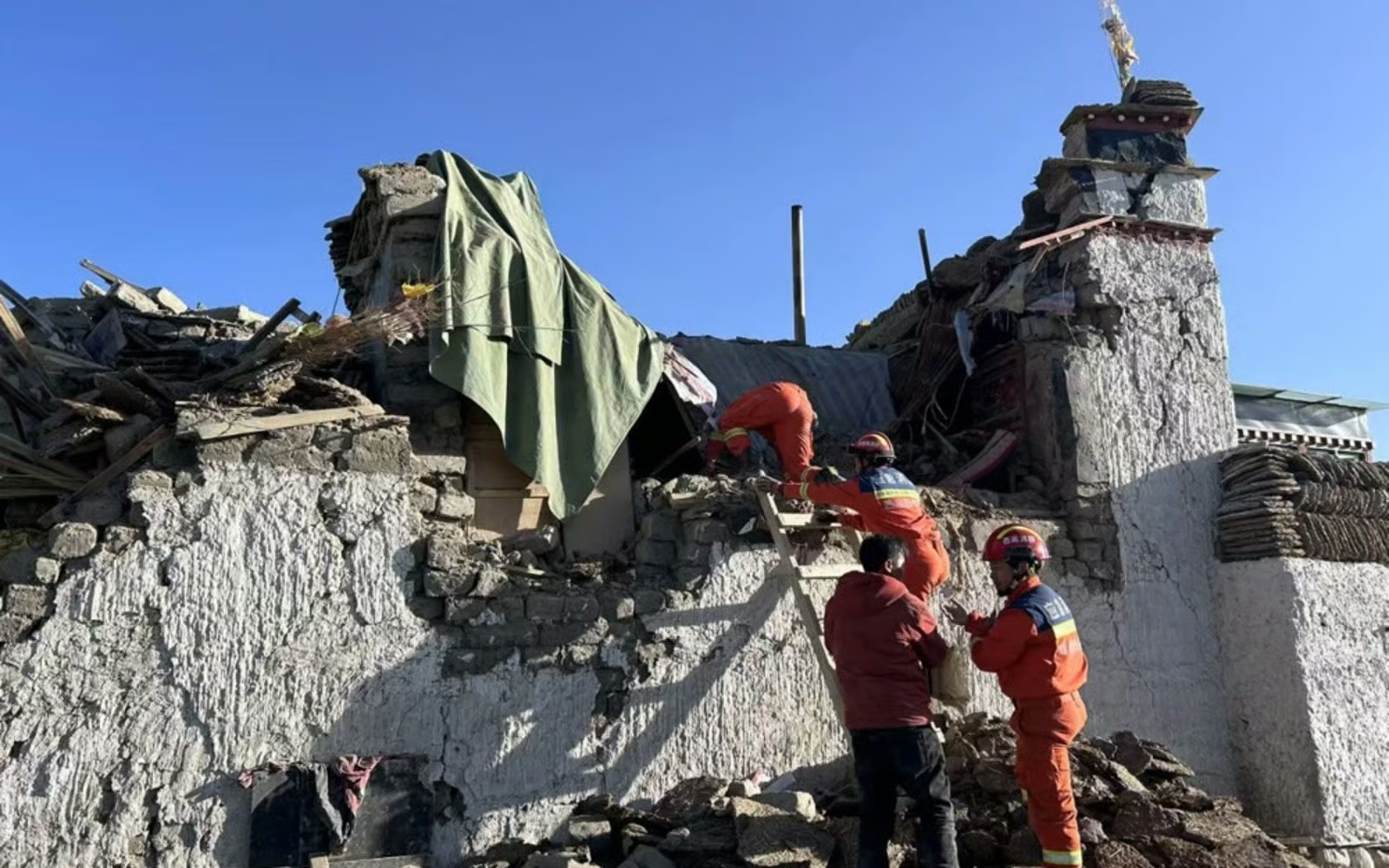
A powerful Tibet earthquake struck the city of Nagqu on the evening of 22 October 2026. State media reported that at least 16 people died and dozens were injured. Hundreds of homes collapsed, and rescue teams are still searching affected areas. Here are the latest facts about the quake, the damage, and the rescue effort.
Tibet Earthquake: What Happened
A magnitude 7.0 earthquake hit northern Tibet on Thursday evening. The US Geological Survey said it struck at 10:33 p.m. local time. The epicentre was about 191 km east-northeast of Nagqu, in a sparsely populated, high-altitude area.
Local officials said the quake was centred in Maru township in Baqing County. The epicentre lies about 390 km northeast of the regional capital, Lhasa. Reuters reported that this was the strongest earthquake to hit China since January 2024.
Death Toll and Injuries
The death toll stood at 16 on Friday. Initially, officials reported 54 injured. Later, the number rose to 65. Because search work is continuing, these figures may change.
Damage to Homes and Services
The damage is serious, especially in village areas. The Nagqu media office said at least 339 homes and 20 livestock sheds collapsed. Xinhua also reported more than 300 collapsed houses.
- Power and telecom services were disrupted in the county seat.
- Communication was down in some of the affected areas.
- Hundreds of aftershocks followed the main quake.
- More than 12,000 people were reportedly moved to safer locations.
Many residents were afraid to return to their houses. As a result, people set up tents along roadsides or spent the night in their cars. The weather in this high-altitude region is cold, so shelter is a major concern.
Rescue Efforts in Nagqu
Chinese President Xi Jinping ordered an all-out effort to find survivors and treat the injured. Rescue teams worked through the night, using torches to search collapsed houses.
Several groups joined the operation:
- Baqing County mobilised more than 1,600 people for relief work.
- The Nagqu fire and rescue brigade sent 110 personnel and 25 vehicles.
- The Nagqu Armed Police Detachment sent 225 officers and soldiers with 18 vehicles.
Why Is Tibet Prone to Earthquakes?
Tibet sits in a seismically active zone. Earthquakes of this size are still rare in the region. However, China has seen several deadly quakes in recent years:
- January 2025: a quake in Tibet’s Tingri county killed at least 126 people.
- December 2023: a quake in Gansu province killed at least 148 people.
- 2014: a quake in Yunnan province killed more than 600 people.
Tibet is largely closed to foreign journalists. Therefore, much of the information comes from Chinese state media.
Earthquake Safety Tips
Pakistan is also an earthquake-prone country. These simple steps can protect you during a strong quake:
- Drop to the ground, take cover under a sturdy table, and hold on.
- Stay away from windows, heavy shelves, and unsafe walls.
- If you are outdoors, move to an open area away from buildings and power lines.
- Expect aftershocks, and do not re-enter damaged buildings.
- Keep water, a torch, a first-aid kit, and important documents ready.
Frequently Asked Questions
How strong was the Tibet earthquake?
It had a magnitude of 7.0, according to reports from the US Geological Survey and state media.
How many people died?
At least 16 people died, and 65 were reported injured. The numbers may rise as rescue work continues.
Where did the earthquake strike?
It struck in the Nagqu area of northern Tibet. The epicentre was in a mountainous area of Baqing County.
Is there still a risk of aftershocks?
Yes. Hundreds of aftershocks followed the main quake, so residents are advised to stay away from damaged buildings.
Conclusion
The Tibet earthquake has killed at least 16 people and left hundreds of homes in ruins. Rescue teams continue to work in cold, high-altitude conditions, with power and communication cuts slowing relief. Check trusted news sources for the latest updates. For more world news, keep following Pakistan Post. You can also read the original report on Dawn.
