

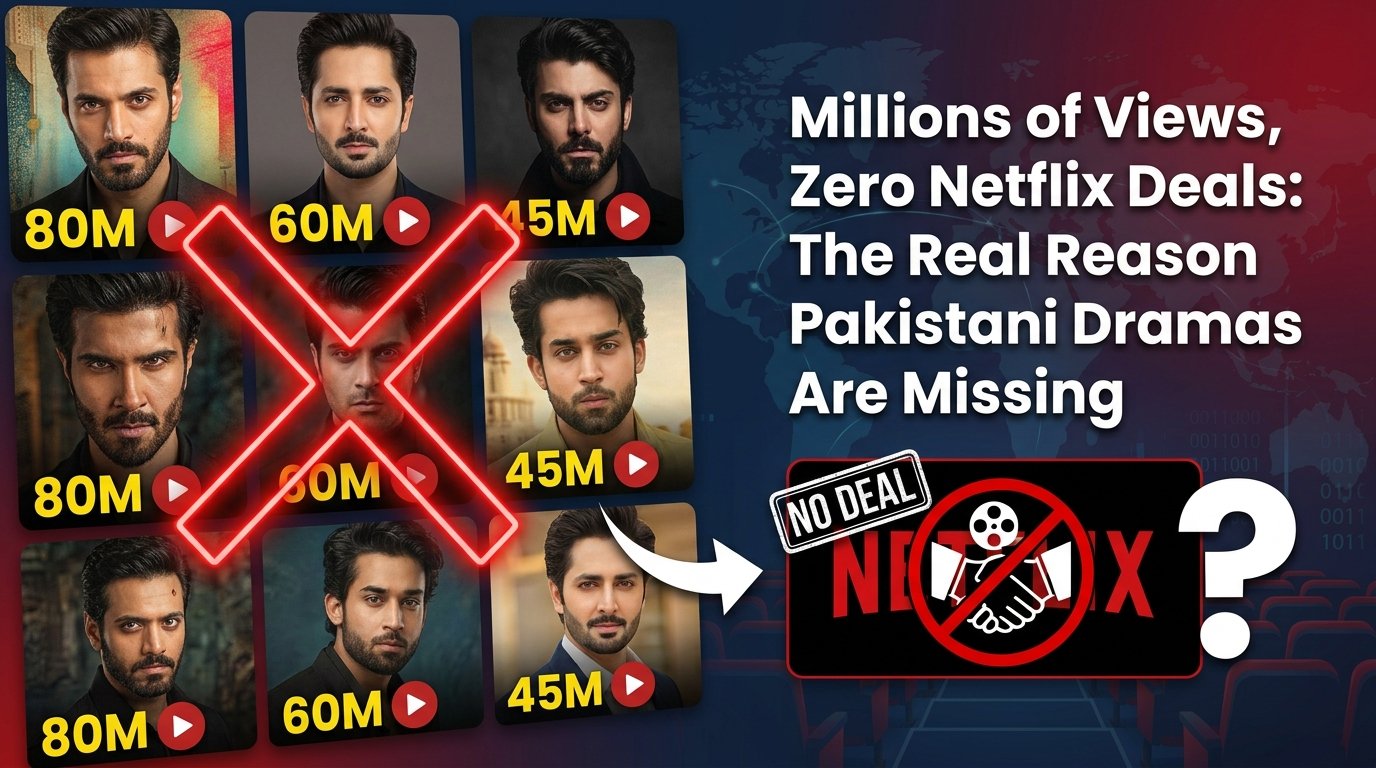
Pakistani dramas rack up hundreds of millions of views on YouTube. They dominate conversations across Karachi, Dubai, London, and Delhi alike. So why can you barely find any of them on Netflix? The answer isn’t simple, and it isn’t just one thing — it’s a tangled mix of geopolitics, business economics, and storytelling habits that together have kept one of South Asia’s most-watched TV industries almost entirely locked out of the world’s biggest streaming platform.
The Numbers Don’t Add Up — And That’s the Whole Point
Here’s what makes this genuinely puzzling: Pakistani dramas are not struggling for audiences. They’re struggling for access. Individual serials routinely cross the hundred-million-view mark, and Pakistani drama channels collectively generate billions of views. For many viewers across South Asia and the diaspora, YouTube — not Netflix — is simply where Pakistani television actually lives. That’s a massive, proven, hungry audience that global streaming platforms would normally be racing to capture. Instead, Pakistani content remains almost entirely absent from Netflix and Amazon Prime Video’s original lineups.
Theory One: Geopolitics and Netflix’s Regional Office Setup
One of the most frequently cited explanations traces back to a structural business decision Netflix made years ago. Filmmaker Nabeel Qureshi has explained that Netflix originally handled deals from its Los Angeles headquarters, but later shifted decision-making for Urdu and Hindi content to a regional office based in India. According to Qureshi, since that shift, Pakistani content has struggled to get acquired at all — and when rights are purchased, the payments are reportedly too low to be worthwhile.
Filmmaker Mehreen Jabbar has echoed similar concerns, describing what she calls an “unspoken pressure” and “unsaid bias” shaping decisions at Netflix’s regional hub — tied, in her view, to the political realities of where those decisions are actually being made. Journalist Maria Memon has framed it as a structural bottleneck: unless Pakistan’s government can negotiate directly with Netflix’s global administration rather than going through a regional office, Pakistani content will keep facing an uphill climb.
This theory gained further weight during periods of heightened India-Pakistan tension. Following the 2025 India-Pakistan conflict, Indian streaming platforms were reportedly ordered to remove Pakistani shows entirely — the acclaimed series “Churails,” for instance, was pulled from ZEE5 as a direct result. Separately, some reports have suggested India has quietly limited Pakistani drama availability on Netflix specifically amid rising cross-border demand for that content.
It’s worth being precise here: these are claims and interpretations from industry figures and reporting, not an official policy Netflix has publicly confirmed. Netflix has not issued a public statement explaining its approach to Pakistani content specifically, which is part of what makes the silence itself so frustrating for people in the industry — as one report put it, Pakistan’s first Netflix original finished production over a year ago and still hasn’t been released, with no explanation and no timeline given.
Theory Two: The Business Math Doesn’t Favor Pakistan — Yet
Beyond geopolitics, there’s a more straightforward commercial explanation. Actor Faisal Qureshi has pointed to Pakistan’s digital market limitations directly: many Pakistani viewers rely on shared Netflix accounts rather than individual paid subscriptions, which significantly reduces the country’s commercial value to Netflix compared to larger, more monetizable markets. From a pure business standpoint, a massive free YouTube audience doesn’t necessarily translate into a market Netflix sees as worth heavily investing in.
Theory Three: Pakistani Dramas Aren’t Built for the OTT Format
There’s also a genuine creative and structural mismatch at play. Global streaming hits — from South Korean dramas to Turkish historical epics — tend to follow a tight 6-to-10-episode season format. Pakistani dramas, by contrast, often stretch from 30 to 50 episodes, a format shaped by decades of local TV and advertising economics rather than the international streaming model. Industry analysts note that this wasn’t always the case — during the PTV era, Pakistani dramas were often tightly written around 13 episodes. The shift toward much longer runs came later, and it doesn’t easily translate to how global platforms package and market content today.
Beyond length, some analysts argue Pakistani creators face genuine structural gaps: few dedicated OTT-focused screenwriting labs, workshops, or mentorship programs exist locally to help writers and directors adapt to the different pacing and storytelling demands of streaming formats. Producers who have worked directly with global platforms also point to Netflix’s rigorous creative oversight process — multiple rounds of revisions and strict adherence to international benchmarks — as something Pakistan’s TV industry isn’t yet fully structured to deliver on a consistent, timely basis.
Theory Four: Self-Censorship and Risk Aversion
There’s a cultural dimension too. Faisal Qureshi has noted that international platforms tend to prefer content reflecting a society’s full picture, including its genuine challenges and shortcomings — but presenting those honest narratives can carry real social and professional risk for Pakistani creators. Many reportedly self-censor to avoid the kind of backlash that can quickly escalate on social media in a more conservative cultural environment. That risk-aversion pushes creators toward familiar, tested local formats rather than the bolder, more experimental storytelling Netflix’s global audience has come to expect from shows like “Churails” — itself a rare example of a Pakistani series that pushed boundaries, and one that faced real institutional pushback for doing so.
Is Anything Actually Changing?
There are signs of movement. Federal Minister for Planning and Development Ahsan Iqbal has stated that the government is actively working to expand Pakistani films and dramas onto international streaming platforms, describing the entertainment sector as an important contributor to the country’s exports. The government has also announced plans for a homegrown platform called “Apna OTT,” intended to give Pakistani creators a direct international showcase independent of Netflix’s acquisition process entirely. Meanwhile, industry observers note that Pakistan’s first Netflix original series is reportedly expected to arrive soon, which many see as a potential turning point — though, as of now, no confirmed release date has been announced.
So, Which Explanation Is Actually Right?
Probably all of them, to varying degrees. This isn’t a single-cause problem with one clean villain — it’s a genuine convergence of geopolitical friction, an under-monetized domestic streaming market, a storytelling format built for a different era of television, and understandable creative caution in a challenging social environment. Untangling any one of these factors wouldn’t fully solve the problem on its own, which is likely part of why progress has been so slow despite years of industry frustration and a massive, clearly proven audience waiting on the other side.
Frequently Asked Questions
Why aren’t Pakistani dramas available on Netflix?
There’s no single confirmed reason. Industry figures point to a mix of factors: Netflix’s regional content decisions reportedly being handled through an India-based office, low commercial value from Pakistan’s shared-account subscription culture, Pakistani dramas’ much longer episode formats compared to global OTT standards, and creative self-censorship shaped by social and professional risk.
Has Netflix officially explained its approach to Pakistani content?
No. Netflix has not issued a public statement addressing this specifically, which industry insiders say adds to the frustration, since projects have reportedly been completed and left unreleased without explanation.
Is a Pakistani Netflix original coming soon?
Reports suggest Pakistan’s first Netflix original series has been completed and may be released soon, though no confirmed release date has been announced as of now.
What is “Apna OTT”?
It’s a planned Pakistani-government-backed streaming platform intended to give local creators a direct international showcase, independent of acquisition decisions made by platforms like Netflix.
For now, Pakistani dramas remain a massive, proven success story on YouTube while staying largely locked out of the world’s biggest streaming stage — a genuinely frustrating gap between audience demand and platform access that no single fix seems likely to close overnight.
