

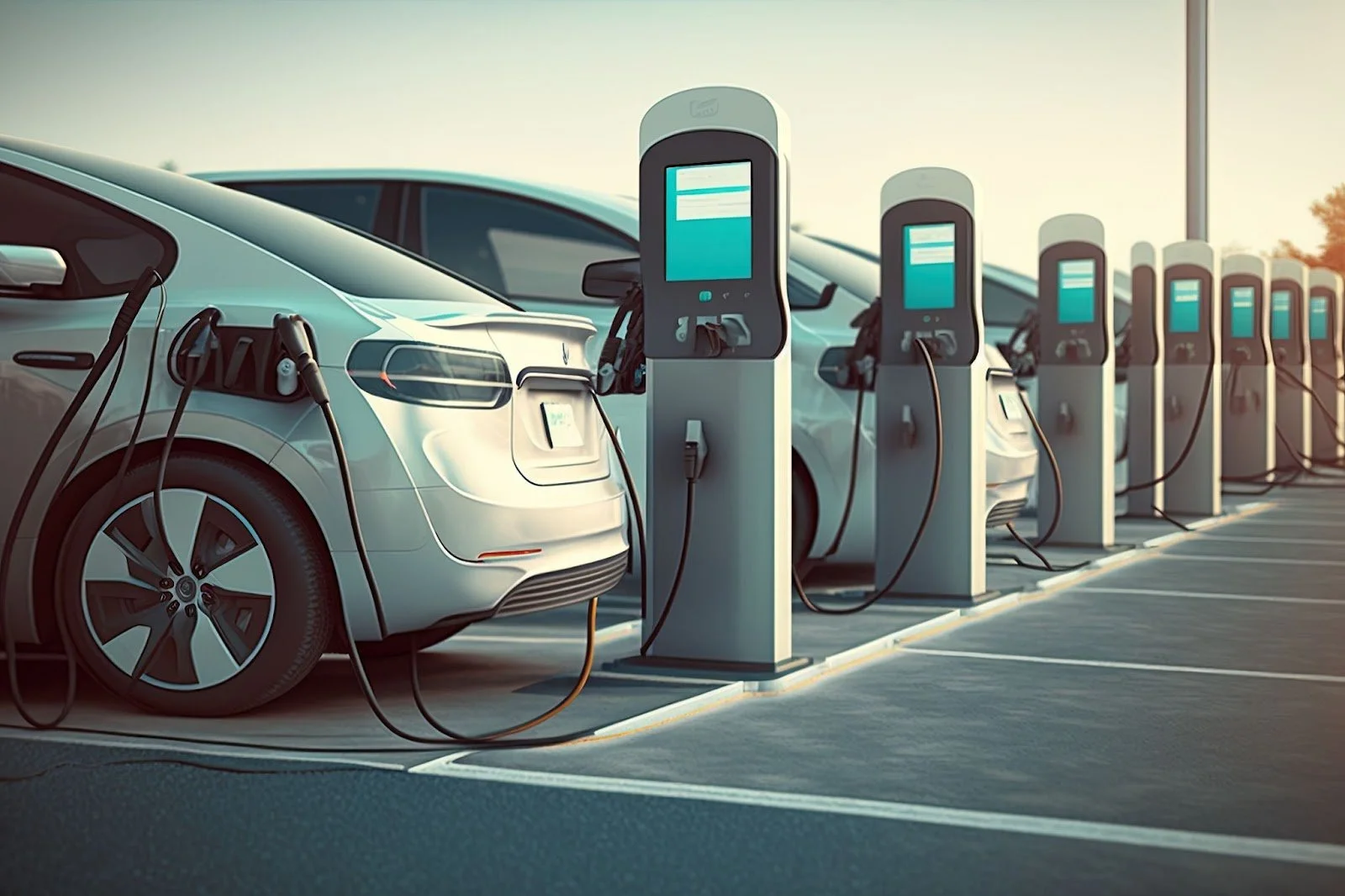
Prime Minister Shehbaz Sharif has given the green light to sweeping tax relief for new energy vehicles (NEVs) under Pakistan’s draft Auto Policy 2026-31, aiming to make electric and hybrid vehicles significantly cheaper while continuing to protect the country’s existing conventional vehicle manufacturers.
What Tax Relief Was Approved
| Measure | Detail |
|---|---|
| Sales tax on NEVs | Reduced to just 1% — applies to vehicles, CKD kits, parts, inputs, and raw materials |
| Federal Excise Duty (FED) | Fully exempted for NEVs |
| Capital Value Tax (CVT) | Fully exempted for NEVs |
| Withholding Tax (WHT) | Fully exempted for NEVs |
| Customs duty on charging stations | Set at 1% |
| Battery swap stations | Supported through viability gap funding |
| NEV loan limit | Increased from Rs. 3 million to Rs. 10 million |
| Maximum loan tenure | Extended from 3 years to 5 years |
Not All EVs Are Treated Equally
A key decision by the Prime Minister broke from what the policy committee initially proposed. The committee had recommended equal tax treatment for Battery Electric Vehicles (BEVs), Range Extended Electric Vehicles (REEVs), and Plug-In Hybrid Electric Vehicles (PHEVs) — but Shehbaz Sharif rejected that approach, instead instructing officials to separate the categories. Under the final structure, BEVs receive the most favorable tax treatment, followed by REEVs, with PHEVs receiving comparatively less generous treatment.
The Prime Minister also ordered hybrid electric vehicles (HEVs) and conventional internal combustion engine (ICE) vehicles to be treated equally in terms of duties and taxes — a notable shift, since earlier budget cycles had included specific sales-tax concessions for hybrids that this policy does not appear to extend in the same form.
What This Means for Conventional Vehicle Buyers and Makers
The policy isn’t only about EVs. Existing assemblers of conventional vehicles will continue receiving protection for four more years, giving the local industry a transition window rather than an abrupt shift toward electrification. At the same time, the Prime Minister ordered the abolition of the proposed federal excise duty on conventional cars below 1000cc, and directed that customs duty on all cars be cut from 30% to 15% by the policy’s fifth year (FY2030-31) — a gradual liberalization of import duties running alongside the EV incentives.
Hybrid vehicles also get a phased break: the draft proposes a 20% reduction in import taxes over five years, along with duty cuts on hybrids up to 1,000cc (from 50% to 30%) and a phased reduction for hybrids above 1,800cc over the same period.
A New Environmental Levy for Larger Vehicles
To help fund these incentives, the government is considering an environmental levy targeting bigger, higher-emission vehicles — a proposed 10% levy on vehicles between 2,001cc and 3,000cc, and a steeper 19.5% levy on vehicles above 3,001cc. Revenue from this levy would reportedly be directed toward export promotion and research and development within the auto sector.
What Happens Next
This is an in-principle approval, not a final, implemented policy. The draft will now undergo legal vetting, after which the Finance Ministry has been directed to submit the proposal to the International Monetary Fund (IMF) for review — expected around October. Only after IMF consultation, followed by approval from the Economic Coordination Committee (ECC) and the federal cabinet, would the policy move to Parliament for formal passage through the Finance Bill.
Why This Matters for Pakistan’s Auto Sector
The government’s broader new-energy vehicle strategy, as outlined in the Economic Survey 2025-26, targets NEVs making up 30% of new vehicle sales going forward — an ambitious goal that this tax relief is clearly designed to support. The timing also comes as Pakistan’s auto sector shows signs of recovery, with car production up 51.3% year-on-year to 115,495 units during July-March FY2026, and 2- and 3-wheeler production up 31.4% to 1.43 million units, alongside the entry of new EV, plug-in hybrid, and hybrid vehicle manufacturers into the local market.
Final Thoughts
With a 1% sales tax, multiple tax exemptions, and significantly expanded financing options now approved in principle, this marks one of the most substantial policy pushes yet to make electric and hybrid vehicles affordable in Pakistan. Whether it delivers on that promise, though, still depends on clearing IMF review, ECC and cabinet approval, and formal passage through Parliament — meaning buyers shouldn’t expect these lower prices to show up on dealership floors immediately.
