


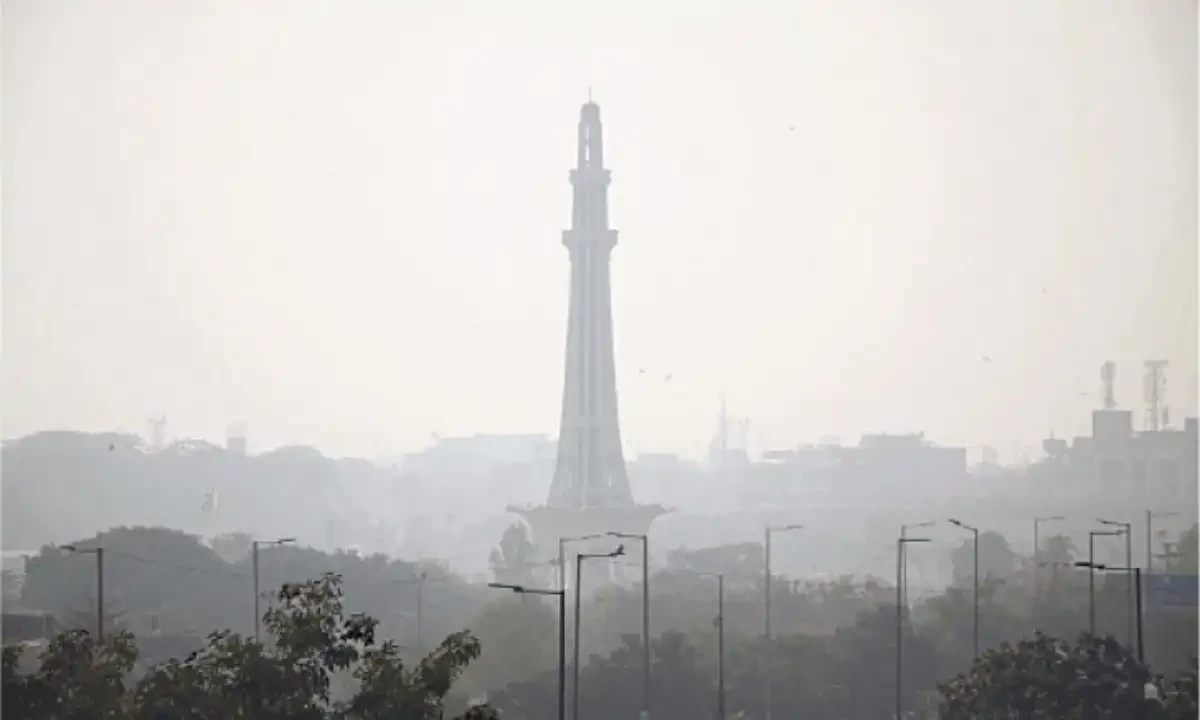
Pakistan loses an estimated 6.5% of its GDP every year to air pollution — not from a single disaster, but from smog, industrial emissions, and burning fuels that never fully clear the sky. As the world marked the International Day of Clean Air for Blue Skies on September 7, 2026, a new policy analysis makes the case that air pollution in Pakistan has become as much an economic emergency as a health one, and that the country already has the policies needed to fix it — just not the financing or enforcement to make them work.
The Numbers Are Genuinely Alarming
Pakistan ranked as the world’s third most polluted country in IQAir’s 2024 assessment, with an average PM2.5 concentration of 73.7 micrograms per cubic meter — roughly 14 to 15 times higher than the World Health Organization’s recommended annual limit of 5 micrograms. The situation is even more severe in specific regions: a World Bank appraisal for Punjab found average annual PM2.5 exposure of about 52 micrograms per cubic meter province-wide, with measured levels in central Lahore reaching 110 to 130 micrograms — more than 20 times the WHO guideline.
The economic toll tracks closely with the health toll. The World Bank’s Pakistan Country Climate and Development Report estimates air pollution costs the country roughly 6.5% of GDP annually in combined health expenditures and productivity losses. A separate World Bank appraisal found that health costs tied to PM2.5 exposure in 2019 alone amounted to about 9% of GDP — a related but distinct estimate that, together with the 6.5% figure, underscores just how large this economic drag really is.
Who Bears the Heaviest Burden
Air pollution’s impact isn’t distributed evenly. World Bank modelling attributes roughly 23% of Punjab’s PM2.5 pollution — and 28% in Greater Lahore specifically — to residential sources, primarily the burning of solid fuels for cooking. That puts women and girls, who more often handle household cooking duties, at disproportionately higher direct exposure, alongside infants and young children breathing the same indoor air. Outdoor workers, low-income households, and communities living near roads, brick kilns, and industrial sites also face elevated exposure with fewer resources available to protect themselves.
Pakistan Already Has the Policies — Just Not the Follow-Through
This isn’t a story about Pakistan lacking environmental policy on paper. The federal government adopted its National Clean Air Policy (NCAP) in 2023, targeting a 38% reduction in PM2.5 emissions by 2030 and 81% by 2040. Punjab approved its own Clean Air Policy and phased action plan the same year. According to policy analysis from Fair Finance Pakistan and the University of California, Davis Air Quality Research Center, the real gap isn’t ambition — it’s implementation. Their review identified nine structural gaps in the national framework and five in Punjab’s, centered on a few recurring problems: a lack of consistent, quality-assured pollution data across provinces, targets without clear funding or enforcement mechanisms, and minimal connection between financial-sector lending decisions and actual pollution outcomes.
Pollution Doesn’t Respect Provincial Borders
One especially notable finding: pollution in Punjab isn’t purely a Punjab problem. World Bank modelling found that 53% of Punjab’s PM2.5 pollution in 2021 originated within the province itself, but 9% came from other Pakistani provinces and 13% from outside the country entirely. That means local clean-air efforts and cross-border, cross-provincial cooperation aren’t competing priorities — they’re both necessary, since no single province or city can fully solve this on its own.
The Proposed Fix: Measure, Govern, Finance
The policy analysis proposes a three-step sequencing approach for turning ambition into results:
- Measure: Build a nationally consistent, quality-assured air-quality monitoring system, paired with source-apportionment studies to determine exactly how much pollution comes from transport, industry, households, agriculture, and other sources in each region.
- Govern: Convert that data into enforceable standards with named institutional responsibilities, compliance mechanisms, and transparent public progress reporting.
- Finance: Connect verified pollution and emissions data to lending decisions — meaning banks, investors, and development-finance institutions would factor pollution risk and cleanup performance directly into loans, guarantees, and transition financing for industry.
That financial piece is a notable emphasis in the analysis: the argument is that Pakistani banks and lenders currently have little incentive to reward companies that clean up their emissions, and that connecting credit terms to verified environmental performance could accelerate industrial transition without cutting off capital that viable businesses need to modernize.
Why This Matters Beyond Winter Smog
One point the analysis stresses repeatedly: air pollution in Pakistan isn’t just a seasonal winter smog problem confined to a few bad months in Lahore. It’s a year-round drag on labor productivity, healthcare spending, education (through school closures during severe smog episodes), agricultural yields, and business operations. Framing it primarily as a wintertime nuisance, rather than a persistent structural economic cost, is part of what the report argues has kept policy responses reactive rather than sustained.
Frequently Asked Questions
How much does air pollution cost Pakistan’s economy?
The World Bank estimates air pollution costs Pakistan roughly 6.5% of GDP annually in combined health expenditures and productivity losses, with a separate assessment putting 2019 health costs specifically at about 9% of GDP.
How polluted is Pakistan compared to other countries?
Pakistan ranked third most polluted globally in IQAir’s 2024 assessment, with an average PM2.5 concentration of 73.7 micrograms per cubic meter — about 14 to 15 times higher than WHO’s recommended limit.
Does Pakistan have policies to address air pollution?
Yes. The federal National Clean Air Policy (2023) and Punjab’s Clean Air Policy set specific emissions-reduction targets, but policy analysts say implementation gaps — particularly around data, enforcement, and financing — remain the main barrier to progress.
Who is most affected by air pollution in Pakistan?
Women and girls face disproportionate exposure due to household cooking roles, alongside infants, young children, outdoor workers, and low-income communities living near high-pollution sources like roads, brick kilns, and industrial sites.
Pakistan’s air pollution crisis is described by policy experts as genuinely solvable — but only if it’s treated as a measurable, financed, year-round priority rather than a seasonal inconvenience to manage each winter and forget about the rest of the year.
