


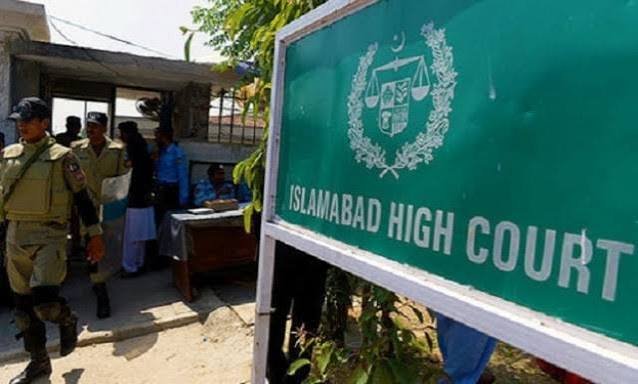
The Islamabad High Court (IHC) has ruled on the petition challenging PTI’s planned September 27 march — and rather than blocking the protest outright, it’s placed the burden squarely on provincial governments: no government resources, officials, or machinery can be used to support it.
What the Court Actually Ordered
A larger bench headed by IHC Chief Justice Sardar Muhammad Sarfraz Dogar, along with Justice Muhammad Azam Khan and Justice Muhammad Asif, disposed of the petition with a short order carrying several specific directives:
- No political party or leadership has the “lawful right” to occupy public roads, highways, interchanges, toll plazas, or buildings in Islamabad in a way that blocks access to educational institutions or medical facilities
- No political party or leader has the right to obstruct citizens’ free movement
- Provincial governments must ensure public funds or government officials are not used for any march, procession, or rally
- Official vehicles, machinery, or other government equipment must not be used to facilitate the protest
- No public servant can be compelled to participate in any march, procession, or rally
- Any public office holder acting against these instructions is to be considered in violation of the Constitution
The court directed the Islamabad administration and interior ministry to protect citizens’ constitutional rights, while chief secretaries and provincial police chiefs were tasked with ensuring the directives are actually implemented. The interior secretary, Islamabad chief commissioner, and inspector general were separately directed to ensure compliance.
How the Hearing Unfolded
The bench reserved its verdict earlier in the day after Khyber Pakhtunkhwa’s police chief gave the court an assurance that no “illegal or unconstitutional activities” would be permitted in connection with the protest. Much of the hearing centered on a dispute over whether PTI’s planned march could genuinely be called peaceful.
Islamabad’s Advocate General, Naveed Hayat Malik, was permitted — after some initial reluctance from Chief Justice Dogar, who noted video screenings weren’t standard court practice — to play footage from PTI’s 2022 and 2024 protests. He argued the demonstrations could not be described as peaceful, alleging that barriers had been removed with cranes during the 2022 protest, that property at D-Chowk was set on fire, and that a police official was killed. He made similar allegations about the 2024 protest, describing it as an “assault on Islamabad” and alleging protesters fired shells at police and that Rangers personnel were run over by a vehicle.
The Islamabad AG also laid out the existing legal framework: anyone seeking to hold a protest in the capital must submit a detailed application, with the district magistrate empowered to approve or reject it, and the government retains authority to declare red zones or impose Section 144 restrictions where needed.
A Sharp Legal Argument From the AG
The Islamabad AG directly challenged PTI’s stated rationale for the march, arguing the protest’s real objectives — securing the release of a “convicted prisoner” and removing the government — were both unconstitutional. He argued that seeking a prisoner’s release should go through legal remedies in court, not street protest, and that dissatisfaction with the prime minister should be addressed through a parliamentary vote of no-confidence rather than “toppling the government in the streets.” He also pushed back on PTI’s framing that the march aimed to “strengthen the judiciary,” arguing rising litigation numbers actually reflected growing public confidence in the courts, not the opposite.
The Petitioner’s Response
The petitioner’s lawyer, Chheena, rejected arguments that the case was premature, framing it around his own fundamental rights — his life and his children’s access to education. He argued a citizen shouldn’t have to wait for actual harm before seeking judicial protection, asking pointedly whether he should “only come to court after my children’s school has been seized.” He also raised a sharper question tied to KP Chief Minister Sohail Afridi’s public statements about bringing millions of people to Islamabad: if that mobilization succeeded, would the court then be expected to order the release of the “prisoner” the protest was demanding freedom for — and what would that mean for judicial independence?
A Tense Exchange Over the KP Police Chief’s Affidavit
The court also called KP Inspector General Zulfiqar Hameed to the rostrum to read out a submitted affidavit. When the petitioner’s counsel argued the affidavit should explicitly commit to preventing any “illegal or unconstitutional gathering,” Chief Justice Dogar pressed the IG directly: “If an illegal and unconstitutional act takes place, will you not stop it?” The IG assured the bench that any illegal activity would be stopped, and the court recorded his sworn statement to that effect — with Justice Dogar personally directing that the undertaking be redrafted to explicitly state that unlawful protest activity would be prevented and dispersed.
Notably, after the verdict, KP’s Advocate General told Dawn he would “not own” the police chief’s undertaking, separately noting the KP government was working on “restructuring of bureaucracy, free from the Centre’s influence” — a comment suggesting some daylight between the provincial government’s political position and the assurance its own police chief gave the court.
What This Means Going Forward
The ruling doesn’t ban PTI’s September 27 march, but it does draw firm boundaries: provincial governments — including KP, where PTI holds power — cannot use public resources, vehicles, or personnel to support it, and any official who does so risks being found in violation of the Constitution. Enforcement now falls to chief secretaries, provincial police chiefs, and Islamabad’s administration, with the court’s directives creating a clear paper trail for accountability if government resources are found to have been used regardless.
Final Thoughts
By disposing of the petition with conditions rather than an outright ban, the IHC has avoided directly blocking a major political demonstration while still asserting firm limits on how provincial governments can engage with it — a middle path that leaves PTI free to proceed with its march, but under close scrutiny over exactly how it’s organized and resourced. Whether the KP government’s on-record court commitments hold up in practice, given the Advocate General’s own comments distancing the province from its police chief’s undertaking, is likely to be one of the more closely watched details as September 27 approaches.
