


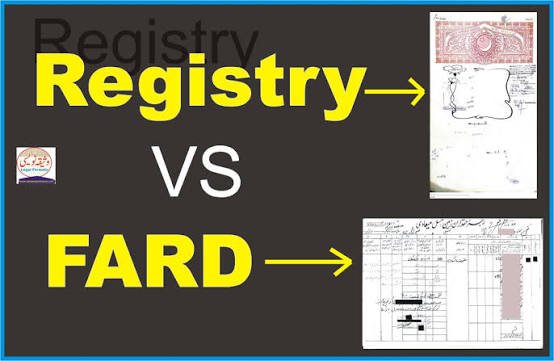
A registry is the sale deed that records a sale. An intiqal, also called mutation, is the change of ownership in the land revenue record. A fard is a document that shows who owns the land according to that record. They are linked but not the same, and sources disagree on which one proves ownership. Here is what each one means, how they differ and what to check before you buy.
The Three Terms in Simple Words
- Registry (bay-e-nama): The sale deed. It records the sale and is registered at the sub-registrar’s office, according to Zameen and ProPakistani.
- Intiqal (inteqal or mutation): The change of the owner’s name in the land records, kept by the patwari or tehsildar, according to ProPakistani.
- Fard: A document that proves ownership of a piece of land and lists its location, size and property type, according to Zameen’s glossary.
Registry and Intiqal Compared
| Registry | Intiqal (mutation) | |
|---|---|---|
| What it is | A sale deed on stamp paper | An entry in the revenue record |
| Handled by | Sub-registrar | Patwari or tehsildar |
| Needs a sale? | Yes, it reflects an actual sale | No, it also applies to inheritance and gifts |
| Shows possession? | It can indicate whether possession was handed over | No |
| Where disputes go | Civil courts | Usually revenue officers, sometimes civil courts |
| Where it is common | Mandatory in urban areas | Common in rural areas |
This table is from a ProPakistani explainer (15 July 2022).
Which One Proves Ownership?
The two explainers disagree:
- Zameen (2019, updated 2021) says inteqal “transfers ownership of the property,” and that a registry alone does not put the property in your name on local records. It says a registry is mandatory after a sale and an inteqal is optional but recommended.
- ProPakistani (2022) says a registry is the more legally credible document, and an intiqal is “just an entry in revenue record” that is weaker and more open to challenge.
These views are not easy to reconcile, and the law and practice differ by province and by whether records are computerised. Ask a lawyer about your own case.
Where the Fard Fits In
Neither explainer discusses the fard. Zameen’s glossary says a fard is needed to register a property. Based on that and the other definitions above, a fard is the record of who the land officially belongs to, so it is a good way to check whether an intiqal has been done. I could not find an official source that states this directly, so treat it as a reading of the sources.
See our guide on how to read a fard for the key terms, and how to get one in Punjab.
The Usual Order of Steps
- Check the fard: Make sure the seller’s name is on the record.
- Registry: Zameen lists verifying the seller’s documents, getting a No-Objection Certificate, drafting the agreement, paying dues, buying stamp paper and submitting it to the registrar.
- Intiqal: Zameen says to go to the Sub-Registrar’s office with the registry deed, identification, the seller’s original title deed and any power of attorney. The deed comes about a month later. ProPakistani says registry is generally first and intiqal comes later.
- Check the fard again: After the intiqal, get a fresh fard to see your name.
Zameen says the process may vary by province. The first fard check and the last one are my suggestion, not an official step.
Costs From the Zameen Article
Zameen’s 2019 article gives these approximate costs for a registry: about Rs3,000 for a newspaper advertisement, about Rs5,000 for a lawyer or deed writer, stamp duty of 3%, Capital Value Tax of 2%, a registration fee of 1% and town tax of 1% of the property value. It does not state the intiqal fee. These figures are old and rates change, so confirm them with the sub-registrar. I could not open a more recent report on land record fees.
Tips Before You Buy
- Do not rely on an intiqal or a registry alone. Check the fard and the sale deed.
- Make sure the seller’s name matches the record and their CNIC.
- Never pay in cash without a stamped receipt.
- Use a lawyer to check the chain of ownership.
- Keep copies of every document.
What I Could Not Confirm
- Which document is stronger in law, since sources disagree.
- How the fard relates to the other two in an official source.
- Current fees and how the process works outside Punjab.
This is general information, not legal advice.
Frequently Asked Questions
What is a registry?
A sale deed on stamp paper, registered at the sub-registrar’s office.
What is an intiqal?
The change of ownership in the land revenue record, also called mutation.
What is a fard?
A document that proves ownership of land, with its location and size.
Is a registry enough to own a property?
Sources disagree. Zameen says the intiqal transfers ownership, while ProPakistani says the registry is more credible. Ask a lawyer.
Do I need an intiqal after a registry?
Zameen recommends it to avoid problems when you resell.
Can an intiqal happen without a sale?
Yes, for inheritance or gifts.
Check the fard, complete the registry and the intiqal, then get a fresh fard in your name.
