

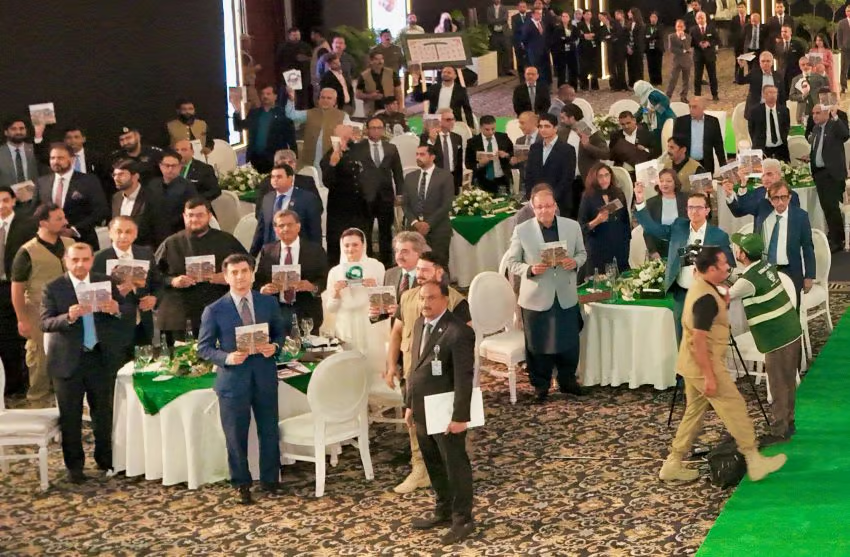
Punjab has a new big plan to grow its factories and sell more products abroad. On Friday, October 30, 2026, Chief Minister Maryam Nawaz launched the PIVOT Plan 2026-29 in Lahore. It is a roughly Rs2 trillion strategy to make Punjab an export-led industrial hub. Here is what the plan promises, how the money is meant to be spent, and what to watch next.
What Is PIVOT?
PIVOT stands for Punjab Innovation for Value, Opportunity and Transformation. It is a three-year plan for 2026 to 2029. The government says it aims to:
- Add $6.8 billion in extra exports
- Create 162,000 new direct jobs
- Support more than one million families
The chief minister said the plan will not remain a paper of targets. She said the government will track progress, measure it, and check the results. Her message to investors was that the government will make things easier, and industry will lead.
Where Will the Money Come From?
The plan combines public and private money. Here are the main figures from the launch:
| Item | Amount |
|---|---|
| Public investment | Rs1,089 billion |
| Private-sector investment target | Rs906 billion |
| Spending to strengthen industry, value addition, and export strength | Rs753.7 billion |
| Cheap loans for businesses (STEP) | Rs300 billion |
| Solar power and battery storage | Rs50 billion |
| Refunds of duty on machinery | Rs50 billion |
These are parts of the same plan, so do not add them all up. The public and private investment together come to about Rs2 trillion.
Cheaper Loans: The STEP Programme
A main part of the plan is the Strategic Trade Enhancement Programme (STEP), which comes with a new online portal. The government wants to give Rs300 billion in loans at rates between zero and five percent to eligible businesses, so they can borrow at lower cost to grow. Terms and conditions will apply.
Help for Factories
- Solar and batteries: Rs50 billion is set aside for solar power and Battery Energy Storage Systems, to help factories with high electricity costs.
- Machinery refunds: Another Rs50 billion will repay duties on machinery, so manufacturers can upgrade factories, adopt new technology, and meet international quality standards.
- Labs and industrial parks: The plan includes modern testing laboratories, certification centres, and “plug-and-play” industrial space to help businesses meet the rules of foreign markets.
Which Industries Are Included?
PIVOT focuses on manufacturing industries that already sell abroad, including:
- Garments and textiles
- Sports goods
- Leather and footwear
- Surgical instruments
- Pharmaceuticals
- Fans
- Cutlery
- Steel
- Ceramics
Farming and Food Processing
The plan wants to move agriculture beyond selling raw crops. It includes four special agro-processing parks, one each in Sargodha, Khanewal, Okara, and Bhakkar. It also covers tourism, digital services, and training for workers, with skills courses that match what industry really needs.
Making Business Easier
The government says investors should spend their time building businesses, not dealing with paperwork. Under its E-Biz plan, it wants to put 300 public services online and bring 2,000 firms onto e-commerce platforms. The plan also includes updated labour laws, reforms to public-private partnerships, and approved schemes for leasing state land in nine productive sectors.
Who Will Run It?
- A PIVOT Board led by Senior Minister Marriyum Aurangzeb, on behalf of the chief minister
- A PIVOT Secretariat in the Planning and Development Department
- A PIVOT cell in the chief secretary’s office
- Deputy commissioners as district-level contact people
Who Attended the Launch?
The event brought together business leaders, bankers, diplomats, and development partners, including the World Bank, the Asian Development Bank, and the United Nations. State Bank of Pakistan Governor Jameel Ahmad said small and medium business (SME) financing grew 61 percent to Rs1.1 trillion by June 2026, reaching nearly 326,000 borrowers. He said the aim is to reach Rs2 trillion and 775,000 borrowers by the 2028 financial year.
Business leaders from Nishat Group, Gul Ahmed Textiles, Arif Habib Group, Fatima Group, and the American Business Forum welcomed the plan. Gul Ahmed’s Ziad Bashir listed six strengths of Punjab: security, motorway links, reliable energy, digital land records, quicker approvals, and a market of 120 million people.
What to Watch Next
These numbers are targets, not results. The real test will be whether the cheap loans reach businesses, whether factories get the energy and machinery support, and whether exports and jobs actually grow. The government says progress will be tracked and measured, so updates on the PIVOT portal and Board meetings will be worth following.
Frequently Asked Questions
What is the PIVOT Plan?
A Rs2 trillion, three-year (2026-29) economic plan by the Punjab government to boost industry and exports.
What does the plan aim to achieve?
$6.8 billion in extra exports, 162,000 direct jobs, and support for more than one million families.
What is STEP?
The Strategic Trade Enhancement Programme, which plans Rs300 billion in loans at zero to five percent for eligible businesses.
Which industries does it cover?
Garments and textiles, sports goods, leather and footwear, surgical instruments, pharmaceuticals, fans, cutlery, steel, and ceramics.
Who will oversee it?
A PIVOT Board led by Senior Minister Marriyum Aurangzeb, with a secretariat and district-level contact persons.
PIVOT is Punjab’s biggest recent push to turn factories into exports. The plan is bold on paper, and the coming months will show how much of it reaches businesses and workers.
