

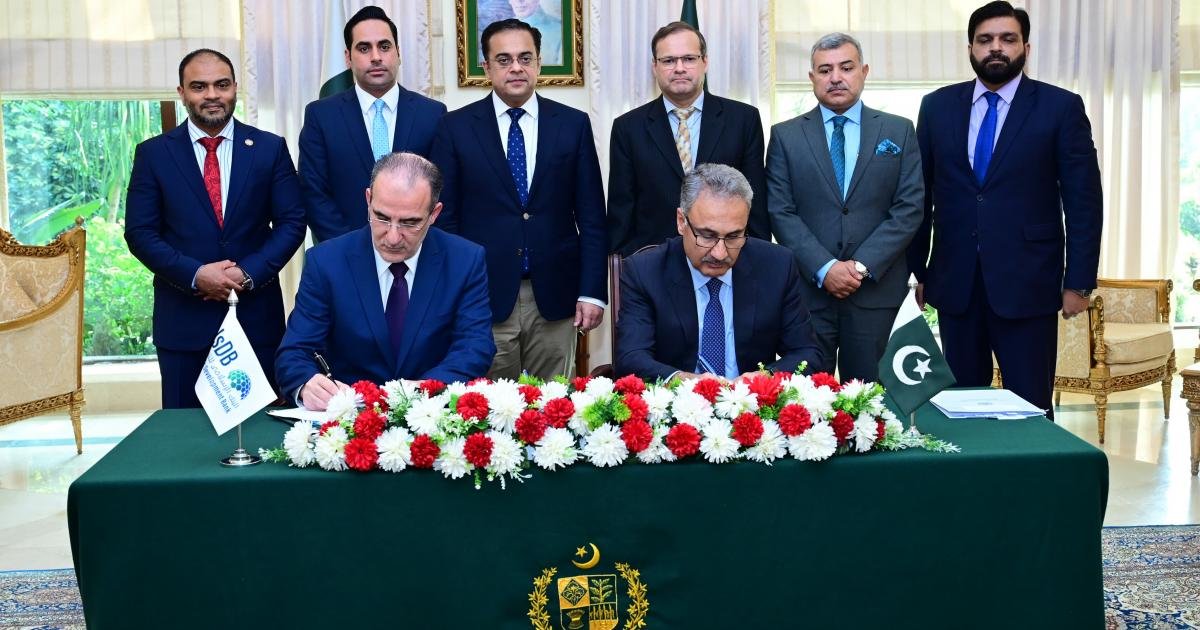
The European Union just gave Pakistan a big gift of money — €65 million, which is about Rs. 20.64 billion. This EU Pakistan €65 million deal was signed on Monday, September 22, 2026, in Islamabad. The money will be used for three different projects. Here is what happened, explained in simple words.
<!– –>
Who Signed the Agreement?
Two people signed the papers. One was Raimundas Karoblis, the EU’s Ambassador to Pakistan. The other was Muhammad Humair Karim, the Secretary of Pakistan’s Economic Affairs Division. They signed three separate grant agreements at the same event.
What Is a “Grant”?
A grant is money that Pakistan does not have to pay back. It is different from a loan. This makes the €65 million a true gift, meant to help Pakistan grow in specific areas.
The Three Projects the Money Will Fund
The €65 million is split across three separate programmes, each with its own goal:
- Global Gateway Development Facilitation for Pakistan — This project aims to bring more foreign investment into Pakistan. It will also work on improving the tax system and helping the government plan its money better for the long term.
- Energy and Natural Environment Resilience in Khyber Pakhtunkhwa — This project will help bring electricity to rural areas in KP that are currently off the power grid. It will also support the province in managing its natural resources in a sustainable way.
- EU Support to the Rule of Law and Business Environment in Pakistan — This project has two parts. First, it will help people in KP and Balochistan get better access to police, courts, and legal aid. Second, it will help Punjab and Sindh set up better systems for solving business disagreements, making it easier for companies to invest there.
Why Is the EU Doing This?
This money comes from a larger EU spending plan called the Multiannual Indicative Programme, which covers the years 2021 to 2027. Under this plan, the EU already gives Pakistan about €100 million every year for different development projects. The EU has also separately promised €265 million for Pakistan between 2021 and 2024, plus another €135 million for 2025 to 2027. So this new €65 million is part of a much bigger, ongoing relationship — not a one-time gift.
What Officials Said
Secretary Karim thanked the EU for its continued support. He said the new projects match Pakistan’s own goals — bringing in more foreign investment, giving more people access to electricity, and improving how business disputes get resolved. Ambassador Karoblis said the agreements show the EU’s commitment to helping Pakistan grow economically and attract more investment, as part of the EU’s larger “Global Gateway” plan.
Why This Matters for Ordinary Pakistanis
Even though this is a government-to-government deal, the effects are meant to reach regular people over time. If the energy project succeeds, more rural homes in KP could finally get reliable electricity. If the rule-of-law project succeeds, more people in KP and Balochistan could get easier access to courts and legal help. And if the investment-focused project succeeds, more foreign companies could set up business in Pakistan, which can mean more jobs.
Frequently Asked Questions
How much money did the EU give Pakistan?
€65 million, which is about Rs. 20.64 billion, split across three separate development programmes.
Does Pakistan have to pay this money back?
No. This is a grant, not a loan, so Pakistan does not need to repay it.
What will the money be used for?
Three things: attracting more foreign investment, improving electricity access and natural resource management in Khyber Pakhtunkhwa, and strengthening the rule of law and business dispute resolution across several provinces.
Is this the only money the EU gives Pakistan?
No. This €65 million is part of a much larger ongoing partnership, under which the EU gives Pakistan roughly €100 million every year for various development projects.
This agreement is a small but meaningful piece of a much bigger, years-long partnership between Pakistan and the European Union — and its real success will be measured not by the signing ceremony, but by whether these three projects actually deliver results for the people in KP, Balochistan, Punjab, and Sindh over the coming years.
