


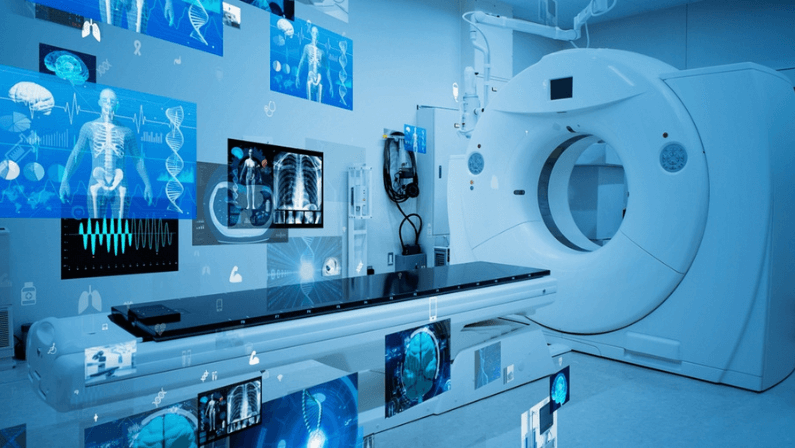
A new AI tool can now look at a CT scan and spot nearly 150 different health problems, including cancer — and the best part is, any hospital or researcher in the world can use it for free. Alibaba’s research team has released this AI cancer detection model, called Damo Radar, as open-source software. Here is what it does, and why doctors are calling it a big deal, explained in simple words.
What Is Damo Radar?
Damo Radar is an AI model built by Damo Academy, which is Alibaba’s research arm. It is what’s called a “vision-language model” — this means it can look at images (in this case, CT scans) and understand them well enough to describe what it sees in medical language, almost like a report a radiologist would write.
The model looks at a special type of scan called a contrast-enhanced CT scan. This type of scan uses a dye to make organs and tissues show up more clearly. Damo Radar was trained to examine 18 different organs in the abdomen (the belly area) and spot a wide range of problems, including cancerous tumors.
Why “Open-Source” Matters
Alibaba didn’t just announce this model — it gave it away for free. The full code, the training method, and the model’s “weights” (the actual trained AI brain) were all released publicly on GitHub and Hugging Face under an open license. This means any hospital, university, or researcher anywhere in the world can download it, study it, test it, and even build their own tools on top of it, without paying Alibaba anything.
How Good Is It, Really?
The numbers behind Damo Radar are genuinely impressive. It was trained using more than 420,000 CT scans and over 15 million pairs of images matched with written medical descriptions. When tested on nearly 40,000 real patient scans, it scored an average of 0.913 out of a possible perfect score of 1.0, across 146 different medical findings.
Here’s the part that really stands out: in a head-to-head test against 26 expert radiologists from different hospitals, Damo Radar’s average accuracy beat 23 of those 26 human experts. On top of that, when doctors used the AI to help them, they missed 10% fewer diagnoses and finished their scan reviews over 30% faster.
A “Generalist” Model, Not Just a Single-Disease Tool
Most medical AI tools built so far are “specialists” — they’re trained to look for just one specific disease, like only breast cancer or only a certain type of tumor. Damo Radar is different. It’s built as a “generalist,” meaning one single model can recognize almost 150 different conditions across 18 organs at once. The research team has called it “the world’s first expert-level generalist medical imaging model,” and they believe the same approach could eventually be expanded beyond CT scans to other types of medical imaging too.
The Research Behind It
This isn’t just a company press release — the work behind Damo Radar was peer-reviewed and published in the journal Science, one of the most respected scientific journals in the world. The research team included scientists from Damo Academy, Zhejiang University, and several affiliated hospitals, giving the project real academic and medical backing, not just a tech company’s marketing claim.
What This Could Mean for Patients
If tools like Damo Radar get adopted more widely, the biggest benefit for patients could be faster and more accurate diagnosis — especially in places that don’t have enough expert radiologists available. Because it’s open-source, hospitals in lower-income countries or under-resourced regions could potentially use or adapt this technology without the high cost that usually comes with advanced medical AI software.
That said, it’s important to be clear: this is a research tool, not yet a fully approved clinical product available in hospitals everywhere. Turning a strong research result into everyday, government-approved medical use in different countries usually takes more time, testing, and regulatory approval.
Frequently Asked Questions
What is Damo Radar?
It’s an open-source AI model created by Alibaba’s Damo Academy that can analyze CT scans and identify nearly 150 abdominal conditions, including cancer, across 18 organs.
Is Damo Radar free to use?
Yes. Alibaba released the full code, training method, and trained model publicly and for free, so researchers and hospitals worldwide can use or build on it.
How accurate is it compared to human doctors?
In tests against 26 expert radiologists, Damo Radar’s average accuracy beat 23 of them, and it helped reduce missed diagnoses by 10% while cutting review time by over 30%.
Is this AI model already being used in hospitals?
Not widely yet. It’s a research breakthrough, published in the journal Science, but real-world hospital adoption typically requires further testing and regulatory approval in each country.
Damo Radar is a genuinely exciting step forward in medical AI — a single, free, open tool that can spot nearly 150 conditions at once, tested to a standard that beats most expert radiologists. Whether it becomes a common tool in hospitals worldwide will depend on how quickly health systems can test, approve, and adopt it in the years ahead.
