


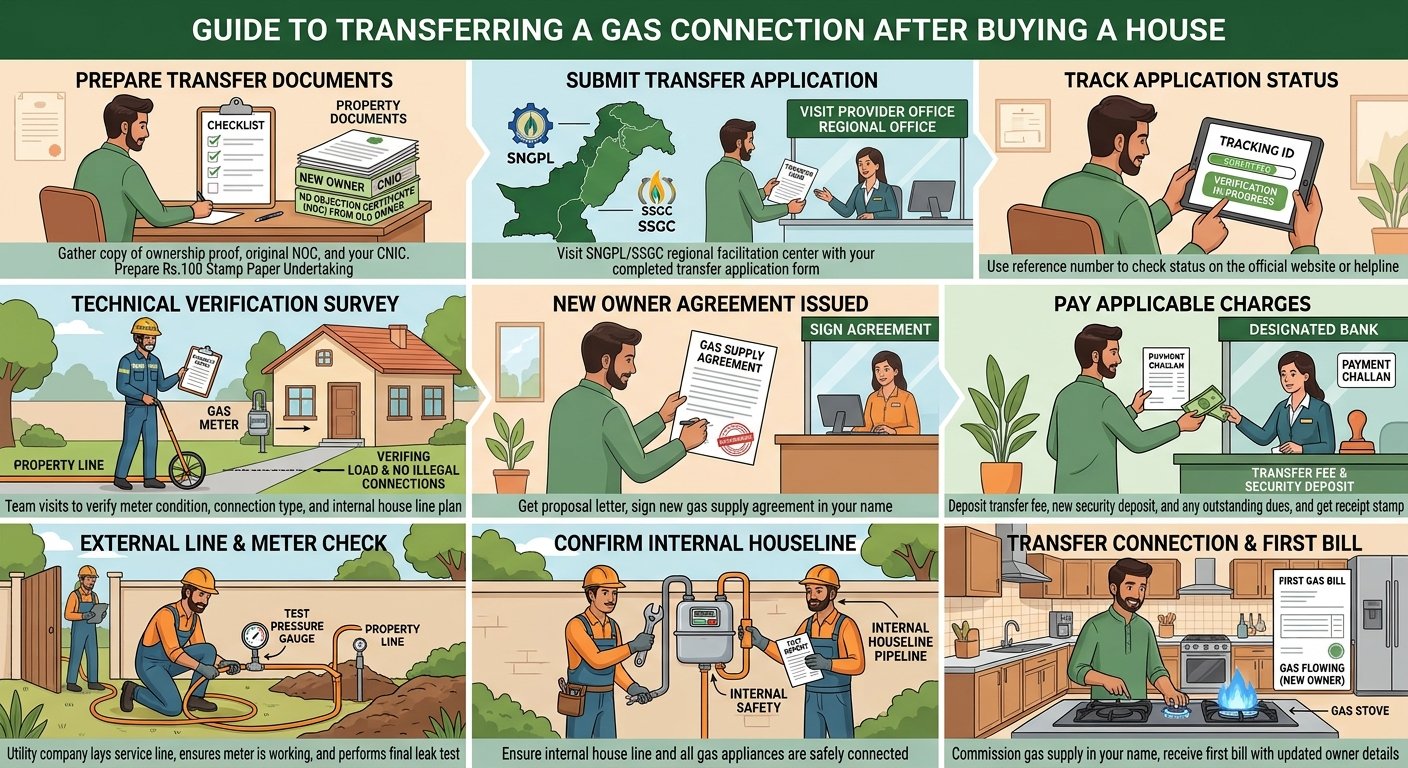
You bought a house that already has a gas meter. Do you need a new connection? No. You can ask the gas company to transfer the gas connection into your name. This is called a “change of name”. It keeps the bills, the contract, and any problems with the old owner from becoming a mess. This guide explains how it works, mainly with SNGPL, what documents you need, and what to check first.
Why You Should Transfer the Connection
- The gas bills will come in your name, so you can manage and pay them properly.
- You sign a new gas sales contract, and this puts you on record as the customer.
- It avoids confusion if the old owner stops paying, or disputes arise later.
One important note from SNGPL: the change of name on a gas bill does not prove you own the property, and SNGPL does not take part in disputes over property ownership.
Is There a Fee?
SNGPL says there is no fee for transferring a gas connection (change of name). Other guides say there may be a nominal fee, especially with SSGC. These sources disagree, so check with your own gas company before you pay anything.
Do You Need the Previous Owner’s NOC?
SNGPL says an NOC from the previous owner is not compulsory when you buy a property. Instead, you take on all risks, liabilities, and responsibility through an affidavit. Some other guides still mention an NOC “if applicable”, so ask the regional office what applies in your case.
Documents You Need After Buying a House
SNGPL’s list for a purchased property includes:
- An application for transfer, addressed to the Chief Sales Officer
- A copy of your CNIC
- A copy of the sale deed, attested by an Oath Commissioner
- A copy of the last paid gas bill
- An affidavit on Rs. 100 non-judicial stamp paper
The affidavit says you bought the property, that it has been transferred in your name in the revenue record, that the previous customer has left, and that you will follow the company’s rules and pay all gas charges. It also says that if your papers turn out to be false, the company can disconnect the gas without notice. SNGPL provides a specimen to copy.
Some guides also list a mutation or registry and the previous owner’s CNIC. Bring any property papers you have, such as the registry or Fard, in case the office asks for them.
Step by Step: How to Transfer
- Check the last bill. Look for any unpaid amount, and note the consumer number and the meter reading.
- Prepare your documents. Get the sale deed attested, and make the affidavit on stamp paper.
- Apply online or in person. SNGPL says you can apply on its website or at an SNGPL regional or sub-regional office. The online form asks for the present owner’s consumer number, then your name, CNIC number and its issue date, mobile number, and email.
- Submit the documents. Attach clear copies.
- Sign the new gas sales contract. SNGPL says a new contract is always signed for every transfer.
- Wait for the update. One recent guide says SNGPL completes the change by the next billing cycle. Check your next bill to see if your name appears.
For SSGC (Sindh and Balochistan), guides say the process is similar. You collect or download the transfer form, submit it with your ownership documents, CNIC, and a recent bill, and pay any fee. Confirm the details with SSGC, because I could not find its official transfer page.
Watch Out for Unpaid Bills (Arrears)
This is the biggest risk. SNGPL’s page says any outstanding dues can be recovered after the transfer through later gas bills. That means if the old owner left unpaid gas bills, you could end up paying them. Before you buy a house, or at least before you transfer the connection:
- Ask the seller for the latest paid gas bill.
- Check the bill for arrears.
- Ask the seller to clear any dues in writing.
- Take a photo of the meter reading on the day you take possession.
What If You Inherited the Property?
SNGPL also handles transfers when a property is inherited. In that case, the application can come from the present owner, a joint owner, or a legal heir. The document list is different from a purchase, so see SNGPL’s page for the exact papers.
Your Name vs What the Company Says: Quick Comparison
| Question | SNGPL’s Own Page | Other Guides |
|---|---|---|
| Transfer fee | None | A “nominal” fee is mentioned |
| Previous owner’s NOC | Not compulsory, replaced by your affidavit | “If applicable” |
| New contract | Always signed | Usually mentioned |
| Proof of ownership | Sale deed, attested | Registry, Fard, or mutation also mentioned |
Common Mistakes to Avoid
- Leaving the connection in the old owner’s name for months
- Skipping the check for old unpaid bills
- Not attesting the sale deed, or making the affidavit on the wrong stamp paper
- Paying an agent to “arrange” the transfer
- Applying for a new connection when you only need a name change
Frequently Asked Questions
Do I need a new gas connection if the house already has a meter?
No. You can transfer the existing connection into your name.
Does SNGPL charge a transfer fee?
SNGPL says there is no fee for a change of name. Other guides mention a nominal fee, so confirm with your gas company.
What is the most important document?
Your attested sale deed, along with your CNIC, the last paid bill, and the stamped affidavit.
Will old unpaid bills become my problem?
They can. SNGPL says outstanding dues can be recovered through later bills after the transfer.
How long does the transfer take?
One recent guide says it is done by the next billing cycle. Timing can vary.
Transferring a gas connection after buying a house is quick and, with SNGPL, free. Check the old bills first, prepare your documents, and put the connection in your name as soon as you take possession.
