


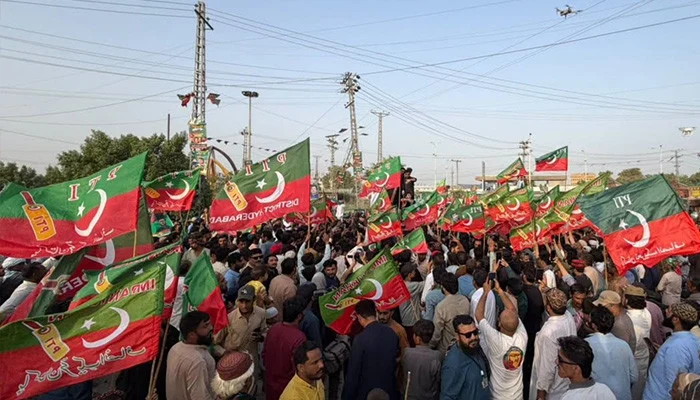
The Islamabad High Court (IHC) has decided to form a larger bench to hear a petition challenging Pakistan Tehreek-e-Insaf’s (PTI) planned September 27 protest in Islamabad, with Chief Justice Sardar Muhammad Sarfraz Dogar describing the matter as sensitive enough to carry constitutional implications.
What the Petition Argues
The case was filed by Waqas Ahmed, an Islamabad-based trader, who argues the planned protest would disrupt routine life, traffic, and business activity in the federal capital. His lawyer, Akhtar Chheena, told the court his client would be directly affected since the demonstration — announced by Khyber Pakhtunkhwa Chief Minister Sohail Afridi — is planned to move into Islamabad itself.
The petitioner’s counsel raised a broader legal argument as well: that allowing street protests to influence the outcome of pending court cases would set a precedent letting anyone with a case before the courts pursue the same route, rather than working through legal channels. He also referenced Pakistan’s 2024 PTI protest, alleging it resulted in the deaths of three Rangers personnel and roughly Rs. 240 million in losses, and questioned whether government resources — including a chief minister’s official vehicle — would again be used to facilitate the demonstration.
What PTI Says the Protest Is About
PTI has framed the September 27 demonstration as a nationwide protest to demand the release of party founder Imran Khan and to mobilize supporters around what the party describes as the “supremacy of the Constitution.” The protest has been publicly announced by KP Chief Minister Sohail Afridi, who has indicated he plans to lead the march into Islamabad.
Why the Court Is Forming a Larger Bench
Chief Justice Dogar’s decision to escalate the case to a larger bench reflects how seriously the court is treating the matter — he reportedly likened the underlying dispute to a “constitutional crisis,” given that it touches on questions of government machinery, judicial independence, and public order. Rather than ruling on a routine administrative matter, the larger bench format signals the court expects to weigh in on broader constitutional questions about the right to protest versus the state’s authority to regulate public order in the capital.
Who’s Been Summoned
| Officials Summoned by IHC |
|---|
| Attorney General for Pakistan |
| Inspectors General of Police — all four provinces, Islamabad, and Motorway Police |
| Chief Secretaries — all four provinces |
| Advocate Generals — all four provinces and Islamabad |
| Chief Commissioner and Deputy Commissioner, Islamabad |
Notably, the court has directed these officials to appear in person rather than simply submit written responses — an indication of how closely the IHC intends to scrutinize the state’s role and preparedness ahead of the planned protest.
What Happens Next
The IHC has adjourned the case until September 10, 2026, giving the summoned officials just days to prepare their responses before appearing in court. With the protest itself scheduled for September 27, the timeline leaves the court roughly two and a half weeks to rule on the petition — a decision that could significantly shape whether, and how, the demonstration proceeds in Islamabad.
Final Thoughts
This case sits at the intersection of two competing claims that Pakistani courts have wrestled with before: a citizen’s right to peaceful protest and the state’s responsibility to maintain public order and protect business activity in the capital. With a larger bench now assigned and senior officials from all four provinces summoned to appear in person, the September 10 hearing is likely to be closely watched as an early signal of how the court intends to balance those interests ahead of PTI’s planned September 27 march.
