


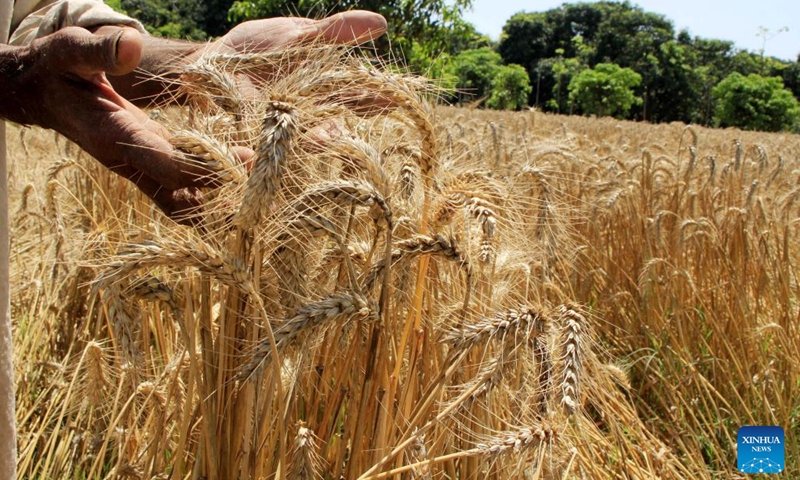
The government has formally approved the import of 750,000 metric tonnes of wheat, with the Trading Corporation of Pakistan (TCP) issuing an international tender to secure the shipment — the first phase of a larger plan to import up to one million tonnes as the country works through a widening gap between wheat production and consumption.
Why Pakistan Is Importing Wheat
Pakistan’s annual wheat consumption is estimated at around 31.3 million tonnes for the 2026-27 market year, while domestic production is forecast at roughly 29.6 million tonnes — leaving a shortfall of close to 1.7 million tonnes. The Economic Survey 2025-26 put actual production at 29.61 million tonnes, up from 28.40 million tonnes the year before, but still not enough to close the gap without imports.
Some farmers’ representatives have also pointed to a separate, longer-term issue: reported gaps between what wheat costs to grow and the government’s procurement price. According to one farmers’ body’s calculations, the current support price of Rs. 3,900 per 40kg maund (set in March 2023) falls short of covering current production costs, which it estimates closer to Rs. 3,761 per maund before profit margin — a factor some link to reduced incentives to grow wheat domestically.
Tender Details
| Detail | Terms |
|---|---|
| Total quantity | 750,000 metric tonnes (±10% at government’s option) |
| Minimum bid size | 50,000 metric tonnes (smaller bids rejected) |
| Delivery basis | Cost and Freight (CFR) |
| Delivery ports | Karachi and/or Gwadar |
| Crop requirement | Must be from the latest (2026) crop |
| Expected delivery | November 2026 |
| Procurement rule | Rule 21(A), Public Procurement Rules, 2004 |
How the Wheat Will Be Distributed
According to government sources, the imported wheat has already been earmarked for three provinces based on their requirements:
| Province | Allocation |
|---|---|
| Sindh | 300,000 tonnes |
| Punjab | 250,000 tonnes |
| Khyber Pakhtunkhwa | 200,000 tonnes |
How We Got Here
Prime Minister Shehbaz Sharif gave in-principle approval for importing up to one million metric tonnes of wheat following requests from the provinces. The Economic Coordination Committee (ECC) of the Cabinet then approved the plan with specific conditions attached — including pre-shipment inspection requirements and confirmation of provincial funding contributions — and formed a steering committee to ensure those conditions were met before the import could proceed.
Deputy Prime Minister and Foreign Minister Ishaq Dar, who chaired the committee overseeing the decision, confirmed the first phase would cover 750,000 tonnes, with delivery scheduled for November. He also directed the Pakistan Agricultural Storage and Services Corporation (PASSCO) to immediately release wheat to provinces according to already-approved allocations, and told provincial governments to ensure timely payment and lifting of their allotted supplies.
What This Means for Consumers
The stated goal behind the import is straightforward: boost market supply to prevent further increases in flour and roti prices, particularly amid concerns that some wheat held in private storage hasn’t been released into the market at the expected pace, with hoarders and middlemen reportedly holding stock while anticipating higher prices. PASSCO’s own strategic reserves — which stood at around 1.783 million tonnes as of early July — provide a buffer, but officials have flagged those reserves as nearing levels that require replenishment through imports.
Final Thoughts
With the TCP tender now open and delivery targeted for November, this marks the concrete first step in Pakistan’s plan to close a roughly 1.7-million-tonne wheat gap through imports rather than relying solely on domestic stocks. Whether this eases pressure on flour prices as intended will depend largely on how quickly the imported wheat clears customs and reaches provincial distribution networks once it arrives — and whether the remaining balance of the one-million-tonne target follows in a timely second phase.
