


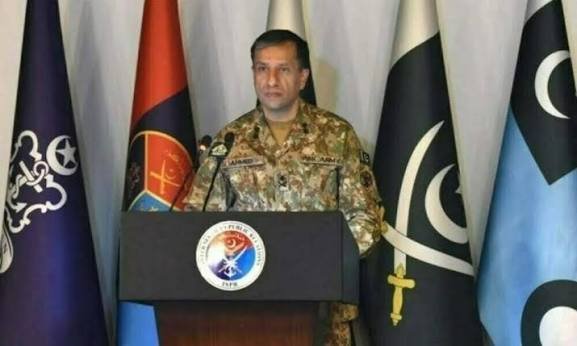
Pakistan’s military has issued its strongest statement yet on defending Saudi Arabia, with the armed forces’ spokesperson declaring the country will go “to any extent” required to protect the Kingdom — a pledge that goes noticeably further than earlier, more cautious statements on the Makkah Defence Pact.
What Was Actually Said
In an exclusive interview with Arab News, Lt. Gen. Ahmed Sharif Chaudhry, Director General of Inter-Services Public Relations (ISPR), said Pakistan “fully stands with the Kingdom of Saudi Arabia, both diplomatically and physically,” specifically emphasizing the word “physically.” He described Pakistan’s commitment as unconditional: “Our commitment to Saudi security is unconditional. It stems from a deep-rooted, historical and unbreakable bond between the people of Pakistan and the people of Saudi Arabia, between the political and the military leadership of both countries.”
He went further, leaving little room for ambiguity: “So, nothing stops us. Nothing bars us. Nothing is there which hesitates our commitment. So, whatever is required, whatever is asked, we will go to any extent for that.” Chaudhry confirmed this commitment specifically extends to protecting Makkah and Madinah, Islam’s two holiest sites, saying, “There should be no doubt on that.”
The Trigger: An Escalating Houthi Campaign
This statement lands amid a genuinely dangerous stretch for Saudi Arabia. Falling debris from an intercepted Houthi drone killed a Yemeni national residing in Saudi Arabia and injured two others in Taif on Thursday, adding to a toll of more than 80 people wounded in recent attacks. The Saudi-led coalition fighting the Houthis in Yemen also said this week it had intercepted a Houthi drone heading toward restricted airspace around Makkah itself — though the Houthis have denied targeting the city. Separately, drones launched from Iraq damaged three pumping stations on Saudi Arabia’s East-West Pipeline, forcing a temporary closure of that critical oil-export route.
The Saudi-led coalition has called the security of the Two Holy Mosques and their pilgrims a “red line,” vowing to take further measures to deter future attacks — language that frames the stakes of this conflict in unusually stark terms even by the standards of the broader Yemen war.
How This Fits the Makkah Defence Pact
Chaudhry’s remarks were explicitly framed around Pakistan’s commitments under the Makkah Defence Agreement — the trilateral collective-defense pact signed by Pakistan, Saudi Arabia, and Turkiye in August 2026, under which an attack on any one signatory is treated as an attack on all three. He said Islamabad wasn’t just committed on paper, but was “already there” for the protection of the Haramain Sharifain and the Kingdom — a notably more assertive framing than Defence Minister Khawaja Asif’s earlier comments, which described the pact as something that “could become operational” in response to Houthi attacks. This latest statement reads less like a conditional warning and more like a declaration that Pakistan already considers itself actively engaged in Saudi Arabia’s defense.
Coordination at the Highest Levels
Chaudhry also confirmed that Pakistan’s top military leadership remains in direct, ongoing contact with Saudi counterparts. He referenced a phone call between Chief of Defence Forces and Army Chief Field Marshal Syed Asim Munir and Iranian Foreign Minister Abbas Araghchi held on Wednesday, saying Pakistan’s politico-military leadership “remains in continuous communication with the esteemed leadership of the Kingdom of Saudi Arabia on all these matters.” Notably, this places Pakistan in the position of maintaining active communication channels with both Saudi Arabia and Iran simultaneously — a balancing act that reflects Islamabad’s stated desire to support its Saudi partner while not fully severing ties with Tehran.
A Separate Note on India-Pakistan Engagement
Away from the Saudi Arabia comments, Chaudhry also addressed a smaller diplomatic detail: India’s Chargé d’Affaires in Islamabad took part in and represented India at an SCO-RATS council meeting held earlier this week. He said Pakistan hopes India’s participation in the Shanghai Cooperation Organisation (SCO) continues, noting Pakistan is set to host the SCO Heads of State summit next year — a modest signal of continued institutional engagement between the two countries even amid other regional tensions.
What “Any Extent” Could Actually Mean
Despite the forceful language, Chaudhry’s remarks stop short of specifying concrete military action — no mention of troop deployments, asset positioning, or a defined trigger point for direct intervention. The phrase “to any extent” functions as a strong political and diplomatic signal of solidarity, but the practical, operational meaning of that commitment — what Pakistan would actually do, and when — remains undefined publicly. That ambiguity is arguably deliberate: it maximizes deterrence value against further Houthi attacks while leaving Pakistan’s leadership flexibility on if and how to respond to any specific future escalation.
Final Thoughts
This marks the most emphatic public commitment Pakistan’s military has made to Saudi Arabia’s defense since the Makkah Defence Pact was signed, and it comes at a moment when Saudi Arabia is facing a real, escalating threat rather than a hypothetical one. Whether “to any extent” eventually translates into a concrete military response — or remains a powerful diplomatic statement backing Saudi Arabia’s own defensive efforts — will likely depend on how the Houthi campaign against Saudi cities and infrastructure develops in the days and weeks ahead.
