


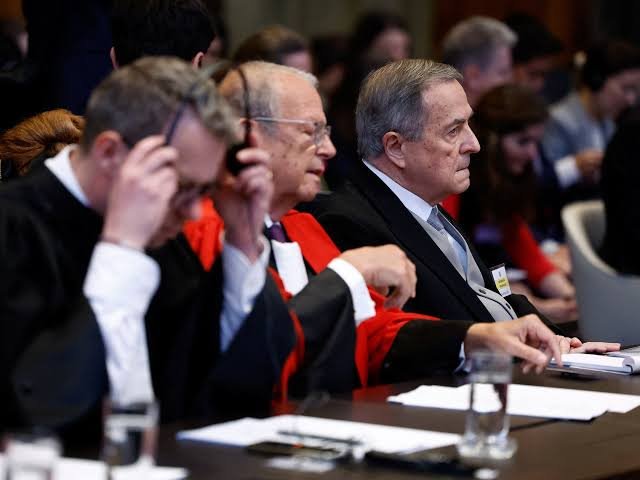
Germany is asking the International Court of Justice (ICJ) to throw out a case accusing Berlin of “facilitating genocide” in Gaza through its military and political support for Israel — setting up four days of hearings at the UN’s top court in The Hague.
What the Case Is About
The case was filed by Nicaragua in 2024, shortly after Israel launched its offensive in Gaza following the October 7, 2023 Hamas attacks. Nicaragua argues that Germany’s support for Israel — including arms exports — breaches the 1948 Convention on the Prevention and Punishment of the Crime of Genocide. Managua initially asked ICJ judges to impose emergency measures forcing Berlin to halt all aid to Israel, particularly military equipment, but the court declined that request in April 2024, saying the circumstances at the time didn’t justify emergency orders.
The underlying case, however, was never dismissed — and Germany is now moving to have it thrown out entirely.
Germany’s Legal Strategy
Berlin has filed what are formally called “preliminary objections to the jurisdiction of the Court and to the admissibility of certain claims.” In practical terms, Germany’s lawyers are trying to convince judges either that the ICJ doesn’t have the authority to rule on the case at all, or that Nicaragua’s underlying argument doesn’t hold up. Germany’s representative at the court, Julia Monar, told judges the accusations were inaccurate and distorted, and Berlin has separately described the case as grossly biased.
Germany has also pointed to its own scrutiny process, saying its arms trade with Israel is subject to detailed review that goes beyond what international law requires. The full detail of Germany’s legal arguments has not yet been made public.
Hearing Schedule
| Day | What Happens |
|---|---|
| Monday | Germany presents its case for dismissal |
| Following session | Nicaragua responds |
| Wednesday & Thursday | Both countries get a further opportunity to address the court |
Rulings on preliminary objections like this typically take the ICJ around six months to hand down. The court has two broad options: side with Germany and dismiss the case entirely, or reject Berlin’s objections, in which case the case would move forward to be considered “on the merits” in much greater detail.
Germany’s Stated Position on Israel
Germany has consistently placed Israel’s security at the center of its foreign policy, a stance its representatives have tied directly to the country’s Nazi-era history. That position has made Germany one of Israel’s most consistent supporters among major Western powers throughout the Gaza war, even as it has also provided humanitarian aid to Gaza — a combination Nicaragua’s legal team has previously criticized as contradictory.
How This Case Differs From South Africa’s Case Against Israel
This proceeding is separate from — though closely related to — the higher-profile case in which South Africa has accused Israel directly of committing genocide in Gaza, a case Israel firmly denies. Nicaragua’s case instead targets Germany specifically, arguing that a third-party state providing military and political support can itself bear responsibility under the Genocide Convention. Both cases are before the same court and rest on the same 1948 treaty, but they involve different parties, different legal theories, and are proceeding on separate tracks.
What Happens Next
The ICJ’s rulings are legally binding, but the court has no enforcement mechanism of its own to compel compliance. Even a ruling against Germany at this preliminary stage wouldn’t resolve the underlying dispute — it would simply allow Nicaragua’s substantive allegations to be examined in full. Given the ICJ’s typical timeline, a decision on Germany’s objections isn’t expected until sometime in the first half of next year.
Final Thoughts
This week’s hearings mark a procedural but consequential moment in a case that’s been simmering since 2024. Whichever way the ICJ rules on Germany’s objections, the outcome will shape not just this specific case but the broader legal question of how far a supporting state’s responsibility can extend under the Genocide Convention when it provides military and political backing to another country accused of the same violation.
